


748
By Lizzy Chirkpi
The Nigerian Senate has again renewed its push for the death penalty as punishment for all individuals involved in kidnapping, banditry, and terrorism including perpetrators, financiers, informants, logistics providers and other enablers of the crimes.
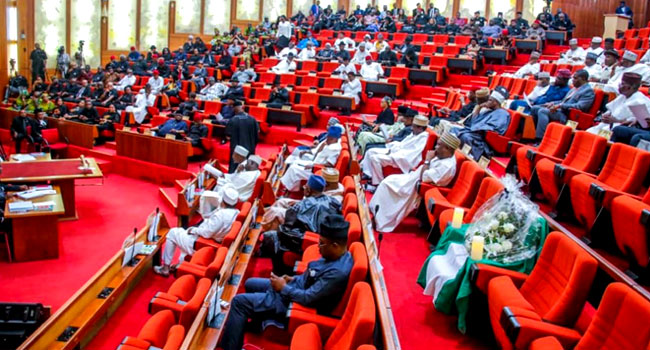
At Wednesday’s plenary, lawmakers debated amendments to the Terrorism (Prevention and Prohibition) Act 2022, sponsored by Senate Leader Opeyemi Bamidele, with the chamber again insisting that the scale and brutality of kidnapping in Nigeria now justifies capital punishment.
The proposed amendment seeks to formally categorise kidnapping, hostage-taking and similar offences as acts of terrorism, granting security agencies broader powers to track, disrupt and dismantle kidnapping networks nationwide.
Leading the debate, Bamidele said the bill aims to “designate kidnapping, hostage-taking and related offences as acts of terrorism and prescribe the death penalty for such offences without option of fine or alternative sentence.”
He warned that kidnapping has transformed into “coordinated, commercialised, and militarised acts of violence perpetrated by organised criminal groups,” with devastating consequences for families, communities, the economy and the nation’s stability.
Across all regions, he noted, kidnapping has “instilled widespread fear in communities; undermined national economic activities and agricultural output; interrupted children’s education; bankrupted families forced to pay ransom; overstretched our security forces, and claimed countless innocent lives.”
A statement from the Office of the Senate Leader reiterated that Bamidele described modern kidnapping patterns as bearing “all the characteristics of terrorism,” insisting that it is “no longer adequate to treat these acts as ordinary criminal offences.”
He said classifying kidnapping as terrorism would equip security agencies with stronger tools including asset tracing, forfeiture, intelligence-led operations, and faster prosecutorial procedures under counter-terrorism law.
The bill also prescribes the death penalty not only for perpetrators but also for “financiers… informants, logistics providers, harbourers, transporters, and anyone who knowingly assists, facilitates, or supports kidnapping operations.”
“Attempt, conspiracy, or incitement to kidnap attracts the same penalty,” he added, arguing that “this strong deterrent is necessary to confront kidnapping at the scale it currently operates.”
The Senate Leader emphasised that Nigerians now live under constant threat, noting: “Nigerians are kidnapped on highways, in schools, in homes, on farms, and in markets. Innocent children, vulnerable women, hardworking men, traditional rulers, travelers, and public servants have all become targets.”
“These criminals kill victims even after ransom is paid; subject victims to brutal torture; rape, mutilate, and starve hostages… This is not a mere crime. It is terrorism in its purest form.”
He stressed that the bill does not target any community but seeks to “dismantle violent networks” while upholding due process and fair trial guarantees.
The debate drew strong support across party lines, with contributions from Senator Adams Oshiomhole (Chairman, Senate Committee on Interior), Senator Orji Uzor Kalu of the All Progressives Congress (Chairman, Senate Committee on South-East Development Commission), Senator Abba Moro of People’s Democratic Party (Minority Leader), and others.
Presiding over the session, Senate President Godswill Akpabio approved the bill’s progression and referred it to the Committees on Judiciary, Human Rights and Legal Matters; National Security and Intelligence; and Interior for public hearing and further review. The lead committee is expected to report back within two weeks.
Oshiomhole who sponsored a similar motion last week threw his full support behind the death penalty proposal but criticised deradicalisation programmes that allow some offenders to reintegrate into society.
“Some of these guys went back to their crimes. We should not continue with deradicalisation programmes again,” he said.
“Even the Bible and Quran say those who are killed have no right to be alive… If you are caught and convicted for acts of terrorism, then the penalty should be death.”
Senator Orji Uzor Kalu noted that:
“Nigerians have suffered in the hands of kidnappers. Young girls have been raped. Women have become widows for no reason. This must not continue again.”
Minority Leader Abba Moro also endorsed the bill, insisting it must sail through second reading “with the hope that kidnappers will face capital punishment.”
Senator Victor Umeh condemned the gruesome killing of kidnap victims and called for strict enforcement against networks and financial institutions that enable ransom payments.
“They will collect ransom and still kill their victims… We should do everything to amend the Terrorism Act to classify kidnapping as terrorism,” he said.
The latest move marks yet another attempt by the Senate to impose capital punishment on kidnappers, terrorists and their supporters—a demand that has resurfaced repeatedly in recent years amid worsening insecurity.
With renewed urgency, lawmakers say the death penalty is now unavoidable as Nigeria faces what Bamidele described as “a war on the people” that threatens national unity, economic stability and the safety of every Nigerian family.