


823
By Tracy Moses
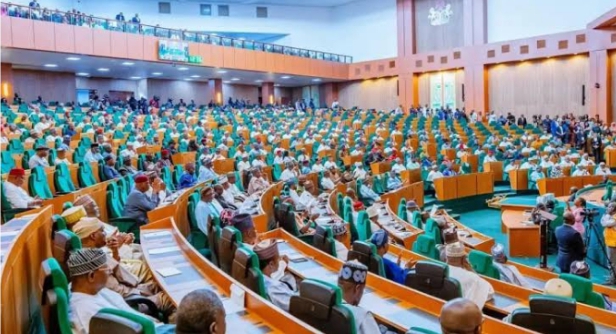
The House of Representatives has demanded answers from electricity distribution companies over their investments and utilisation of government intervention funds, summoning the Managing Directors of Ibadan Electricity Distribution Company (IBEDC) and Jos Electricity Distribution Company (JEDC).
The directive came after the chief executives of both companies failed to appear at a public hearing on Thursday, a move the House Ad hoc Committee investigating Nigeria’s power sector reforms and expenditure from 2007 to 2024 described as a “direct affront” to its ongoing probe.
Chairman of the committee, Hon. Al-Mustapha Ibrahim, expressed strong displeasure over the absence of the Managing Directors, stressing that the session was crucial to uncover the root causes of Nigeria’s persistent electricity crisis, which continues to undermine economic growth more than a decade after the privatisation of the power sector.
A legacy of challenges
Nigeria’s electricity woes trace back to the 2013 privatisation, when the Federal Government unbundled the Power Holding Company of Nigeria (PHCN) into separate generation, transmission, and distribution entities.
While private investors acquired majority stakes in distribution (Discos) and generation companies (Gencos), the Transmission Company of Nigeria (TCN) remained government-owned.
The reforms aimed to improve generation, expand distribution networks, enhance service delivery, and attract private investment. Yet, more than a decade later, electricity supply remains unstable, averaging 4,000–5,000 megawatts, far below the estimated demand of 23,000 megawatts for a population exceeding 200 million.
Successive governments have injected trillions of naira into the sector through programmes such as the Nigerian Electricity Market Stabilisation Facility (NEMSF) and the Power Assurance Programme (PAP).
Despite this, complaints persist over inadequate Disco investment, weak infrastructure, poor metering coverage, and continued reliance on communities to provide transformers and other distribution assets.
Back to the probe
During Thursday’s session, Ibrahim emphasised that distribution companies are central to resolving Nigeria’s electricity challenges. “There is no way we can move forward without hearing directly from the Managing Directors,” he said.
“We want them to tell Nigerians who they are, what they do, the investments they have made, and how they have utilised government intervention funds.”
Citing TCN submissions, Ibrahim noted that Nigeria has never generated up to 13,300 megawatts of electricity at any point, with peak generation hovering around 10,000 megawatts, despite transmission capacity of about 7,000 megawatts. “The big question is why Nigerians are still in darkness,” he said.
Officials representing IBEDC and JED were unable to justify the absence of their Managing Directors or provide formal delegation letters.
The committee unanimously rejected the representation, insisting that only the Managing Directors could adequately address issues regarding investments, operational efficiency, and utilisation of intervention funds.
Following deliberations, Hon. Olajide Mohammed (Oyo State) moved a motion to adjourn the hearing to 5 February, directing the Discos to return with their Managing Directors. “We want to hear from the horse’s mouth,” he said.
The motion was later amended by Hon. Abubakar Jajere (Yobe State), who called for the invitation of the core investors in the Discos, citing a recurring pattern of disregard for committee summons.
Upholding the amended motion, Ibrahim warned that failure to comply would attract the full instrumentality of the House. “If they continue to evade this investigation, it raises serious questions about their capacity, commitment, and ability to deliver effective power supply after 13 years of privatisation,” he said.
The committee adjourned until 5 February, reiterating its resolve to uncover the root causes of Nigeria’s electricity crisis and ensure accountability in the power sector.