


2.4K
By Lizzy Chirkpi
The Federal Government has committed about $500 million in direct funding to upgrade infrastructure at the Murtala Muhammed International Airport, in a major push to reposition Nigeria as a leading aviation hub in Africa.
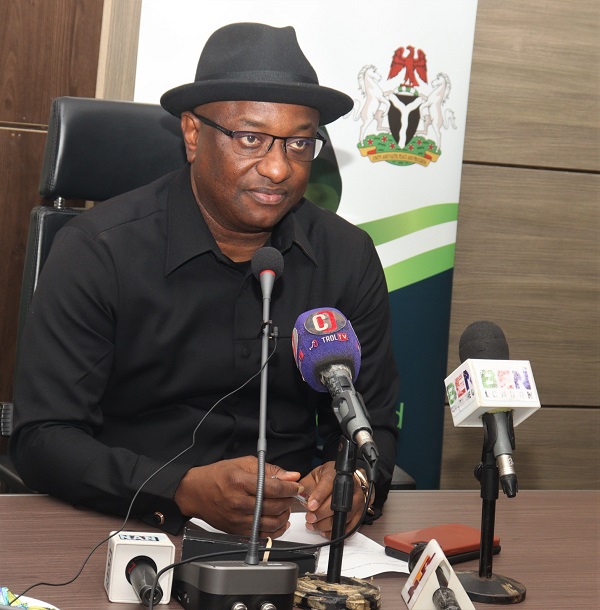
Minister of Aviation and Aerospace Development, Festus Keyamo, disclosed this on Wednesday while speaking at an industry investment summit in Lagos, where he outlined the scale and urgency of ongoing reforms in the sector.
According to the minister, the decision to fund the project outright without borrowing reflects the administration’s resolve to fast-track the transformation of the country’s busiest airport into a modern, globally competitive facility.
He explained that “Lagos as Nigeria’s primary international gateway, must reflect the size and strategic importance of the nation’s aviation market,” noting that major construction work is already underway.
Keyamo projected that visible progress would emerge within the next 22 months, expressing confidence that the completed upgrade would meet international standards and improve passenger experience, operational efficiency, and safety.
Beyond Lagos, the minister revealed that expansion plans are also being extended to other parts of the country. He announced that President Bola Ahmed Tinubu has approved the resumption of work on a second runway in Abuja, a project previously stalled due to security and logistical challenges.
“The Lagos airport modernisation, valued at about ₦712 billion, involves a comprehensive redevelopment of ageing facilities rather than routine maintenance. It is expected to significantly boost capacity and integrate advanced technologies, including automated passenger processing systems.”
The urgency of the overhaul is likely due to recent fire incident at the airport’s old international terminal, which disrupted flight operations and damaged critical communication infrastructure managed by the Nigerian Airspace Management Agency. The incident prompted authorities to accelerate reconstruction plans, including the demolition of affected structures.
Currently, Lagos serves as Nigeria’s main aviation hub through its multiple terminals, handling both international and domestic traffic. Officials say the ongoing upgrade is part of a broader strategy to modernise airport infrastructure nationwide and support growing passenger demand.
In the long term, the government is also exploring additional capacity through proposed projects such as a new airport in the Lekki axis, aimed at complementing existing facilities and supporting economic growth in the region.