


By Tracy Moses
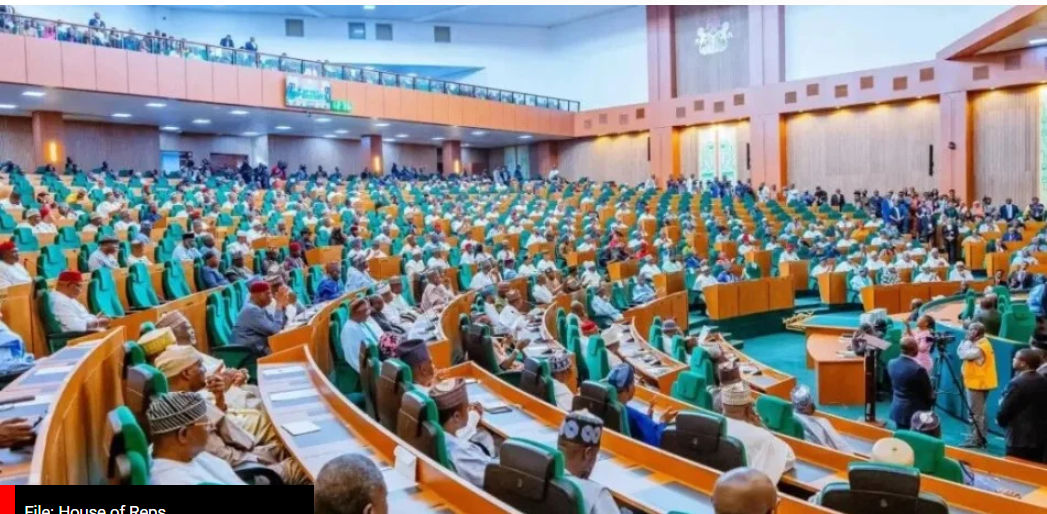
The Minority Caucus in the House of Representatives on Thursday staged a walkout during plenary in protest against the passage of the Constitution Alteration Bill seeking to establish State Police Services, accusing the House leadership of violating constitutional and parliamentary procedures.
The lawmakers insisted that while they support the establishment of State Police as a response to Nigeria’s worsening security challenges, the constitutional amendment should not have been passed without strict compliance with the provisions of the 1999 Constitution and the House Standing Orders.
The protest followed the House’s approval of President Bola Tinubu’s Constitution Alteration Bill on State Police after Speaker Abbas Tajudeen announced that 311 lawmakers voted in support of the proposal, comprising 276 members who participated physically and 35 who voted virtually.
Addressing journalists shortly after the walkout, the Minority Caucus spokesman, Hon. Afam Ogene (NDC, Abia), disclosed that the caucus had, on July 22, submitted a memorandum to the Speaker requesting that the bill be recommitted for further legislative scrutiny.
The memorandum, titled “State Police: Nigeria Must Get It Right – Request for the Reconsideration of the State Police Constitutional Amendment Bill,” was acknowledged by the Office of the Speaker on Thursday before the House proceeded with the consideration and passage of the legislation.
According to Ogene, the caucus’ position was not an opposition to State Police but a call for a stronger constitutional framework capable of addressing legal, institutional, operational and fiscal concerns.
“We wish to state unequivocally that we support the principle of State Police. Nigeria’s security realities demand bold constitutional reforms that strengthen public safety, deepen federalism, improve community-based policing and enhance the protection of lives and property,” he said.
Describing the proposal as a historic opportunity to reform Nigeria’s policing architecture, he nevertheless cautioned against what he called the adoption of an incomplete constitutional framework.
“Our concern is therefore not against State Police; it is against adopting an incomplete constitutional framework.”
Ogene said the Minority Caucus had proposed a limited technical review involving constitutional lawyers, security experts, state governments, fiscal authorities and other stakeholders to address identified gaps in the bill, but lamented that none of its recommendations was considered.
He also faulted the procedure adopted by the House in determining quorum and considering the constitutional amendment.
“The Constitution is the grand norm. It is the rule book upon which even our Standing Orders derive their strength and powers,” he said.
According to him, the attendance register signed by lawmakers at the commencement of each legislative sitting remains the only legitimate basis for determining the number of members present.
“The way of determining members who are present in sitting is by our registers, and that is why those registers are there to be signed on each legislative day.”
Ogene further accused the Speaker, while presiding over the Committee of the Whole, of denying members the opportunity to move amendments during the clause-by-clause consideration of the bill.
“We forwarded to the Speaker our position on this issue. We also forwarded a detailed compendium of the various clauses and our suggestions on what ought to be done during clause-by-clause consideration, but we were never given that opportunity.”
Also speaking, the Minority Leader, Hon. Frederick Agbedi (PDP, Bayelsa), maintained that the caucus fully supports any measure capable of addressing the country’s security crisis but insisted that constitutional amendments must be processed strictly in accordance with established legislative procedures.
“The Minority Caucus is not against the creation of State Police. We are not against whatever is going to remedy the insecurity in this country. As a Minority Caucus, we are ready to support it,” he said.
“But any action taken by Parliament must follow due process. We are talking about an institution—the institution of the National Assembly and the House of Representatives. It has its own rules and laws, and when those rules and regulations are not complied with, it affects the credibility of the institution as well as the credibility of Nigeria and our democracy.”
Agbedi disclosed that the Minority Caucus had earlier engaged Speaker Abbas Tajudeen on areas of concern in the bill and was assured that amendments could be introduced during legislative consideration.
He, however, expressed disappointment that the Committee of the Whole merely read the long title of the bill before putting it to a voice vote.
“Mr. Speaker even identified areas where we could intervene. But for Mr. Speaker to sit as Chairman of the Committee of the Whole, read only the long title of the bill and then put a voice question for the determination of a constitutional alteration that requires two-thirds majority, clause-by-clause consideration and voting, is absurd.”
Citing Order 13 Rule 15(a) of the House Standing Orders, Agbedi argued that every clause of a constitutional amendment bill must be considered and approved separately by a two-thirds majority of members.
According to him, failure to follow that procedure undermines the integrity of the legislative process.
“This is not about majority or minority. It is about protecting the laws of this nation. Anywhere there is no rule of law, that society is deemed to be in crisis.”
He also accused the Chair of denying him the opportunity to raise a constitutional point of order before ruling him out of order.
“As Minority Leader, I raised a point of order and, without hearing it, the Chairman ruled me out of order. He needed to hear my point of order before deciding whether it complied with our rules or the Constitution.”
Questioning the validity of the voting process after Minority members had exited the chamber, Agbedi said:
“If we had walked out of the House, where are our votes? Can you count our votes? Can you decide a constitutional amendment with a voice vote? It is not possible.”
He maintained that the caucus only sought the opportunity to debate the bill clause by clause and propose amendments in line with constitutional and parliamentary practice.
“Laws, proposals, executive bills and private members’ bills are all subject to amendment before members in the chamber. In this case, we were not allowed to go through clause-by-clause consideration and we were not given the opportunity to cast our votes as provided by the Constitution and our Rules.”
Calling on Nigerians to defend democratic institutions and the rule of law, Agbedi added:
“We stand on the side of Nigeria. We stand on the side of the rule of law. We stand on the right side of what will make Nigeria a great nation and preserve the integrity, progress and development of this country.”
The House of Representatives on Thursday approved President Bola Tinubu’s Constitution Alteration Bill seeking to establish State Police Services as part of efforts to decentralise policing and strengthen Nigeria’s security architecture.
The Senate also passed the proposal, moving the legislation a step closer to becoming law. Under Section 9 of the 1999 Constitution, however, the amendment must still be approved by at least two-thirds of the 36 State Houses of Assembly before it can be incorporated into the Constitution.
The creation of State Police has remained one of the most debated constitutional reforms in Nigeria, with proponents arguing that decentralised policing would improve intelligence gathering and enhance responses to local security threats, while critics have expressed concerns over funding, operational capacity and the potential abuse of state-controlled police by political office holders.