


By Oscar Okhifo
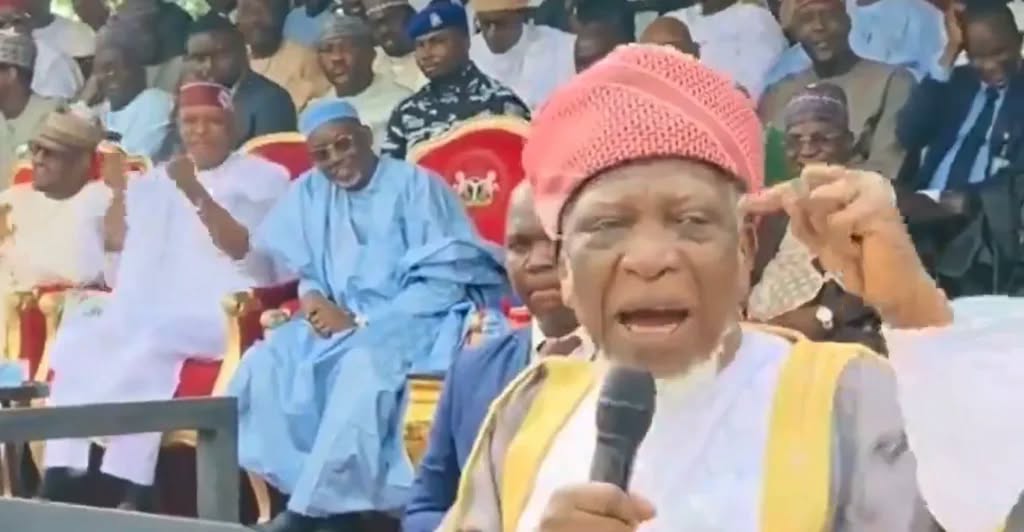
Islamic cleric, Sheikh Sani Yahaya Jingir, has come under mounting criticism over remarks in which he reportedly referred to Christians as “infidels,” with Christian preacher Prophet Isa El-Buba and several prominent Nigerians condemning the statement and calling for action against him.
Jingir’s comments, reportedly made at a political gathering organised in support of Kano State Governor Abba Kabir Yusuf, have triggered renewed controversy over the role of religion in Nigerian politics, particularly amid growing debates over the possibility of a Muslim-Muslim presidential ticket ahead of the 2027 general elections.
Reports of the remarks surfaced over the weekend, with the cleric reportedly urging Muslims to demonstrate their numerical strength and “show infidels their limit.”
El-Buba, General Overseer of El-Buba Outreach Ministries International, reacted to the remarks in a video on Monday, accusing Jingir of making inflammatory statements capable of worsening religious tensions in a country already grappling with insecurity, poverty and deepening social divisions.
El-Buba questioned why a religious leader would resort to language capable of setting Muslims and Christians against one another rather than addressing the social and economic challenges confronting millions of Nigerians, particularly in northern Nigeria.
“But I can see the governor of Kano State. This is how insane all of you are in northern Nigeria, some of you. This is the way you think,” El-Buba said.
He expressed particular concern over the reference to Christians as infidels, questioning the wisdom of using such language in a country where Muslims and Christians coexist and participate in the political and social affairs of the nation.
“People that are brainless. Somebody is standing there in your meeting shouting Muslim, Muslim, calling Christians infidels. And I’m not going to take this,” he said.
El-Buba said religious leaders should be working to unite Nigerians and offer solutions to the challenges facing the country rather than making statements capable of setting one religious group against another.
“Northern Nigeria, Muslims, you talk about the highest capital poverty of the world. Are you not ashamed?” he asked.
He also drew attention to insecurity, criminality and drug abuse in northern Nigeria, arguing that these should be among the issues occupying the attention of political and religious leaders.
“Are you not ashamed that banditry is here in the north? Criminality is here in the north. It is here in the north, you have the highest level of drug addicts,” El-Buba said.
According to him, the primary responsibility of religious leaders should be to preach messages capable of helping people overcome poverty, insecurity and other social problems.
“That you are supposed to be, if you are sane, to begin to preach the message that will help to bring people out of bondage and out of their captivity,” he said.
El-Buba accused those making anti-Christian statements of engaging in incitement and warned that such rhetoric could further damage relations between Muslims and Christians.
“You are there making stupid statement and inciting against Christians and calling them, look at them infidels,” he said.
He further questioned why Christians would be expected to support political leaders or movements associated with rhetoric that appears to portray them as inferior or outsiders.
“If they think they have voting power, what should any Christian that is going to align themselves with these evil brainless people and creatures?” he asked.
El-Buba also questioned whether a Muslim-Muslim political ticket would address the economic and security challenges confronting Nigerians.
“But let me tell you, we are in north together, let’s see if the Muslims-Muslims ticket will provide food for us or it will bring what we lack,” he said.
More condemnations
El-Buba is not alone in criticising Jingir’s reported remarks.
Media personalities, activists and other notable Nigerians, including Omoyele Sowore, Femi Fani-Kayode, Reuben Abati, Rufai Oseni and Deji Adeyanju, have also criticised the cleric’s comments, describing them as inflammatory and capable of worsening religious tensions.
Fani-Kayode, a former Minister of Aviation and Nigeria’s ambassador-designate to South Africa, described Jingir’s reported remarks as provocative and dangerous to national unity.
The former minister also stressed that Nigeria is neither a Muslim nor a Christian country, pointing to the secular and multi-religious character of the Nigerian state.
Human rights lawyer and activist Deji Adeyanju also condemned the remarks, warning that religiously inflammatory rhetoric could further divide Nigerians and threaten national cohesion.
Some critics have gone further by calling on security agencies to investigate Jingir over what they consider potentially inciting remarks.
Fani-Kayode specifically called for the cleric to be invited by the Department of State Services (DSS) and formally cautioned.
“Jingir should be invited by the DSS and formally cautioned before he sets this country on fire,” Fani-Kayode said.
The controversy has continued to generate intense reactions across social and conventional media, with Nigerians divided between those demanding official action against Jingir and others defending his right to express his views.
The development has also revived debate over the Muslim-Muslim presidential ticket and the place of religion in Nigerian politics as political parties and aspirants position themselves for the 2027 general elections.
Critics accuse Jingir of promoting religious division and deploying faith as a political tool, while some Muslim groups and individuals have defended him, arguing that his comments should be viewed within the broader context of his position on Muslim political participation and representation.
A media aide to the Jama’atu Nasril Islam (JNI), identified as Ahmad, also defended Jingir’s position, saying the cleric had remained principled despite the backlash.
The conflicting reactions have placed renewed focus on the responsibility of political and religious leaders to exercise restraint in their public utterances, particularly in a country where religious and ethnic tensions have repeatedly become flashpoints.
The controversy has also raised questions over whether the Federal Government and security agencies will take action, particularly following calls by some Nigerians for Jingir to be investigated over the alleged inciting nature of his remarks.
As political parties and aspirants intensify preparations for the 2027 elections, religion, identity and political alliances are expected to remain major issues in the contest for political power.
As of Monday, there was no official statement from the Federal Government, the DSS or the Nigeria Police Force announcing any investigation, invitation, arrest or prosecution of Jingir over the remarks.