


By Tracy Moses
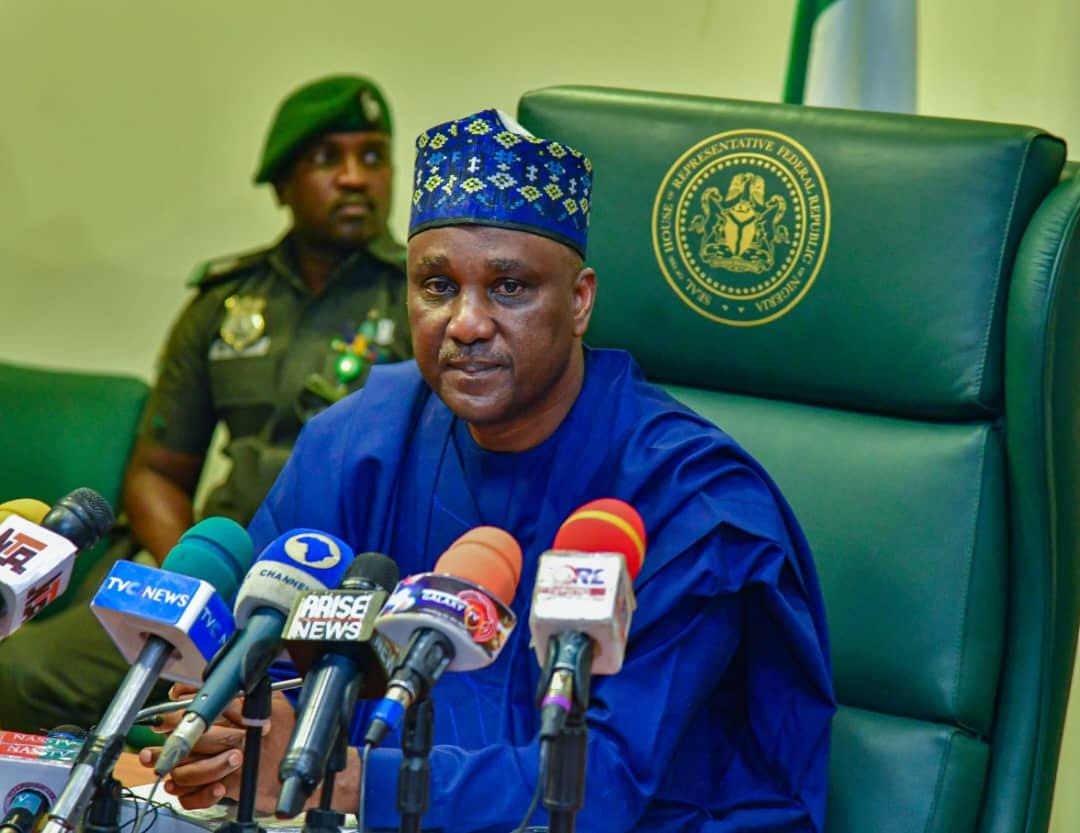
Speaker of the House of Representatives, Rt. Hon. Tajudeen Abbas, has challenged state governors to commit at least N1 billion monthly to dedicated intervention funds for Micro, Small and Medium Enterprises (MSMEs), saying subnational governments must take greater responsibility for supporting small businesses and stimulating economic activities.
Abbas, who spoke on Monday through the House Majority Leader, Prof. Julius Ihonvbere, at a stakeholders’ engagement organised by the House Committee on Small and Medium Enterprises in Abuja, said state governments had the financial capacity to establish sustainable funding mechanisms for entrepreneurs but had failed to demonstrate sufficient commitment.
“There is no governor in this country that cannot put one billion a month in a special fund for MSMEs in his state. There is no state that cannot do it,” he said.
The Speaker said such dedicated funds, if managed through transparent guidelines, effective monitoring mechanisms and clearly defined eligibility criteria, would provide critical financial support to entrepreneurs, particularly those operating small businesses at the grassroots.
He expressed concern that despite increased federal allocations to state and local governments, the two tiers had failed to translate improved revenue into meaningful interventions capable of strengthening small businesses and creating economic opportunities.
Abbas argued that responsibility for improving the business environment and addressing the economic challenges confronting Nigerians should not rest solely with the Federal Government, insisting that state and local governments also had critical roles to play in enterprise development.
“All the complaints you are hearing in this country today is not because of Tinubu. Not because of the federal government. It’s because of state and local governments that are not performing,” he said.
His remarks come amid persistent financing challenges confronting Nigerian MSMEs, including high borrowing costs, stringent collateral requirements, regulatory bottlenecks and limited access to institutional support.
Although successive administrations have introduced intervention programmes and established financing institutions to support small businesses, concerns persist over the accessibility, affordability and effectiveness of these facilities, particularly for micro and small enterprises outside major commercial centres.
Abbas observed that many businesses surviving the country’s difficult economic conditions were doing so largely because of the resilience of their owners rather than effective government support.
“Those that are surviving are surviving not because of government and agencies, but in spite of government and agencies,” he said.
He blamed part of the problem on excessive bureaucracy in the administration of intervention funds, noting that cumbersome application procedures and regulatory requirements often discouraged genuine entrepreneurs from seeking assistance.
“I’m a systems man, but I know this system is not working. And it will not work when you bureaucratise a procedure. A lot of red tape,” he said.
The Speaker also expressed concern over high commercial lending rates, arguing that businesses already struggling with rising operational costs would find it difficult to service loans carrying double-digit interest rates.
He said access to finance should go beyond the availability of funds to include affordability, flexible repayment arrangements and lending conditions that take into account the peculiar circumstances of small businesses.
Earlier, Chairman of the House Committee on Small and Medium Enterprises, Dr Pascal Agbodike, said the engagement was convened to identify practical legislative and institutional measures to address the challenges confronting MSMEs.
Agbodike said the committee had brought together government agencies, financial institutions, development finance institutions and private-sector representatives to review existing intervention programmes, identify implementation gaps and determine why available funds had not produced the expected results.
He expressed concern that although the National Assembly continued to make budgetary provisions for relevant institutions and programmes, questions remained about how the funds were being utilised and the extent to which they reached intended beneficiaries.
“We are lawmakers. Ours is simple, to appropriate the necessary funds. But when we appropriate those funds, how is it being trickled down to the common man in the street?” he asked.
The committee chairman said the House would scrutinise the activities of relevant institutions, including the Central Bank of Nigeria (CBN) and the Bank of Industry (BOI), to identify gaps between policy formulation, funding approvals and actual disbursement to entrepreneurs.
He expressed optimism that the engagement would produce concrete recommendations and measurable improvements in the delivery of MSME support programmes within 100 days.
Also speaking, Director-General of the Presidential Enabling Business Environment Council (PEBEC), Princess Zahrah Mustapha Audu, identified affordable financing, regulatory reforms and stronger collaboration with state governments as critical to unlocking the potential of Nigerian MSMEs.
Audu said PEBEC monitors the activities of 69 ministries, departments and agencies (MDAs), with a mandate to identify and address bureaucratic and legislative obstacles affecting the ease of doing business.
She disclosed that the council had introduced the ReportGov digital platform to enable businesses to report difficulties encountered in their dealings with government regulators and public institutions.
According to her, complaints submitted through the platform are automatically referred to the relevant government agency, which is expected to resolve them within 72 hours. PEBEC intervenes where an agency fails to address a complaint within the stipulated period.
She called for stronger partnerships between state governments and development finance institutions, including the Bank of Industry, Bank of Agriculture and Nigerian Export-Import Bank, to expand financing opportunities for small businesses.
Under the proposed arrangement, state governments could provide counterpart funding to reduce lending risks, ease collateral requirements and make credit facilities more accessible to entrepreneurs with viable business proposals but without conventional security.
Audu said PEBEC had facilitated similar partnerships in about 15 states, creating opportunities for business associations to participate in financing arrangements with development finance institutions.
She also stressed the importance of patient capital, arguing that MSMEs needed financing arrangements that recognised the time required to establish businesses, stabilise operations and generate sufficient returns before repayment obligations fell due.
“For me, the solution for SMEs is patient capital,” she said, urging the CBN to review prevailing interest rates to make commercial lending more affordable.
In his contribution, a former member of the Anambra State House of Assembly and consultant, Charles Ezeani, called for legislative intervention to establish government-backed credit guarantee institutions to reduce the risks associated with lending to small businesses.
Ezeani identified cumbersome lending procedures and excessive documentation requirements as major obstacles preventing rural entrepreneurs from benefiting from government-backed intervention funds.
He said many small business owners lacked the technical expertise and institutional capacity to meet the stringent conditions imposed by commercial banks, even after securing preliminary approvals from development finance institutions.
He particularly criticised the lengthy process of obtaining letters of intent from commercial banks under intervention financing arrangements, saying the additional requirements often caused unnecessary delays and frustrated applicants.
“Government institutions should have the capacity to give guarantees of almost zero collateral to the downtrodden,” he said.
Ezeani argued that a functional credit guarantee framework would encourage commercial banks to extend more credit to micro and small enterprises, particularly entrepreneurs with viable business proposals but without the conventional collateral demanded by lenders.
The call for dedicated state-level intervention funds has renewed attention on the role of subnational governments in addressing the financing gap confronting Nigerian MSMEs.
However, beyond the proposed N1 billion monthly commitment, effective implementation would depend on transparent disbursement procedures, clear beneficiary selection criteria and robust accountability mechanisms to ensure that public funds reach genuine entrepreneurs.
For small businesses struggling to secure affordable capital and navigate institutional barriers, the ultimate test will be whether state governments translate the Speaker’s challenge into sustainable financing arrangements capable of supporting enterprise growth, employment generation and economic development.