

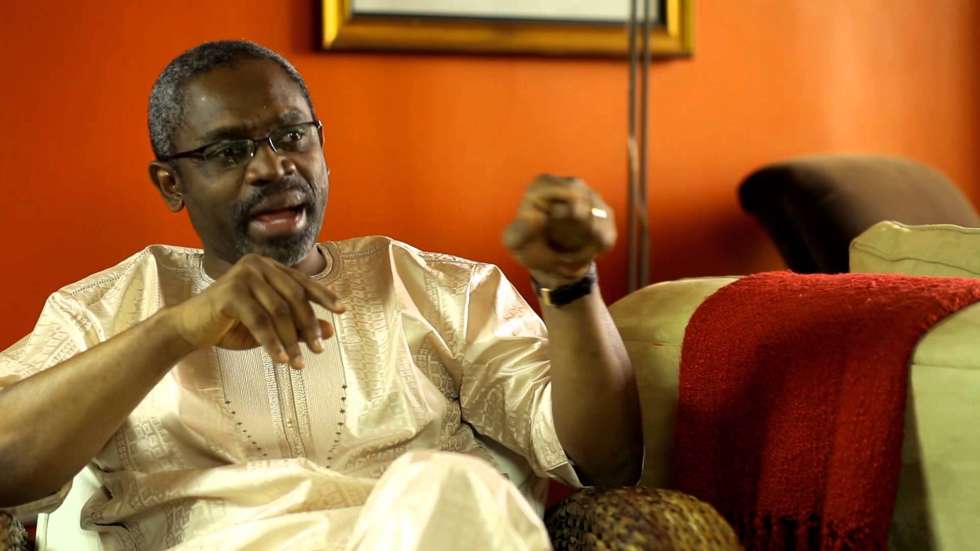

APC’s Leader of the House of Representatives, Femi Gbajabiamila has kicked the Mohammadu Buhari’s administration for fixing pump price without any thoughts about fixing the refineries.
According to him, to deregulate without looming at the root cause of the problem could be counter productive in the long run.
In a chat with the Punch he said ” where is the political will to fix our refineries? It is like putting the cart before the horse to deregulate before fixing the refineries. It should have been the other way round so that we can subsidise production and not importation”
Excerpts
The government said it had removed the ‘subsidy’ on petrol and a litre now sells officially for N145. The government earlier said ‘subsidy’ would stay. Are you satisfied with this?
No, I am not comfortable (with it), but I am pragmatic. My antecedents, when it comes to this issue, are known to all. I have always led the fight against the removal of subsidy. I have never believed in it. Even before the 2012 debate, which I led on the floor of the House as an opposition leader, I wrote a letter to then Acting President Jonathan, berating him for even thinking of removing subsidy. Once petrol price is increased, everything in everybody’s life is increased. That, for me, is a fundamental problem. It doesn’t make sense to me that a country, which is blessed with a natural resource is also importing that resource. It doesn’t make sense that you have oil in your backyard and at the same time price it as the international price simply because you are importing it. I don’t expect the price of tea in China to be the same with that of South Africa or any country that doesn’t produce tea. Subsidy is a good thing everywhere but why it is given a bad name in Nigeria? I asked those questions then. I was told it was the fraud in it, perpetrated by one per cent of the population. Now, my answer is that you cannot punish 99 per cent of Nigerians for the inefficiency of the government or the fraud of one per cent. What you need to do as a government is to plug those loopholes and deal with those fraudsters. But now, for the first time, I was at a stakeholders’ meeting at the Vice-President’s office with labour leaders. By the time a graphic picture of what was happening — with facts and figures — was reeled out and what was about to happen if we continued this way, much as I resisted, it was clear to me that we might not even have a country in a couple of months. I saw clearly that no state would be able to pay salaries in two months’ time; even oil-producing states like Bayelsa would not be able to pay salaries, if there was no federal allocation. Thus, I had to reconsider myself and my thoughts prior to now and what was in front of me. I came to the very painful conclusion that in the short term, deregulation was the best way to go and that in the long term, it would pay off for everybody. Again, this is not the government’s fault. Research has shown that other oil-producing countries are re-adjusting their subsidy regime. Even at that, I believe certain things should have been done prior to now. For instance, where is the political will to fix our refineries? It is like putting the cart before the horse to deregulate before fixing the refineries. It should have been the other way round so that we can subsidise production and not importation. The real issue is even that 70 per cent of the subsidy figure is made up; it’s not real.
People say it was hypocritical to oppose subsidy removal in 2012 only to see nothing wrong with it now that the APC government is in power. What do you say?
If we are to look at it objectively, 2012 was totally different from 2016. In 2012, oil was selling for over $100 and we had plenty money to throw around for subsidy. Hence, my position then was no; you could not allow people to suffer because you must remove subsidy. But 2016 is totally different. Oil prices have dropped. There is no money.
But why is the government still pegging prices if they have deregulated? Why keep Petroleum Product Pricing Regulatory Agency or insist on N145 per litre?
I have raised that question myself before. If you read the article I wrote in 2012, I did raise those legal questions. It is not just PPPRA, there is the Price Control Act; yes, all those things have to go if you want to deregulate and throw the market open to make the economy laissez-faire, like they say. But, I think this is almost like a home-grown deregulation; not deregulation strictly so-called. I think the government, knowing the nature of business in this country and how people can easily want to extort and take advantage (of things), has decided to re-define deregulation in the context of Nigeria. Hence, it’s not full deregulation, it’s half deregulation so long as you still have that cap. I am just thinking aloud for the government. If you leave it entirely open, it’s not impossible that the price will go to N500 per litre. Yes, we are deregulating but we will not leave it out there for you to do whatever you want; so, we cap it at N145.