


2.8K
By Lizzy Chirkpi
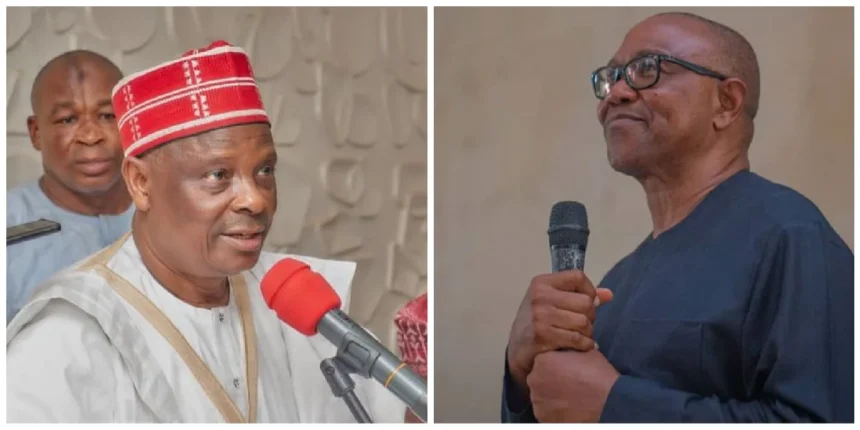
Renewed discussions around a possible Peter Obi–Rabiu Musa Kwankwaso joint presidential ticket have again drawn attention to lingering divisions within Nigeria’s opposition as the country moves toward another electoral cycle.
The proposed alliance, which gained prominence after the 2023 general election, was widely viewed by supporters as a potential force capable of challenging the ruling political establishment. Obi, the Labour Party’s presidential candidate in 2023, and Kwankwaso, leader of the New Nigeria Peoples Party (NNPP), both commanded strong regional bases and significant youth support.
However, despite public enthusiasm and advocacy from civil society groups, talks around the joint ticket failed to progress into formal negotiations.
Political observers attribute the collapse of the initiative to disagreements over power-sharing arrangements, party control and strategic leadership roles.
“The failure of the Obi–Kwankwaso talks exposed the depth of fragmentation within Nigeria’s opposition,” said political analyst Dr. Kalu Okoronkwo. “It was an opportunity for national interest to take precedence, but consensus could not be reached.”
Analysts note that while both politicians share reform-oriented positions on governance, education and social investment, their political approaches differed significantly. Obi projected a message centred on institutional reform and fiscal discipline, while Kwankwaso relied on a mass-mobilisation strategy rooted in northern grassroots support.
Insiders familiar with the discussions said neither side was prepared to make strategic concessions necessary for a workable coalition.
“Coalitions don’t collapse because of weak ideas but because of weak trust,” Okoronkwo said. “Opposition parties still struggle to function as long-term platforms rather than election vehicles.”
The stalled alliance has broader implications for Nigeria’s democratic process. With voter turnout declining and public confidence in political parties under pressure, many Nigerians had hoped the partnership would strengthen opposition cohesion and present a unified alternative.
Civil society organisations have warned that repeated failures to build broad-based coalitions could further discourage young voters who were active participants in the 2023 elections.
“Young Nigerians invested hope and energy in a new political direction,” said a governance advocate in Abuja. “Disunity among leaders risks deepening political apathy.”
While Obi and Kwankwaso remain influential political figures, analysts argue that the breakdown of the talks underscores the challenges facing opposition unity ahead of future elections.
As political realignments continue, observers say the episode serves as a reminder of the difficulties involved in translating popular support into effective political collaboration.