


By Tracy Moses
The National Chairman of the Inter-Party Advisory Council (IPAC), Alhaji Dantele Yusuf, has urged the Chairman of the Independent National Electoral Commission (INEC), Prof. Joash Amupitan, SAN, to ensure that the 2027 general election is free, fair and credible, reminding him that he would remain a Nigerian after leaving office.
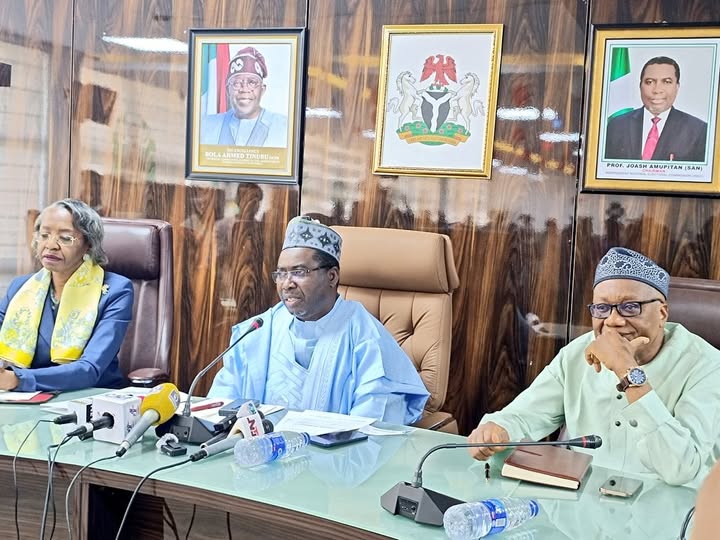
Yusuf spoke on Tuesday in Abuja at a world press conference and national stakeholders’ meeting organised by INEC to mark 100 days to the 2027 general election.
The meeting brought together representatives of political parties, security agencies, civil society organisations, election observers, development partners, the media and other stakeholders as the country enters the final phase of preparations for the elections.
While commending INEC for what he described as the credible conduct of the recent Osun State governorship election, Yusuf said political parties would expect nothing less from the Commission in the 2027 general election.
He urged Amupitan to place national interest above political considerations and ensure that the electoral process remained transparent, impartial and credible.
Yusuf reminded the INEC chairman that his tenure at the Commission would eventually end, stressing that he would remain a Nigerian and live with the consequences of decisions taken while in office.
He also commended Amupitan for convening the stakeholders’ meeting, describing it as the first of its kind, and urged the Commission to sustain regular consultations with political parties as preparations for the 2027 elections intensify.
According to him, sustained dialogue between INEC and political parties would help address concerns early and strengthen confidence in the electoral process.
The IPAC chairman also called on security agencies to intensify preparations for the elections to guarantee a peaceful environment for voters, candidates, election officials and other stakeholders.
He urged INEC’s ad hoc personnel to remain neutral and resist attempts by politicians to manipulate them or use them against the interests of Nigerians.
Yusuf said the credibility of the 2027 elections would depend on the collective commitment of INEC, political parties, security agencies, election officials and other stakeholders to uphold the integrity of the electoral process.
His position came as INEC outlined its preparations for the elections scheduled for January 16 and February 6, 2027.
Presenting the Commission’s 100-day countdown address, Amupitan said INEC had completed nine of the 14 major statutory milestones contained in its revised timetable and schedule of activities for the elections.
He said the Commission had also completed three phases of Continuous Voter Registration, producing 10,772,421 new registrations after biometric verification and bringing the National Register of Voters to about 103 million.
Amupitan said the Register of Voters would be displayed nationwide from October 9 to 15, 2026, allowing citizens to scrutinise the register and raise claims and objections.
He added that the distribution of Phase One Permanent Voter Cards to local government centres would begin on October 9, while the register for the 2027 general election was expected to be presented to political parties on December 15.
On election technology, the INEC chairman said the Commission had acquired 57,000 additional Bimodal Voter Accreditation System (BVAS) devices and was upgrading its systems to strengthen voter accreditation, result management and transparency.
He also disclosed that INEC had established a dedicated Artificial Intelligence Division within its ICT Department, with AI-driven auditing and anomaly-detection tools being integrated into its results verification and cybersecurity systems under a framework that requires human oversight.
A nationwide mock accreditation and election simulation exercise is scheduled for November to test personnel, hardware and network protocols ahead of the elections.
On logistics, Amupitan said INEC had finalised an integrated deployment strategy involving more than 100,000 vehicles and 4,000 boats to facilitate the movement of personnel and election materials across the country’s 176,846 polling units.
He said the Commission was also strengthening collaboration with security and financial intelligence agencies to tackle electoral violence, vote-buying and illicit campaign spending.
Amupitan appealed to political parties, candidates, security agencies, the media and other stakeholders to work together to ensure peaceful and credible elections.
He particularly urged the media to verify electoral information with INEC before publication and warned against privately declaring election results.
“In national elections, it is far more important to be right than to be first,” the INEC chairman said.