


562
By Oscar Okhifo
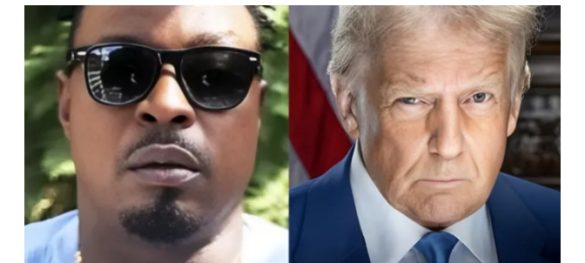
Controversial Nigerian rapper, Eedris Abdulkareem has been locked out of his Facebook and Instagram accounts, days after releasing his politically charged song, “Open Letter to Donald Trump,” which criticizes corruption, insecurity, and bad governance in Nigeria.
The musician confirmed the suspension, saying, “Facebook just suspended my Facebook and Instagram accounts because of my new song, Open Letter to Donald Trump. I can’t access it.”
The song, released under his label Lakreem Entertainment, is a protest track that, while addressing former U.S. President Donald Trump, mainly highlights the challenges facing ordinary Nigerians, including rising insecurity, kidnappings, and the failings of political leadership.
This is not Abdulkareem’s first run-in with censorship.
In April 2025, his song “Tell Your Papa” was banned by the National Broadcasting Commission (NBC) for “objectionable lyrics.”
He first rose to prominence in 2004 with “Jaga Jaga,” a hit that openly criticized government corruption and mismanagement.
Meta, the parent company of Facebook and Instagram, is yet to issue any statement to explain the suspension or indicate how long it might last.
The suspension has sparked strong reactions on social media, with many Nigerians interpreting it as an attempt to silence dissenting voices. Some reactions include:
“When u speak against their way, they will try as much as possible to silence the person.”
“I love Eedris, na him sing Nigeria jagajaga dat year… now without hearing the song, I no say stray bullet go don meet Mr agbado.”
“This is exactly why we need more freedom of speech in Nigeria. Artists like Eedris are speaking truth to power.”
“Social media companies should not be arbiters of what we can or cannot hear. Suspend him, fine, but his voice matters.”
Fans and civil society commentators have expressed concern that politically sensitive content may be increasingly targeted, warning that such actions could have a chilling effect on freedom of expression in Nigeria.