


545
By Oscar Okhifo
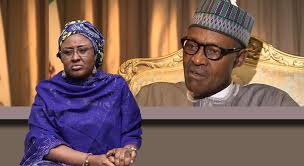
Widow of the late former President Muhammadu Buhari, Mrs Aisha Buhari, has said her husband retained several underperforming appointees during his eight years in office because he feared being labelled a dictator.
Aisha made the disclosure in a new book titled “From Soldier to Statesman: The Legacy of Muhammadu Buhari,” written by Dr Charles Omole and launched on Monday at the Presidential Villa, Abuja.
According to her account in the book, Buhari became increasingly cautious about making sweeping changes to his cabinet and inner circle, worried that decisive actions could reinforce long-standing criticisms of his leadership style as authoritarian.
She recalled that shortly after Buhari assumed office, the political environment around him changed dramatically. Many individuals who stood by him during his years in opposition, she said, suddenly found themselves sidelined, with familiar faces barred from the Presidential Villa and allegedly flagged by security operatives.
Aisha Buhari noted that when she privately raised concerns about the growing disconnect between the administration and its original support base, no significant changes followed, prompting her to speak publicly.
The former First Lady described a widening gap between the ideals that powered Buhari’s political movement and the reality of governance, lamenting that loyal campaign supporters were left outside while technocrats and individuals aligned with other political interests dominated the inner circle.
“They had money; they had people; but they did not have the power to install a president,” she recounted, adding that governance was eventually reduced to what she described as “a sitting-room meeting.”
She further stated that many around Buhari were more interested in personal gains such as money, access and contracts than the responsibility that came with power, a situation that, according to her, led to operational dysfunction within the presidency.
However, her explanation has continued to generate debate, with critics questioning why concerns about personal perception would take precedence over the economic and social consequences of retaining officials widely regarded as ineffective.
Some members of the ruling All Progressives Congress (APC) have previously echoed similar concerns, publicly acknowledging the extent of decay President Bola Tinubu inherited on assuming office.
Several party figures described the state of governance and the economy at the time as “despicably bad,” pointing to years of policy stagnation and weak institutional performance.
The contrasting narratives have further fuelled public scepticism, especially as President Tinubu on Monday eulogized Buhari as a leader of integrity and discipline, while his wife attributed persistent administrative failure to a fear of being labelled authoritarian.
Political observers argue that the explanation sits uneasily with Buhari’s record, particularly allegations of human rights abuses during his tenure, making claims of excessive restraint difficult for many Nigerians to reconcile with lived experience.
Despite the criticism, Aisha Buhari maintained that her husband’s reluctance to act decisively against those who disappointed him stemmed from his desire to avoid authoritarian perceptions.
“He had the wrong people in the right places,” she said, adding that Buhari “didn’t change them for eight years.”