


677
By Lizzy Chirkpi
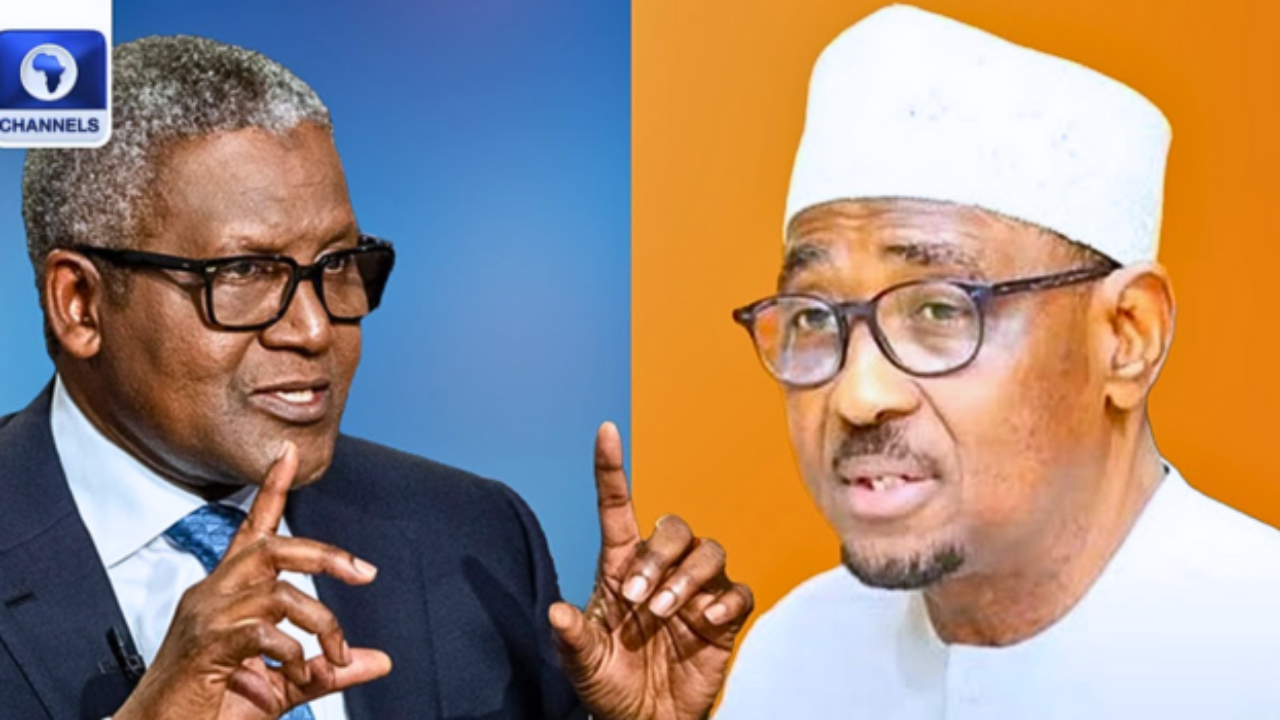
A coalition of legal practitioners under the aegis of Lawyers in Defence of Democracy and Anti-Corruption has challenged the President of Dangote Industries Limited, Alhaji Aliko Dangote, to formally petition relevant anti-corruption agencies over allegations he reportedly made against the Chief Executive Officer of the Nigerian Midstream and Downstream Petroleum Regulatory Authority (NMDPRA), Engr. Farouk Ahmed.
In a statement released on Tuesday, the lawyers faulted what they described as reckless and unsubstantiated corruption claims against the NMDPRA boss, warning that pushing such allegations through the media rather than established legal channels undermines due process and the rule of law.
The group accused the billionaire industrialist of allegedly fueling a media-driven campaign designed to portray Engr. Ahmed as corrupt without submitting the claims to lawful investigation, stressing that such actions threaten democratic values and investor confidence in Nigeria’s oil and gas sector.
The statement was jointly signed by the group’s National Coordinator, Barrister Emeka Okafor, and its Secretary, Barrister Mohammed Bello, on behalf of 40 members of the association.
Speaking for the coalition, Okafor dismissed claims that Engr. Ahmed received a $5 million bribe or financed his children’s education in Switzerland, describing the allegations as “fabrications” unsupported by any credible evidence.
According to him, decisions taken by the leadership of the NMDPRA were driven by national interest and not targeted at any individual or corporate player in the petroleum industry, adding that monopoly does not foster sustainable economic growth.
“We consider these accusations frivolous, baseless and potentially harmful to the stability of Nigeria’s midstream and downstream petroleum industry,” Okafor said.
“This amounts to a media-driven attempt to convict a public officer who has neither been investigated nor charged by any competent authority.”
The lawyers cited Section 36(1) of the 1999 Constitution (as amended), which guarantees the right to fair hearing, insisting that no citizen can be pronounced guilty based on public accusations or media narratives.
“The law is clear: every individual is presumed innocent until proven guilty by a court of competent jurisdiction. What is playing out is a clear breach of this constitutional safeguard,” he added.
The group further criticised Dangote for failing to pursue his grievances through appropriate institutional mechanisms, arguing that someone of his stature should understand the importance of petitions, investigations and adherence to due process rather than public allegations.
In his remarks, Barrister Mohammed Bello said that if the concerns were genuine, the proper course would have been to submit a petition to anti-graft agencies instead of resorting to what he described as trial by media.
The lawyers warned that such actions could scare away both local and foreign investors at a time when the administration of President Bola Ahmed Tinubu, under the Renewed Hope Agenda, is focused on economic recovery and attracting investment.
They also noted that regulatory reforms introduced under Engr. Ahmed’s leadership at the NMDPRA have liberalised the downstream petroleum sector, encouraged competition and curtailed monopolistic dominance.
According to the group, these reforms have opened the sector to new investors, with several refineries completed or nearing commissioning outside the Dangote Refinery, a development they attributed to transparent and firm regulatory oversight.
“It is ironic that the same regulatory framework now being criticised is what made increased private sector participation, including the Dangote Refinery, possible,” Okafor observed.
Reiterating their opposition to monopoly in the petroleum industry, the lawyers said Engr. Ahmed’s regulatory approach has promoted fairness, competition and the national interest.
They concluded that based on their independent assessment, the NMDPRA chief has remained focused on his statutory responsibilities and is not tainted by corruption allegations backed by evidence.
While reaffirming their commitment to accountability and good governance, the group urged Nigerians to disregard what they termed unverified claims and called on stakeholders to respect the independence of regulatory institutions.
They also appealed to the Federal Government to continue supporting reform-driven, professional and independent leadership at the NMDPRA in the broader interest of national development.
Pages: 1 2