


By Godswill Michael
The Federal Government disbursed at least N88.79 billion in monthly stipends to former Niger Delta militants, including prominent ex-militant leader Ebikabowei Victor Ben, popularly known as Boyloaf, under the Presidential Amnesty Programme (PAP) between 2018 and the first half of 2026.
An analysis of records obtained from the Federal Government’s expenditure tracking platform, GovSpend, showed that a total of N88,791,131,022 was paid to leaders of various ex-militant camps for onward distribution to thousands of registered beneficiaries enrolled in the programme.
The records, analysed by Pointblanknews.com, indicate that the government disbursed N3.51 billion in 2018, N11.07 billion in 2019, N7.10 billion in 2020, N15.11 billion in 2021, N12.20 billion in 2022, N12.52 billion in 2023, N15.32 billion in 2024, N8.53 billion in 2025, and N3.44 billion during the first half of 2026.
The payments were made in bulk to representatives of ex-militant camps, who were responsible for distributing the monthly stipends to registered beneficiaries under the amnesty programme.
Among the beneficiary camps were Ateke Camp Phase 1, represented by Dasimaka Adokiye Sami; Boyloaf Camps 1 and 2, represented by Ebikabowei Victor Ben; Adamakiri Camp Phase 2, represented by Harry Tonye Ikemenjeme; Ekpomolopo Tobi Camp Phase 1, represented by Odiki Jacob; Pastor Reuben Camp Phase 1, represented by Reuben C. Wilson; and Farah Camp Phase 1, represented by Philip Dennis Fayeofuri.
Others included Young Shall Grow Camp Phase 1, represented by Torughedi Selky; Commander Don Camp Phase 1, represented by Felix Bonny; Beribegha Camp Phase 1, represented by Joseph Evah; Prince Wills/Lami Camp Phase 1, represented by Abraham Ibitari Mark; Lacto Marine Camp Phase 3, represented by Igoli Godgift Ugobo; Yahweh Camp Phase 2, represented by Sylvester A. Tambo; Shoot-at-Sight Camp, represented by Chief Bibopiri Ajube; Ogunboss Camp Phase 1, represented by Ezizi Paul Ogunboss; Lagosman Camp Phase 1, represented by Sam Kenneth; and Jack Rich (Egberi-Papa) Camp Phase 1, represented by Sobomabo Jackrich.
GovSpend records also revealed multiple payments of N99.99 million each to several camp representatives as part of the monthly stipend disbursements.
Payment descriptions on the platform stated that the disbursements were approved by the Administrator of the Presidential Amnesty Programme as bulk monthly stipends for registered beneficiaries covering March, April and May 2026.
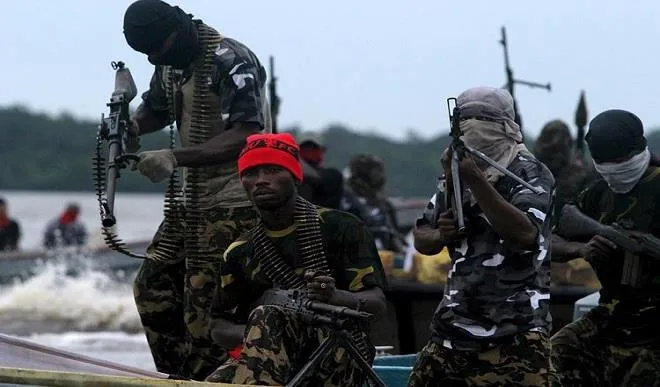
The Presidential Amnesty Programme was established in 2009 by the administration of the late President Umaru Musa Yar’Adua following years of armed militancy in the Niger Delta that disrupted crude oil production, damaged critical oil infrastructure and threatened Nigeria’s economy.
Under the initiative, militants who surrendered their weapons and renounced violence became eligible for monthly stipends, vocational training, educational scholarships and other reintegration support aimed at helping them transition to civilian life.
Although the programme remains a key component of the Federal Government’s peace-building strategy in the oil-producing region, it has continued to attract scrutiny over its cost, transparency and long-term sustainability.
Funding for the programme rose significantly in 2026 after the National Assembly approved N115 billion for the Presidential Amnesty Programme in the 2026 Appropriation Act, up from N65 billion allocated in both 2024 and 2025. The increase represents a 76.9 per cent rise and marks the programme’s highest annual budgetary allocation in nearly a decade.
Despite the increased funding, the programme continues to generate debate over whether the government should gradually transition from recurring monthly stipend payments to greater investment in sustainable economic empowerment, skills acquisition, entrepreneurship and job creation for beneficiaries, nearly 17 years after the amnesty initiative was launched.