


848
By Oscar Okhifo
In moments of violence—when fear reigns, evil rains torrentially, and humanity itself appears to be in ferocious retreat—there are always a few who rise quietly to remind the world of what courage truly means.
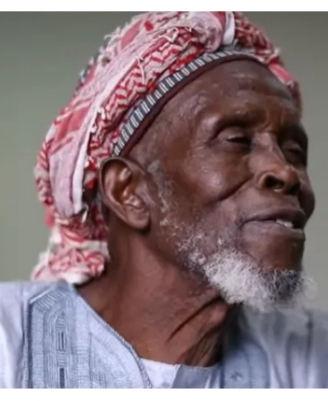
Imam Abubakar Abdullahi of Plateau State was one such rare paragon: a cleric whose faith was expressed not merely through sermons, but through fearless acts of compassion and moral clarity.
In 2018, parts of Plateau State were engulfed in brutal attacks that plunged entire communities into mourning. Armed assailants descended on villages, setting homes ablaze and killing scores of residents. The violence spared no one. Men and women, the young and the old alike, were either mowed down or maimed.
Those who survived fled in desperation, clutching nothing but their lives as they escaped a wave of violence that recognized neither age nor gender. Predominantly Christians, they ran blindly in search of safety—any refuge that might shield them from imminent death.
Their terrified flight led them to the community where Imam Abdullahi lived and served.
Confronted with panicked, exhausted men, women, and children pleading for refuge, the Imam did not hesitate. He immediately grasped the urgency of their peril and acted with decisive compassion.
“I first took the women to my personal house to hide them and returned quickly to hide the men in the mosque,” the Imam later recounted.
The women were concealed within his home, while the men were sheltered inside the mosque—a decision that placed the cleric squarely in harm’s way.
It was an extraordinary risk. In choosing to protect strangers, he knowingly placed his own life on the line.
The danger soon came knocking.
The attackers, having received information that their intended victims were being hidden, traced the fleeing villagers to the Imam’s community. They confronted him directly, demanding access to both his house and the mosque to conduct a search.
At that moment, his loyalty to humanity and to God Almighty was put to a brutal test. It was a confrontation that could easily have ended in bloodshed.
But Imam Abdullahi stood his ground.
Calm yet resolute, he refused to surrender those under his protection—even under the threat of death. Drawing on courage, conviction, and moral authority, he respectfully engaged the armed men until, remarkably, they were persuaded to leave.
That single act of defiance saved dozens of lives. Men, women, and children who might otherwise have been slaughtered walked away alive because one man chose humanity over fear.
In many ways, the Imam’s actions echoed timeless examples of moral bravery. Like the biblical Obadiah, the faithful servant of King Ahab, who hid and sustained the prophets while the King and Queen Jezebel hunted them down, he risked his life to protect the innocent.
His courage also mirrored that of Rahab, the harlot of Jericho, who sheltered Joshua’s spies—complete strangers—at great personal risk because she believed life was sacred.
Yet this was no ancient tale.
It unfolded in modern Nigeria—in a land that has increasingly become a killing field, and on a once-tranquil Plateau now strained by religious suspicion and scarred by cycles of attacks and reprisals.
What makes Imam Abdullahi’s legacy especially profound is the environment in which he lived. In a country where fanaticism too often drowns out reason, where fanatics are sometimes hailed as fantastic faithfuls, he demonstrated that true faith builds bridges rather than walls. He paid no heed to the labels or condemnation that might come from those who believe the nation is too small for different beliefs to coexist.
“God created mankind differently, but He wants us to live together in peace and harmony,” he was quoted as saying.
The old man chose conscience over fear, humanity over hatred.
He could have looked away.
He could have claimed neutrality.
He could have saved himself.
Instead, he stood firm.
His life now places a responsibility on the living. We are called to mirror his morality and courage, and to consciously strive to follow his example. We must allow God to fight His battles and reject every call to violence carried out in His name.
Any religion that encourages the killing of fellow human beings has no claim to divine authority.
Imam Abdullahi’s story urges us to live in peace, to preach peaceful coexistence, and to embody compassion and moral uprightness in our daily lives. Like him, our doors must never be shut against people in danger—regardless of their faith, race, colour, or political affiliation.
As Plateau State, and Nigeria as a whole, continues to search for healing, the memory of this good man stands as a moral compass. He departed this world at the age of 90.
May his courage continue to inspire us, and may paradise be the everlasting abode of Imam Abdullahi—a servant of God whose life bore testimony to the enduring power of love over hate.