


499
By Tracy Moses
Nigeria continues to grapple with an estimated 500,000 new tuberculosis (TB) cases annually, as the Federal Government intensifies efforts to eliminate the disease through expanded access to diagnosis, treatment, and community-based interventions.
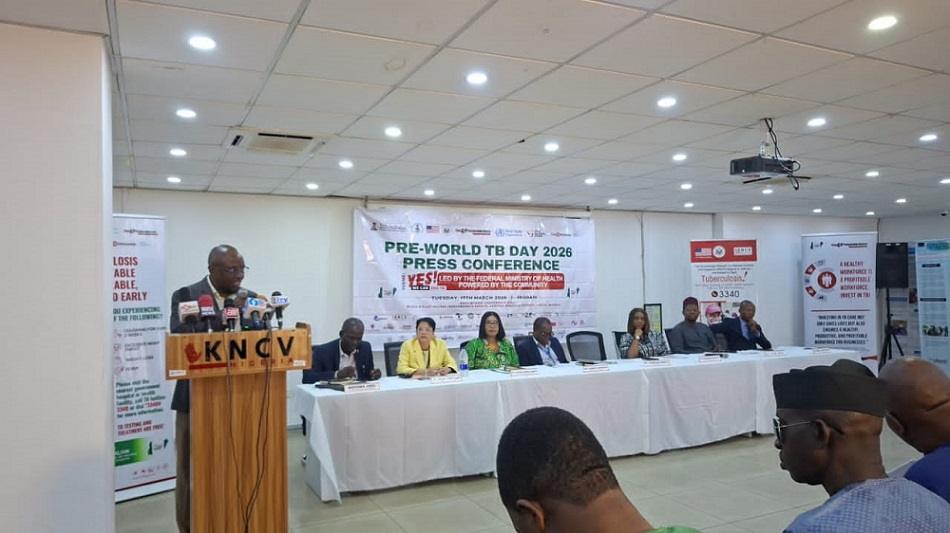
Health authorities disclosed this on Tuesday in Abuja during the 2026 pre-World TB Day press conference, where stakeholders highlighted both the scale of the challenge and the progress made in recent years.
The Acting National Coordinator of the National Tuberculosis, Leprosy and Buruli Ulcer Control Programme, Dr. Clement Adesigbin, said Nigeria remains among the countries with the highest TB burden globally, with an incidence rate of about 219 cases per 100,000 population.
According to him, the high number of infections reflects underlying socio-economic conditions such as poverty, overcrowding, and malnutrition, which continue to fuel the spread of the disease.
“Tuberculosis is not just a medical issue; it is also driven by social and economic realities. Wherever there is poverty and overcrowding, TB thrives,” Adesigbin said.
Despite the burden, he noted that the Federal Government has significantly scaled up its response, leading to improved treatment coverage across the country. He disclosed that access to TB treatment has risen from about 20 per cent in 2018 to over 80 per cent currently.
He explained that the strategy has shifted from passive detection to active case finding, with health workers now moving into communities, including hard-to-reach areas, to identify and treat patients early.
“We no longer wait for patients to come to us. We go into communities to find cases, diagnose early, and commence treatment promptly,” he added.
Adesigbin further revealed that more than 25,000 health facilities nationwide now provide TB services, supported by modern diagnostic technologies such as GeneXpert machines and digital X-rays, which enable faster and more accurate detection.
However, he identified stigma, misinformation, and funding constraints as major obstacles to eliminating the disease.
“Many people still associate TB with myths due to lack of proper information. Stigma discourages individuals from seeking care, while declining global funding is also a serious concern,” he said.
He stressed the need for increased domestic investment, noting that Nigeria must begin to take greater ownership of its TB response as reliance on external funding becomes less sustainable.
Also speaking, the Director of Public Health at the Federal Ministry of Health and Social Welfare, Dr. Charles Nzelu, reaffirmed the government’s commitment to ending TB, emphasizing that diagnosis and treatment remain free in public health facilities.
“No Nigerian should pay for TB services at any government-approved facility. If you have a cough lasting two weeks or more, please get tested. TB is curable, and treatment is available,” he said.
Nzelu described the 2026 World TB Day theme, “Yes! We Can End TB: Led by the Federal Ministry of Health and Social Welfare, Powered by the Community,” as a reflection of renewed leadership and grassroots engagement in tackling the disease.
“The challenge is significant, but our resolve is stronger. Together, we can end TB in Nigeria,” he added.
In his remarks, the Executive Secretary of Stop TB Partnership Nigeria, Mr. Mayowa Joel, said ending TB requires sustained commitment from both government and citizens, particularly in the face of shrinking donor support.
“Ending TB must become a national priority backed by domestic funding and strong partnerships, not just dependence on international donors,” he said.
Similarly, the Board Chair of Stop TB Partnership Nigeria, Dr. Queen Ogbuji-Ladipo, underscored the importance of collaboration, noting that communities play a critical role in awareness creation, prevention, and treatment adherence.
She said while progress has been recorded through partnerships and innovation, more efforts are needed to close existing gaps in the response.
Representing the World Health Organization (WHO) Country Representative, Dr. Pavel Ursu, officials warned that TB remains one of the world’s deadliest infectious diseases, despite being both preventable and curable.
They reaffirmed WHO’s commitment to supporting Nigeria through technical assistance, innovation, and health system strengthening.
Meanwhile, the 2026 World TB Day planning committee announced a series of activities to boost awareness and reduce stigma, including community outreaches, faith-based sensitisation, road walks, and school campaigns.
Stakeholders at the event agreed that while Nigeria has made measurable progress in expanding access to TB services, sustained political will, increased funding, and active community participation will be critical to achieving the goal of eliminating the disease.