


545
Godswill Michael
Nigeria’s health system is failing too many of its citizens, the Chairman of the Senate Committee on Health, Sen. Ipalibo Banigo, said Thursday in Abuja, warning that avoidable blindness and other preventable conditions expose deep structural weaknesses that continue to leave vulnerable communities behind.
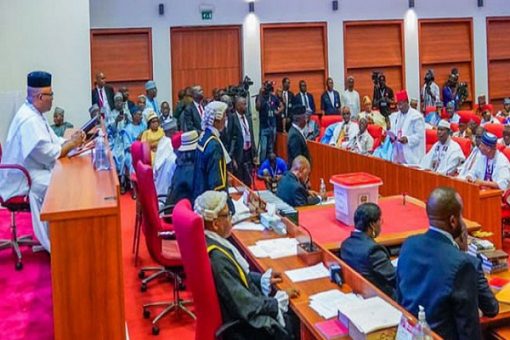
She delivered the message while representing the President of the Senate at the launch of the 10-year SightQuest Nigeria programme, a national eye health initiative by Christian Blind Mission (CBM), where government officials, international partners and civil society groups gathered to confront what speakers described as a widening access crisis in public healthcare.
“Nigeria is a nation of immense potential, yet we must confront an uncomfortable truth: too many citizens are left behind, not because their conditions are unavoidable, but because our systems fail to respond. Avoidable blindness and visual impairment remain quiet injustices of our time, inflicting lifelong consequences on individuals, families, and communities especially the most vulnerable,” she said.
Her remarks come against the backdrop of repeated reports of overstretched hospitals, shortages of trained specialists, weak primary healthcare networks, and patients forced to travel long distances or seek private care for treatable conditions. Public health advocates have long linked preventable deaths, untreated infections, maternal complications and rising disability rates to underfunded infrastructure and fragmented service delivery, particularly in rural communities.
At the Abuja event, Banigo framed the eye health crisis as both a policy and moral emergency.
“The sight crisis in Nigeria is therefore not only a health issue; it is a moral challenge. It reminds us that disability should not define destiny. It affirms that poverty must not be a barrier to progress. Inclusion is not charity, it is a right,” she said.
The chair said the National Assembly recognizes that health outcomes directly shape economic productivity and national development, adding that legislation must go beyond symbolism.
“From a legislative standpoint, the National Assembly recognizes the central role of health in development. Our policies, budgets, and oversight must reflect the understanding that inclusion strengthens the economy. Laws must protect the vulnerable, systems must reach those on the margins, and data must guide our decisions so that no Nigerian is invisible,” the senator said.
According to her, reform requires sustained collaboration across sectors.
“Legislation alone is not enough. Real progress demands partnerships between government and civil society, policymakers and practitioners, communities and institutions. Together we must dismantle stigma, strengthen primary healthcare, improve data systems, and ensure disability inclusion becomes a guiding principle, not an afterthought,” she added.
She described the SightQuest programme as a step toward closing long-standing equity gaps in the health system.
“With the launch of SightQuest Nigeria, we take a meaningful step toward a country where opportunity is not limited by circumstance, where healthcare reaches the last mile, and where inclusion is measured not by intention but by impact,” she said.
The CBM International Chief Executive Officer, Dr. Rainer Brockhaus, said the organisation is committing an initial 15 million euros, nearly N25 billion, to the programme over the next decade to reduce avoidable blindness and address refractive errors.
“Today, that partnership reaches an important milestone with the launch of SightQuest Nigeria, a 10-year initiative to reduce avoidable blindness and to address refractive errors. These are two critical public health challenges affecting millions of Nigerians,” he said.
He said CBM’s presence in Nigeria spans more than five decades and builds on previous collaborations with federal and state governments, including the Plateau State Eye Health project and a multi-state effort to eliminate onchocerciasis and lymphatic filariasis.
“With SightQuest Nigeria, we are not just simply starting another project; we are starting an integrated and comprehensive initiative to achieve lasting, long-term results for the people in need,” he added.
Brockhaus stressed that the programme aims to expand cataract surgery, improve access to refractive services and strengthen inclusive eye care systems, especially for women, children, persons with disabilities and rural populations.
“We must never forget what is at stake. Behind every statistic is a life changed: a child who can finally see the blackboard, a farmer who regains independence, a grandmother who can once again recognise the faces of her loved ones. SightQuest Nigeria is about restoring dignity, and ensuring every person has the chance to learn, to work, and to thrive,” he added.
Nigeria’s Minister of State for Health, Dr. Iziaq Salako, linked vision loss directly to economic performance, noting that untreated visual impairment drains national productivity.
“Visual impairment lowers productivity and national growth. It cost the global economy $401bn annually. The federal government of Nigeria is committed to preventing avoidable vision loss,”.he said.
In his welcome address, CBM Nigeria Country Director, Omoi Samuel, said the programme seeks to build a health system that guarantees access regardless of social status.
“SightQuest is more than a programme; it is a vision of hope. It is about restoring sight, dignity, and opportunity to millions. Over the next decade, we will work hand-in-hand to strengthen primary eye care, expand access to cataract surgeries and refractive error services, and build a health system that leaves no one behind,”Samuel said.
According to CBM, the SightQuest programme will run from 2026 to 2035 and initially cover Bauchi, Imo, Jigawa, Plateau and Oyo states, with plans to expand to nine additional states. By 2035, it targets a 30-percentage-point increase in effective cataract surgical coverage in 10 states while deploying strategies to scale refractive services nationwide.
Banigo told participants that sustained commitment will determine whether the programme becomes a turning point or another missed opportunity.
“As we look toward 2035 and the global vision for disability inclusion, we must remember: a society is judged not by how it treats the powerful, but by how it treats the vulnerable. When we restore sight, we do more than improve health, we unlock futures,” he said.