


1.3K
By Godswill Michael
The Federal Government has intensified efforts to attract private capital into Nigeria’s agricultural sector, citing a significant financing gap that continues to constrain productivity and the transition to climate-resilient farming systems.
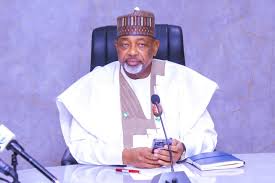
Minister of Agriculture and Food Security, Sen. Abubakar Kyari, made this known during the Nigeria–United Kingdom Investment Forum held recently in London, where he called on investors, financial institutions and development partners to collaborate with Nigeria in unlocking the full potential of its agricultural economy.
In a statement issued on Monday by the Ministry through its Head of Information, Ezeaja Ikemefuna, the minister said current investment levels in agriculture fall far short of what is required to build a resilient food system, deploy climate-smart technologies and scale innovation across value chains.
“While public financing remains essential, unlocking the scale of investment required will depend on stronger participation from private capital and development finance partners,” Kyari stated.
He noted that access to finance remains a major constraint for farmers, limiting productivity across the sector. According to him, total credit available to agriculture stood at about N3.4 trillion as of April 2025, representing less than four per cent of the sector’s contribution to the nation’s Gross Domestic Product.
Kyari noted that Nigeria’s agricultural sector, which employs nearly 70 per cent of the labour force and contributes over 24 per cent to GDP, holds vast opportunities for investment across multiple value chains including rice, maize, cassava, cocoa, and horticultural crops.
He, however, warned that climate change poses increasing risks to agricultural productivity, with challenges such as erratic rainfall, flooding, drought and desertification threatening food security and rural livelihoods.
To address these challenges and de-risk investments, the minister said the Federal Government is strengthening key institutions such as the Bank of Agriculture, the Nigeria Agricultural Development Fund and the National Agricultural Insurance Corporation, while restructuring the National Agricultural Land Development Authority to support large-scale agricultural investments.
He added that ongoing government initiatives—including the distribution of solar-powered irrigation pumps, development of climate-resilient seeds, the National Agricultural Mechanisation Programme, and the Special Agro-Industrial Processing Zones, are designed to improve productivity, enhance value addition and attract private sector participation.
Kyari recalled that President Bola Tinubu declared a national state of emergency on food security in July 2023, a move aimed at addressing rising food prices and boosting agricultural output. This was followed by the inauguration of the Presidential Food Systems Coordinating Unit to align interventions across federal, state and local governments.
The minister emphasised that Nigeria is positioning itself as a competitive destination for agribusiness investment, with opportunities spanning irrigation technologies, storage infrastructure, agro-processing and agricultural logistics.
He assured investors of the government’s commitment to creating an enabling policy environment, including reforms that promote climate-smart agriculture, strengthen land tenure systems and encourage sustainable agribusiness financing.
Kyari urged UK investors and global partners to take advantage of Nigeria’s large market, favourable agro-ecological conditions and ongoing reforms to support the transformation of the sector.
He stressed that bridging the financing gap through increased private sector participation is critical not only to achieving national food security but also to building resilient food systems capable of withstanding climate shocks.