


1.1K
By Lizzy Chirkpi
As Nigeria prepares for the 2027 general elections, recent reforms passed by the House of Representatives — and the gaps left unresolved — are poised to significantly influence the country’s political landscape in the months ahead.
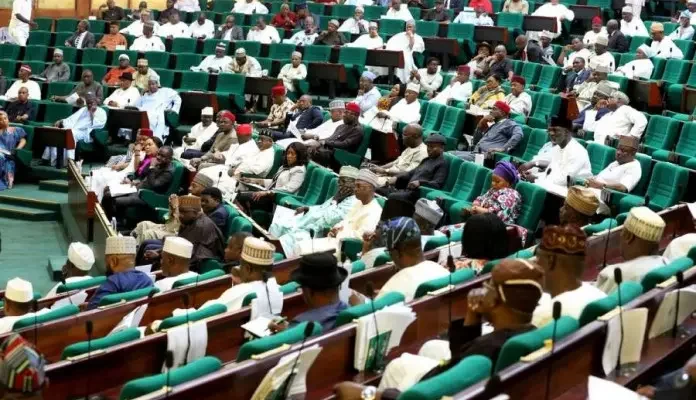
On 23 December 2025, the House of Representatives passed the Electoral Act Amendment Bill after scaling third reading, paving the way for its transmission to the Senate for concurrence. The bill introduces provisions intended to enhance transparency and strengthen the credibility of elections, while simultaneously reviving concerns about money politics and enduring weaknesses in Nigeria’s electoral framework.
At the heart of the amendment is the mandatory electronic transmission of election results, a reform long advocated by civil society groups and election observers. The approved clause states that “the presiding officer shall electronically transmit the results from each polling unit to the IReV portal in real time, and such transmission shall be done after the prescribed form EC8A has been signed and stamped by the presiding officer and/or countersigned by the candidates or polling unit agents, where available at the polling unit.”
Lawmakers say the provision is designed to close the long-standing gap between voting at polling units and final collation — a stage of the electoral process that has historically been vulnerable to manipulation. By mandating the immediate upload of results, the law seeks to make post-voting alterations more difficult and improve public confidence in declared outcomes.
The INEC Result Viewing (IReV) portal, which gained prominence during recent election cycles, is among the technological tools introduced by the electoral commission to improve transparency and reinforce the integrity of the process.
However, its inconsistent deployment during the 2023 general elections exposed both technical and institutional weaknesses, fuelling legal disputes and public scepticism.
To strengthen accountability under the new transmission regime, the amendment prescribes stiff sanctions for electoral officials who deliberately falsify results, including jail terms of up to five years.
Proponents argue that the threat of imprisonment could deter misconduct and reduce the volume of post-election litigation that has become a defining feature of Nigeria’s democratic experience.
The bill also reinforces the legal status of digital voter accreditation. According to the approved clause, “to vote, the presiding officer shall use a bimodal voter accreditation system or any other technological device that may be prescribed by the commission for the accreditation of voters to verify, confirm or authenticate the particulars of the intending voter in the manner prescribed by the commission.”
To address failures linked to malfunctioning devices — a recurring issue in recent elections — the amendment provides that “where a bimodal voter accreditation system or any other technological device deployed for accreditation of voters fails to function in any unit and a fresh BVAS or technological device is not deployed, the election in that unit shall be cancelled and another election shall be scheduled within 24 hours,” provided INEC is satisfied that the outcome could “substantially affect the final result of the whole election and declaration of a winner.”
These reforms build on the Nigerian Electoral Act, 2022, which was widely hailed at the time of its passage for introducing electronic accreditation, early primaries and clearer timelines for electoral activities. However, the Act also revealed significant lapses in implementation.
Ambiguities around electronic transmission, weak enforcement of campaign finance rules, and the absence of clear sanctions for internal party misconduct undermined its impact during the 2023 elections. Court rulings that placed heavy emphasis on manual records over electronic uploads further exposed the limits of the law and reinforced calls for tighter, more explicit provisions.
Alongside transparency-focused reforms, the House approved amendments that significantly increase campaign spending limits across all elective offices. Presidential candidates will now be permitted to spend up to ₦10 billion, double the previous ceiling of ₦5 billion.
Governorship candidates’ limits were raised to ₦3 billion, while senatorial and House of Representatives candidates may spend up to ₦500 million and ₦250 million respectively. In addition, the cap on individual donations was increased from ₦50 million to ₦500 million.
While lawmakers defended the increases as a response to rising campaign costs and economic realities, critics warn that the new thresholds could further entrench money-driven politics, tilt the playing field in favour of wealthy aspirants and established political structures, and marginalise grassroots candidates.
Perhaps the most contentious moment in the amendment process was the rejection of a proposal to criminalise vote buying during party primaries. Clause 89(4) of the amendment report had proposed that “a person that financially or materially induces a delegate for the purpose of influencing the outcome of the party primaries, congresses and conventions commits an offence and is liable on conviction to imprisonment of two years without an option of fine.”
Despite the severity of the provision, lawmakers voted it down — a decision that drew sharp criticism from civil society organisations and political observers who argue that party primaries are the breeding ground of electoral corruption.
Former presidential candidate Peter Obi condemned the rejection, warning that “elections built on inducement and bribery cannot produce credible leadership.” He argued that allowing vote buying at the primary level — where candidates emerge — erodes democratic integrity and normalises corruption across society. He also insisted that failure to regulate inducement within parties undermines broader electoral reforms, as flawed primaries often determine the quality of candidates presented to voters during general elections.
Taken together, the amendments reflect a legislature attempting to balance electoral integrity with political realities. While the emphasis on technology, transparency and accountability marks a significant step forward, the expansion of campaign spending limits and the refusal to criminalise vote buying at party primaries expose deep contradictions within the reform agenda.
As the bill moves to the Senate and, ultimately, the President for assent, its final form will be closely scrutinised. Ultimately, the effectiveness of the new electoral law will depend not only on the strength of its provisions, but on the political will to enforce them. As Nigeria inches closer to 2027, the direction of the coming months — and the credibility of the next general elections — will be shaped as much by these reforms as by the failures they leave unresolved.