


By Oscar Okhifo
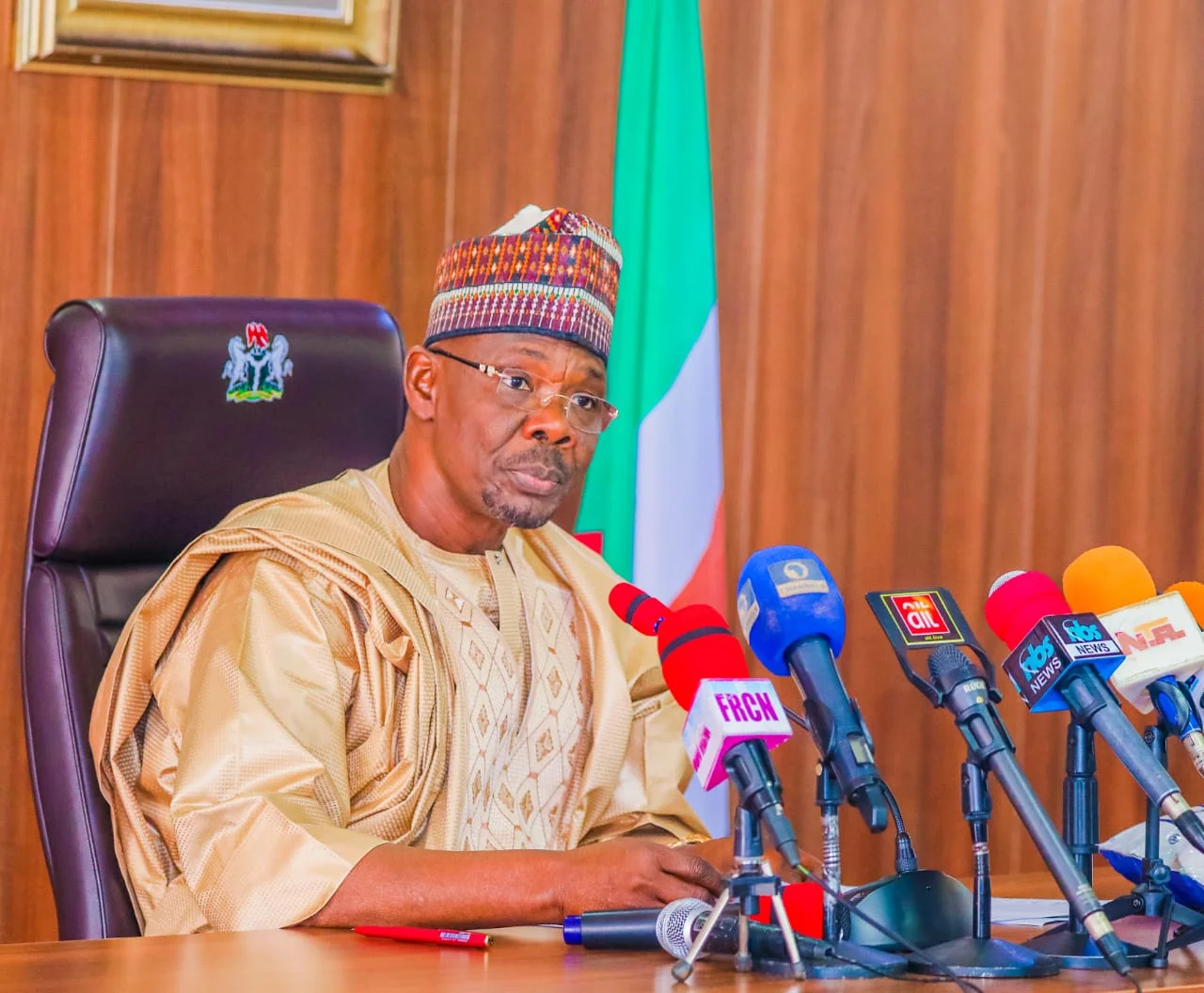
Governor Abdullahi Sule of Nasarawa State has said Nigeria’s Constitution does not require political parties to balance presidential tickets along religious lines, expressing confidence that the country could, in the future, elect a Christian-Christian ticket just as it has twice elected Muslim-Muslim pairings.
Speaking on Tuesday during an appearance on Politics Today, a Channels Television programme, Sule argued that the 1999 Constitution places greater emphasis on federal character, fairness and inclusiveness than on the religious composition of presidential tickets.
According to the governor, while political parties may consider religious and regional factors in selecting presidential running mates, such decisions are matters of political strategy rather than constitutional obligation.
“I believe one day Nigeria will have a Christian-Christian ticket that will also win an election,” Sule said, adding that the Constitution guarantees fairness through the principle of federal character and does not prescribe religious affiliation as a criterion for selecting a presidential candidate or vice-presidential nominee.
Drawing from Nigeria’s political history, Sule cited the June 12, 1993 presidential election, in which the late Chief Moshood Kashimawo Olawale (M.K.O.) Abiola and his running mate, Babagana Kingibe, both Muslims, contested on a Muslim-Muslim ticket. The election is widely regarded as one of the freest and fairest in the country’s history, although its outcome was annulled.
He also referenced the 2023 presidential election, in which President Bola Tinubu and Vice President Kashim Shettima were elected on a Muslim-Muslim ticket despite widespread debate over its religious composition.
According to Sule, both elections demonstrated that Nigerians ultimately decide who occupies public office through the ballot box.
Responding to criticism from the vice-presidential candidate of the New Nigeria Peoples Party (NNPP) in the 2023 election, Bishop Isaac Idahosa, over political representation ahead of the 2027 elections, Sule dismissed the comments as routine opposition politics.
“That is the work of the opposition. They will always criticise what the ruling party is doing. We expect that, and there is nothing wrong with it,” he said.
Sule’s remarks come amid renewed discussions over the composition of the All Progressives Congress (APC) ticket ahead of the 2027 general election. Senior figures within the ruling party have repeatedly defended President Bola Tinubu’s decision to retain Vice President Kashim Shettima as his running mate, arguing that there is no compelling reason to alter a ticket that secured victory in the 2023 election.
Supporters of the arrangement maintain that leadership competence, performance and national cohesion should take precedence over religious considerations, while critics continue to argue that balancing Nigeria’s religious diversity at the highest level of government remains an important factor in promoting inclusion and national unity.
Sule maintained that competence, constitutionalism and national interest should remain the primary considerations in the selection of political leaders rather than religious affiliation alone.
His comments are expected to rekindle debate over the role of religion in Nigeria’s electoral politics as political parties gradually begin positioning for the 2027 general election. Although the Constitution does not mandate religious balancing in presidential tickets, the issue has remained one of the country’s most sensitive political considerations because of Nigeria’s religious and ethnic diversity.