


110
By Tracy Moses
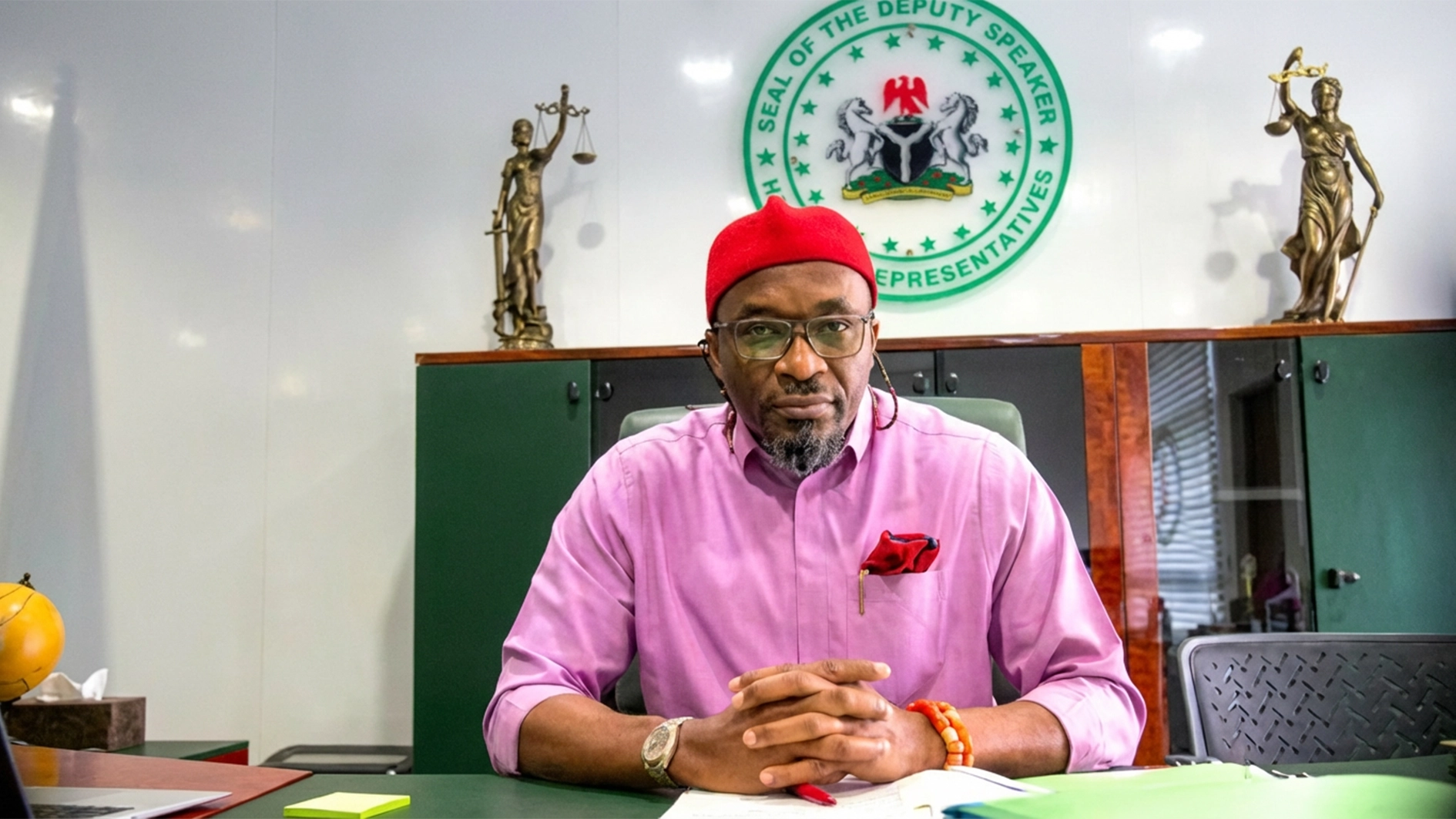
The Deputy Speaker of the House of Representatives, Benjamin Kalu has said that a Doctor of Philosophy (PhD) degree is not merely an academic title but a call to greater responsibility, as he was conferred with a Doctor of Laws by the University of Calabar (UNICAL).
Kalu made this assertion during the University’s 38th Convocation Ceremony, where his doctoral research was also recognised as one of the most outstanding projects, earning a place at the institution’s Achievement Exhibition on Contribution to Knowledge.
Delivering the vote of thanks on behalf of the PhD graduating class, the Deputy Speaker described the doctoral journey as “demanding, humbling, and transformative,” noting that it requires resilience, discipline, and intellectual depth.
Quoting the Greek philosopher Aristotle, he said, “The roots of education are bitter, but the fruit is sweet,” highlighting the sacrifices behind every doctoral thesis, including sleepless nights and rigorous academic engagement.
Reflecting on his academic journey, Kalu noted that the moment was particularly significant, having completed his educational progression at the University of Calabar, where he earlier obtained his LL.B and LL.M degrees.
He emphasised that earning a PhD comes with a higher obligation to society, urging fellow graduands to ensure that their research contributes meaningfully to national development and addresses real-world challenges.
Citing former South African President Nelson Mandela, Kalu said, “Education is the most powerful weapon which you can use to change the world,” underscoring the critical role of knowledge in driving societal transformation.
He further referenced data from the National Bureau of Statistics, which estimates that fewer than 100,000 Nigerians hold doctoral degrees in a population of over 220 million. According to him, this places PhD holders within a small but vital community tasked with providing intellectual leadership.
Highlighting his legislative efforts in the education sector, Kalu reaffirmed his commitment to expanding access to quality education through initiatives such as the Federal College of Education, Bende; the Federal University of Medical and Health Sciences, Item Bende; and the proposed Federal University, Okigwe.
He described these institutions as long-term investments in Nigeria’s intellectual future rather than mere political achievements.
Kalu concluded by urging fellow PhD holders to become agents of change by bridging the gap between academic knowledge and societal progress.
He also expressed appreciation to the University’s Governing Council, Senate, academic staff, and his supervisors for recognising his research as one of the most outstanding contributions to knowledge.