


1.3K
By Daniel Adaji
Nigeria’s banking sector has successfully raised over ₦4 trillion in its ongoing recapitalisation drive, the Central Bank of Nigeria (CBN) has confirmed, as institutions rush to meet regulatory requirements ahead of the March 31, 2026, deadline.
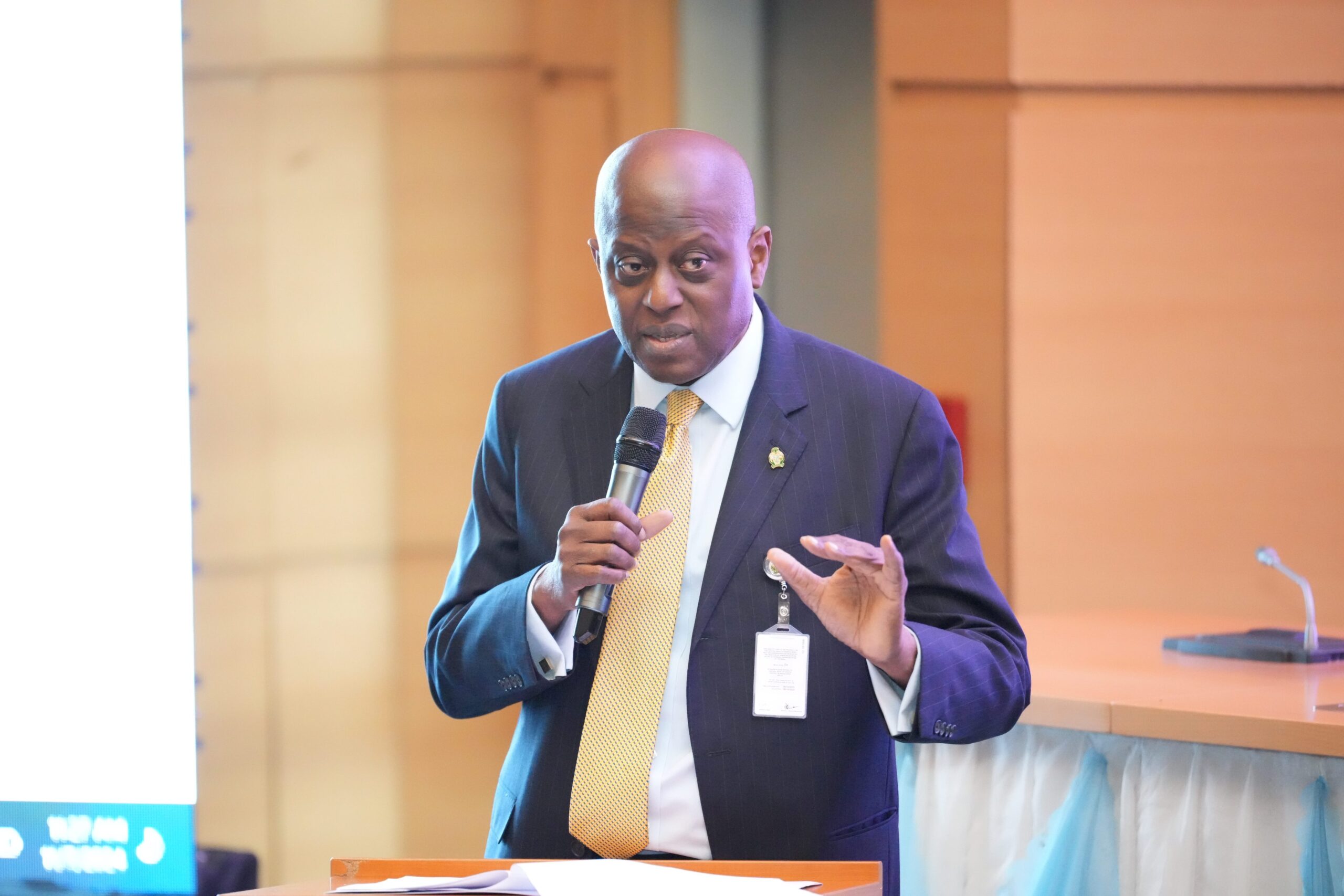
Governor of the CBN, Mr. Olayemi Cardoso, disclosed this progress at the close of the 304th Monetary Policy Committee (MPC) media briefing on Tuesday, noting that the recapitalisation programme is proceeding “in accordance with the approved regulatory timetable, with activity accelerating as the March 31, 2026, deadline nears.”
According to Governor Cardoso, 20 banks have fully met the new minimum capital requirements, while a further 13 banks are at advanced stages of capital raising and are expected to complete the process within the stipulated timeframe.
“Institutions still finalising their plans are assessing a variety of strategic options, including consolidation where suitable, as part of efforts to meet compliance within the remaining timeframe,” he explained.
As of February 19, 2026, the total verified and approved capital raised under the programme stood at ₦4.05 trillion, with ₦2.90 trillion (71.67%) mobilised domestically and US$706.84 million, estimated at ₦1.15 trillion (28.33%), reflecting foreign participation. Governor Cardoso highlighted that “this balanced mix signals broad investor engagement and growing confidence in the sector.”
The CBN Governor also addressed the status of banks under regulatory intervention, noting that “specific legal and structural factors influence the order of recapitalisation measures for these banks.”
He reassured stakeholders that depositor funds remain secure and that operations continue under strict regulatory oversight, adding that the CBN remains actively engaged with relevant stakeholders “to ensure orderly and credible outcomes while maintaining financial stability.”
The current pace of compliance, coupled with ongoing capital-raising activity, has prompted optimism that “the market would see substantial alignment with the new capital requirements by the cut-off date,” Governor Cardoso said.
The recapitalisation drive began in March 2024, when the CBN formally directed banks to raise fresh capital in line with Nigeria’s evolving economic realities and ambition to build a $1 trillion economy. At the time, the apex bank announced a 24-month compliance window, setting March 31, 2026, as the deadline for banks to meet the revised minimum capital thresholds.
Under the new framework, commercial banks with international authorisation are required to raise their minimum capital to ₦500 billion, national banks to ₦200 billion, and regional banks to ₦50 billion. Merchant banks must meet a ₦50 billion threshold, while non-interest banks are required to maintain ₦20 billion for national operations and ₦10 billion for regional licences.
The policy is designed to strengthen the resilience of Nigeria’s banking sector, enhance shock absorption capacity, and position lenders to support larger-scale economic activities amid ongoing reforms and macroeconomic adjustments.