


683
By Tracy Moses
The House of Representatives Ad-hoc Committee probing spending in Nigeria’s power sector has accused electricity Distribution Companies (DisCos) of failing to meet their obligations to consumers, 13 years after the privatisation of the industry, which was intended to improve electricity supply nationwide.
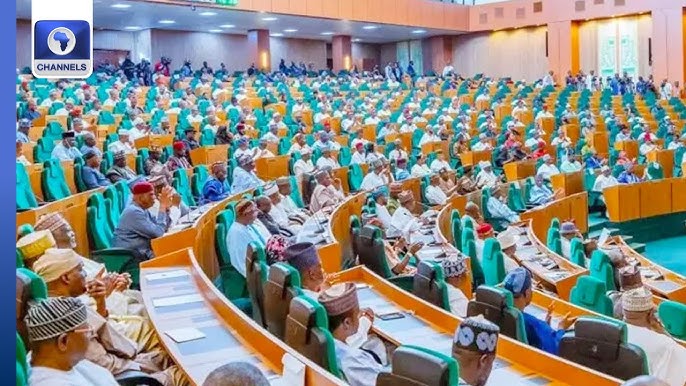
The allegations came on Thursday during the resumed investigative hearing of the Committee, as officials of Abuja, Port Harcourt, and Benin Electricity Distribution Companies appeared before lawmakers.
Chairman of the Committee, Hon. Ibrahim Al-Mustapha Aliyu, said the promise of stable and improved electricity supply that motivated privatisation has largely remained unfulfilled, leaving Nigerians frustrated.
“Public perception across the country is that DisCos are the weakest link in the power value chain,” Aliyu said. “Many of them fell into the hands of individuals who are not genuine investors and who lack the willingness to invest but instead exploit the system.”
He noted that 13 years after privatisation, most DisCos are yet to demonstrate deliberate, concrete investments capable of improving electricity supply nationwide.
Citing Abuja Electricity Distribution Company as an example, Aliyu said the company prioritises high-income urban centres while neglecting rural and less profitable areas.
“Abuja DisCo covers areas as far as Kontagora, yet their focus remains Abuja because that is where the money is. Large parts of Kontagora remain without electricity because extending lines to those communities is considered economically unviable,” he said.
Aliyu stressed that such practices contradict the objectives of privatisation, which were meant to ensure equitable access to electricity across the country.
He also questioned the financial returns from DisCos, noting that while private investors own 60 per cent of the companies and the Federal Government retains 40 per cent equity, the government has not received any dividend.
“If I ask how much dividend has been paid to the government on its 40 per cent equity, the answer is zero,” he said. He added that DisCos often claim to be investing at a loss, despite benefiting from government interventions.
Aliyu recalled that the Federal Government had extended several financial lifelines to the sector, including loans from the Central Bank of Nigeria, all funded by taxpayers.
“These interventions are financed with public funds, yet the same taxpayers remain the worst hit by poor electricity supply,” he said.
He disclosed that the Committee has begun discussions with investors and co-investors in the DisCos to explore ways of improving service delivery.
“We must have honest conversations as Nigerians on how to rescue this situation,” he added.
Also speaking, Hon. Billy Osawaru lamented that consumers are being forced to shoulder the burden of DisCos’ operational failures.
Osawaru said Nigerians are compelled to purchase electricity meters that should be provided free, while communities contribute funds to procure transformers, poles, and other infrastructure, assets that are later taken over by DisCos without compensation.
Another Committee member, Hon. Okorie, accused DisCos of neglecting their core responsibilities, citing instances where communities remained without power for extended periods due to vandalised equipment that was not repaired.
He narrated how one community stayed in darkness until the House Committee on Public Petitions intervened, prompting the DisCo to act.
“Only when the House directed them to reconnect the community did they discover the extent of the vandalism,” Okorie said.
Okorie added that the community, through its local government chairman, mobilised youths to monitor power installations, leading to the arrest and prosecution of vandals within a week.
“This shows that vandalism can be curbed when there is a healthy relationship between DisCos and host communities,” he said.
He argued that widespread consumer rights abuses contribute significantly to vandalism, noting that communities often lose interest in protecting infrastructure they funded but no longer control.
“You cannot expect a community to spend N50 million on equipment, hand it over to a DisCo without compensation, and still expect the youths to protect it,” Okorie said.
In response, Mr. Evwienure Agama, Chief Financial Officer of Benin Electricity Distribution Company, representing the DisCos, told the Committee that they face multiple operational challenges.
He cited obsolete infrastructure, electricity theft, meter bypass, where customers tamper with meters to reduce billing, vandalism, and revenue shortfalls as major obstacles to their performance.