


786
By Tracy Moses
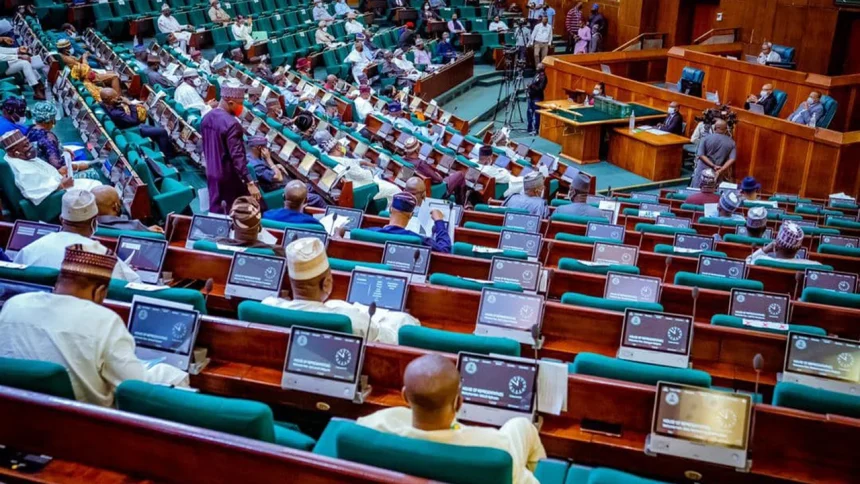
The House of Representatives on Thursday dismissed reports alleging that an executive bill seeking to rename Nigeria as the United States of Nigeria is currently before the parliament.
Recent social media posts had claimed that President Bola Ahmed Tinubu submitted a proposal to the National Assembly to change the country’s name and abolish Shariah criminal law in the northern region. The House says no such bill exists.
Addressing journalists during the presentation of the first batch of prioritised constitutional amendment bills, the House spokesperson and member of the Constitutional Review Committee, Hon. Akin Rotimi Jr., categorically denied the reports.
Rotimi stated that the Presidency had not forwarded any bill related to a change of the country’s name.
“I can confirm that there is no such executive bill before the House. None whatsoever. And that is all I will say on that,” he said.
He revealed that the House and Senate have harmonised 44 constitution alteration bills, which will soon be presented for voting.
“There are 44 bills that have been jointly harmonised by both chambers. Because we operate a bicameral legislature, we have been working closely with our counterparts in the Senate, led by Senator Jibrin Barau, to ensure alignment,” Rotimi explained.
He also clarified misconceptions surrounding the recent engagement between First Lady Senator Oluremi Tinubu and members of the National Assembly at the Presidential Villa. According to him, her discussions focused solely on the Reserved Seats Bill aimed at increasing women’s representation in parliament.
“I was at that event. The First Lady spoke extensively about the Reserved Seats Bill, which she is passionate about as a former lawmaker. The Vice President, members of the Federal Executive Council, and other stakeholders were present to discuss that particular bill, nothing about changing the country’s name was mentioned,” he noted.
Rotimi added that over 350 proposed constitutional amendment bills were initially considered by the review committee before being streamlined.
“We started with more than 350 bills. At different stages, we reduced them to about 80, then to around 60, and now we have slightly over 40 proposals moving to the next phase,” he said.