


536
By Tracy Moses
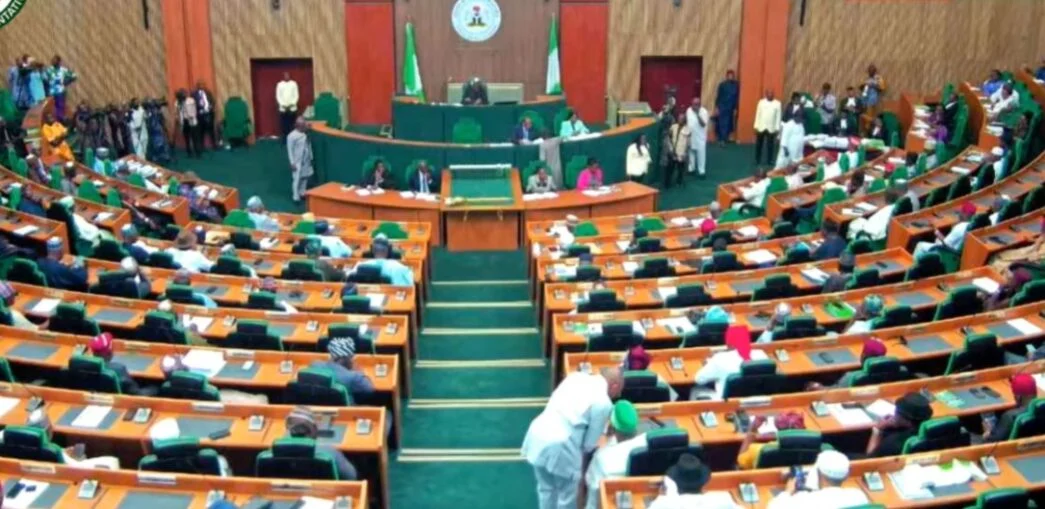
The House of Representatives on Thursday approved President Bola Ahmed Tinubu’s ₦58.18 trillion 2026 Appropriation Bill, throwing its weight behind the administration’s economic reform agenda while acknowledging that the ongoing reforms, though painful, are necessary to reposition the country for sustainable growth.
The budget, titled “The Budget of Consolidation, Renewed Resilience and Shared Prosperity,” was presented to a joint session of the National Assembly on December 19, 2025. It is the third full budget of the
Tinubu administration.
Lawmakers described the fiscal plan as a critical instrument for economic consolidation after years of fiscal strain, weak revenue performance, rising public debt and deep-rooted structural distortions in the economy.
Since assuming office in May 2023, the Tinubu administration has embarked on far-reaching economic reforms aimed at correcting long-standing imbalances.
These include the removal of petrol subsidy, liberalisation of the foreign exchange market and an aggressive drive to expand government revenue while blocking financial leakages.
Although the measures initially triggered sharp increases in the cost of living and inflationary pressures, the government has consistently maintained that the reforms were unavoidable after years of unsustainable spending and economic mismanagement.
Leading the debate on the general principles of the budget, the Leader of the House, Rep. Julius Ihonvbere, said the administration inherited what he described as “distorted and disarticulated institutions,” stressing that meaningful reforms could not be painless. “Development that is not sustainable is not development at all,” Ihonvbere said.
“We should not deceive ourselves, reforms are painful, but they are inevitable if this country must grow, stabilise and compete globally.”
He said recent macroeconomic indicators, as presented by the executive, suggested that the reform agenda was beginning to yield positive results ahead of the 2026 fiscal year.
According to him, Nigeria’s economic growth rate has improved to about 3.98 per cent, while inflation has moderated to 14.45 per cent from previous highs of around 25 per cent. He also cited improved revenue performance, increased exports and rising foreign direct investment inflows.
On currency stability, Ihonvbere noted that the naira had strengthened and stabilised at about ₦1,400 to the dollar, compared to over ₦1,800 previously.
“Our external reserves have climbed to about $47 billion, which is a seven-year high and enough to cover over 10 months of imports,” he said.
“These are indicators that the economy is gradually stabilising.”
He further attributed the improvement to fiscal discipline under the current administration.
“We have not printed a single naira since this government came into office,” Ihonvbere said. “That level of discipline is helping to stabilise the economy and restore confidence.”
A breakdown of the approved budget shows projected total revenue of ₦34.33 trillion against total expenditure of ₦58.18 trillion, resulting in a deficit of ₦23.85 trillion. Non-debt recurrent expenditure is estimated at ₦15.25 trillion, while capital expenditure stands at ₦26.08 trillion.
Lawmakers said the increased capital allocation reflects a deliberate shift from consumption-driven spending to infrastructure-led and sustainable development.
“This is a clear departure from the past where recurrent expenditure dominated,” Ihonvbere said. “Capital investment is what drives growth, creates jobs and supports long-term national development.”
The 2026 budget assumptions include an oil benchmark price of $64.85 per barrel and daily oil production of 1.84 million barrels.
Sectoral allocations prioritise security and national stability, with ₦5.41 trillion earmarked for defence, security operations and food security interventions.
Infrastructure was allocated ₦3.56 trillion, education ₦3.54 trillion, while the health sector received ₦2.48 trillion.
The House also noted the administration’s ongoing international engagements aimed at attracting foreign investment and strengthening economic partnerships, including recent diplomatic and economic missions to countries such as Turkey.
Beyond the figures, lawmakers said the budget represents a set of commitments by the executive to improve budget discipline, enhance revenue generation through tax reforms, manage public debt prudently, invest in human capital and consolidate macroeconomic stability. “We are not saying the government is perfect,” Ihonvbere said.
“But as representatives of 360 constituencies, it is our responsibility to support policies that will move the country forward while also guiding the government to do the right things.”
Following contributions from members, Speaker Tajudeen Abbas put the question to a voice vote, with the “ayes” overwhelmingly carrying the day.
The House thereafter approved the bill and adjourned plenary for two weeks to allow committees to commence detailed budget defence sessions with ministries, departments and agencies.
“This budget is both a promise and a dream,” Ihonvbere added. “If we work together, Nigeria will be a better place, not just for us, but for generations to come.”