


534
By Tracy Moses
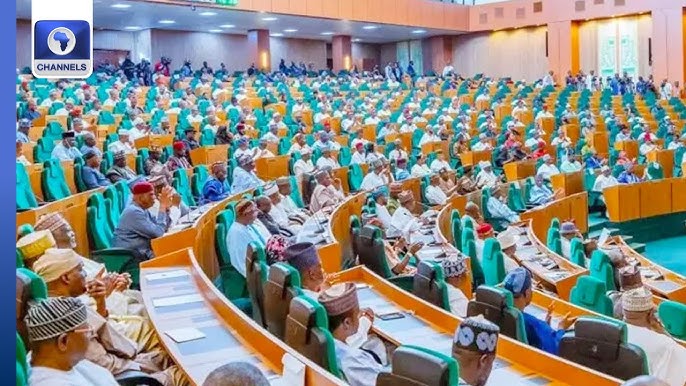
The House of Representatives on Wednesday witnessed a mild row during plenary over the propriety and public use of honorary academic titles, following the announcement of an honorary doctorate conferred on a Kogi lawmaker.
The disagreement arose shortly after the Speaker, Rt. Hon. Tajudeen Abbas, announced a letter notifying the House of an honour awarded to the Deputy Majority Leader, Hon. Abdullahi Halims, by Prince Abubakar Audu University, Anyigba, Kogi State.
Halims, who represents Ankpa/Olamaboro/Omala Federal Constituency and is a chieftain of the All Progressives Congress (APC), informed the House that the state-owned university had conferred on him an Honorary Doctorate Degree.
As lawmakers congratulated him from their seats, Halims rose and held the certificate aloft, turning sideways to display it to his colleagues on the floor.
The gesture, however, immediately drew an objection from Hon. Awaji-Inombek Abiante of the Peoples Democratic Party (PDP), representing Andoni/Opobo–Nkoro Federal Constituency of Rivers State, who cautioned against what he described as a blurring of the line between honorary awards and earned academic qualifications.
Recognised to speak by the Deputy Speaker, Rt. Hon. Benjamin Kalu, Abiante said there was a fundamental distinction between honorary doctorate degrees and academic doctorates obtained through rigorous scholarly work.
“There is a clear-cut difference between an honorary doctorate and a Doctor of Philosophy,” Abiante said. “They are not the same thing.”
He added: “That is why some of us, when we stand up here, do not introduce ourselves as ‘Doctor’ this or ‘Doctor’ that. I will not sacrifice my years of labour in the academic environment for someone who just got honoured. We must maintain that distinction, sir.”
Although no further debate was entertained on the matter, Abiante’s remarks were met with loud approval from lawmakers across party lines.
In his ruling, Deputy Speaker Kalu acknowledged the concerns raised and directed the House Committee on Rules and Business to examine the issue and make recommendations on how the House should formally address the distinction between honorary and earned doctoral degrees.
“The concerns raised are noted,” Kalu said. “The appropriate committee is hereby mandated to look into this matter and advise the House accordingly.”
The exchange touches on a long-standing controversy in Nigeria over the social and professional use of honorary doctorate titles, particularly by public office holders.
Across the country, universities, both public and private, frequently confer honorary degrees on politicians, business leaders, entertainers, and other public figures, often in recognition of philanthropy, influence, or perceived contributions to society.
However, unlike a Doctor of Philosophy (PhD), honorary doctorates do not require academic coursework, original research, or the defence of a thesis.
International academic convention discourages recipients from adopting the “Dr” title in formal or professional settings, except where explicitly permitted for ceremonial purposes.
In Nigeria, the practice has continued to generate debate within academic and professional circles, with critics arguing that the widespread public use of honorary titles diminishes the value of rigorous scholarship and academic training.
Wednesday’s episode at the House of Representatives is the latest indication that the controversy has now entered the legislative arena, with lawmakers seeking clearer institutional guidelines that recognise honorary awards while preserving the integrity of earned academic qualifications.