


By Godswill Michael
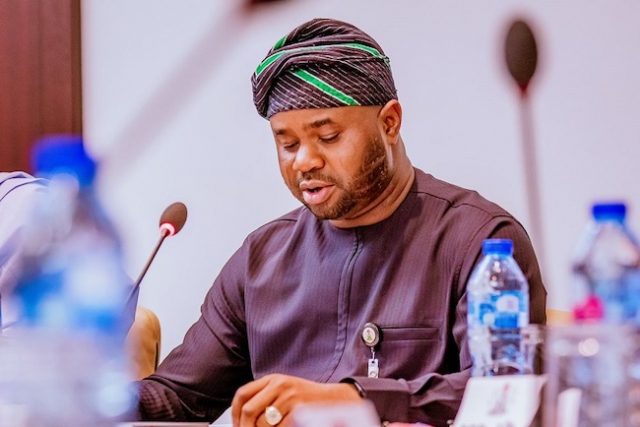
The Executive Chairman of the Nigeria Revenue Service, Dr Zacch Adedeji, has said the operation of the Nigerian National Petroleum Company Limited-owned refineries is no longer critical to Nigeria’s energy security, given the significant expansion of private refining capacity in the country.
Adedeji stated this on Channels Television’s Politics Today on Sunday while defending the economic reforms of President Bola Tinubu and responding to questions about the government’s handling of the country’s state-owned refineries.
Asked whether he was concerned about the operational status of the NNPCL refineries, Adedeji said the government’s priority was to ensure adequate domestic refining capacity, regardless of whether the facilities were owned by the government or private investors.
“Honestly, it doesn’t matter to us,” he said.
“If you look at it, today, through Mr. President’s initiative of Nigeria for good, we have 700 [thousand barrels per day] refinery capacity,” he added.
Adedeji was referring principally to the Dangote Petroleum Refinery in Lagos, which has a nameplate capacity of 650,000 barrels per day and has recently processed more than 700,000 barrels per day during a performance test.
He said the government was primarily concerned with energy security and reducing Nigeria’s dependence on imported refined petroleum products.
“So whether it is done by private or it is done by government, because we are one cycle, honestly, that is of no interest to us,” he said.
“Today, we have refinery working in Nigeria that has helped us in our energy security through the initiative of Mr. President.”
His comments come amid continuing uncertainty over the future of Nigeria’s state-owned refineries in Port Harcourt, Warri and Kaduna.
The three facilities have historically been central to successive governments’ plans to reduce the country’s dependence on imported petroleum products. However, years of inadequate maintenance, operational challenges and delays in rehabilitation have prevented them from sustaining commercial output.
The US Energy Information Administration lists the nameplate capacities of the Port Harcourt, Warri and Kaduna refineries at 210,000 barrels per day, 125,000 bpd and 110,000 bpd respectively. In its latest country analysis, it classified the three facilities as shut-in, while listing the 650,000-bpd Dangote refinery as operating.
NNPCL reviews state refineries
The NNPCL has also acknowledged the challenges facing the government-owned refineries.
In July 2025, the company said it had ruled out selling the Port Harcourt refinery but was undertaking further technical and financial reviews of the Port Harcourt, Kaduna and Warri facilities.
The NNPCL Group Chief Executive Officer, Bashir Bayo Ojulari, described the earlier decision to operate the Port Harcourt refinery before completing its rehabilitation as “ill-informed and sub-commercial,” while maintaining that the company remained committed to completing and upgrading the facility.
The issue has remained politically sensitive, particularly because of the substantial public funds committed to refinery rehabilitation over the years without sustained commercial output.
For Adedeji, however, the emergence of large-scale private refining has fundamentally changed the equation.
He argued that the government’s economic policies had created an environment that encouraged private investment in refining and helped reduce the country’s dependence on imported petroleum products.
“Whether Nigeria, the one in our business is working or not? Honestly, it’s of no significant cost to us,” he said.
He added that the NNPCL was already pursuing partnerships involving the state-owned facilities but maintained that the immediate priority should be ensuring adequate domestic refining capacity.
“I know they are into partnership, but make sure that the Chinese government make it more important to marry us,” he said.
Subsidy removal boosted refining investment
Adedeji also linked the expansion of domestic refining capacity to President Tinubu’s decision to remove the petrol subsidy shortly after assuming office in May 2023.
He argued that the subsidy regime distorted the petroleum market and discouraged investment in commercially viable refining capacity.
According to him, removing the subsidy helped create a more market-oriented environment for private investors.
“Prior to 2023, I told you that we only have refinery capacity of 10,000 a day. Today, we have 700,000 refinery capacity,” he said.
He described the decision to remove the subsidy as a “courageous decision” that helped change the structure of the downstream petroleum sector.
Adedeji has repeatedly defended the subsidy removal, arguing that maintaining it would have imposed an unsustainable burden on public finances.
During the same interview, he said the cost of the subsidy could have risen to about N53tn under prevailing conditions had it not been removed.
He also claimed that the naira could have depreciated to about N3,500 to the dollar without the administration’s foreign exchange reforms.
Revenue and infrastructure
The NRS chairman also defended the government against criticism that increased revenue had not translated proportionately into improved living conditions for Nigerians.
He said increased government revenue was being channelled into infrastructure and other productive activities, rather than simply being retained by the Federal Government.
Adedeji stressed the distinction between Federation revenue and Federal Government revenue, noting that states and local governments receive significant portions of federally collected revenue.
“Ninety per cent of VAT goes to states,” he said.
He argued that higher revenue collections had consequently strengthened the financial position of sub-national governments.
The NRS chairman also distinguished between government funding and private financing, saying major infrastructure projects could attract private capital where government established appropriate structures.
“For the fund is structured. You pay the funds, the contractor looks for the rest,” he said.
He cited projects such as the Lagos-Calabar Coastal Highway and airport development as examples of infrastructure projects that could leverage private financing.
Power sector reforms
Adedeji also pointed to reforms in the electricity sector, saying the government had changed the legal framework to enable states to participate more directly in electricity generation, transmission and distribution.
He said the administration had introduced incentives aimed at attracting private investment into the sector and argued that addressing structural weaknesses in the electricity market would encourage investment and improve industrial productivity.
According to him, Nigeria had moved from what he described as crisis management towards economic consolidation.
“We’ve moved from crisis management in our economy to constantly there’s a stage,” he said.
He urged Nigerians to give the reforms more time, arguing that several of the policies were still at an early stage and that their benefits would become more visible as investment, domestic production and infrastructure expanded.
The debate over the future of the NNPCL refineries is likely to continue as the government weighs the cost of rehabilitating the ageing facilities against the growing role of private refineries.
For Adedeji, however, the central issue is not whether every government-owned refinery is operational, but whether Nigeria has enough domestic refining capacity to meet its energy needs and reduce dependence on imports.
“Today, we have refinery working in Nigeria that has helped us in our energy security,” he said.