


By Oscar Okhifo
The battle for the 2027 presidential election gathered momentum on Friday as the African Democratic Congress (ADC) inaugurated its Presidential Campaign Council in Abuja, with its chairman, Kashim Ibrahim-Imam, declaring that President Bola Tinubu “has to go” over worsening economic hardship, insecurity and declining living standards.
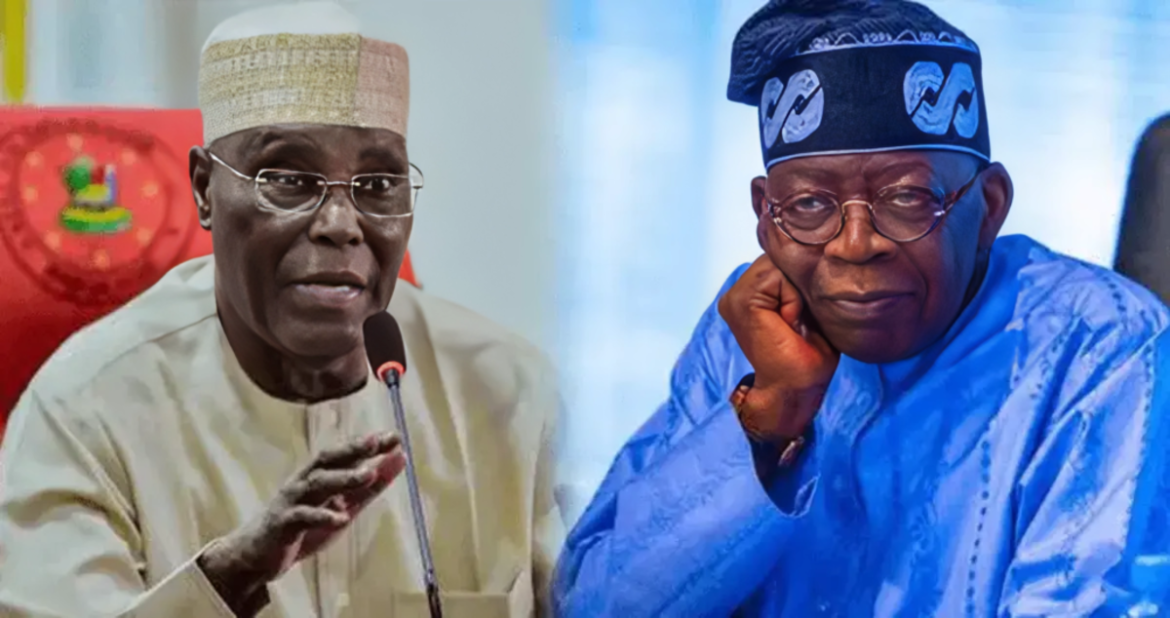
In an address titled Why Tinubu Has to Go, Ibrahim-Imam described the inauguration as the beginning of a national rescue mission, urging Nigerians to reject Tinubu’s re-election bid and support former Vice-President Atiku Abubakar and his running mate, former Rivers State Governor Rotimi Amaechi.
“Let no one mistake this gathering for a ceremony. We have not come here to collect titles. We have come here to begin a rescue,” he declared.
The inauguration formally sets the ADC’s presidential campaign machinery in motion, giving the opposition party a central structure to coordinate its mobilisation and challenge the ruling All Progressives Congress (APC) ahead of the election.
Ibrahim-Imam called on Nigerians to take the campaign’s message to communities across the country.
“Before I proceed, let me ask these pertinent questions: Are you tired? Are you hungry? Are you ready for a change?” he asked.
“Then hear me today, and carry what you hear to every street, every market, every motor park, every mosque and every church in this land.”
His address focused on the economy, rising public debt, insecurity and the cost of living, while presenting Atiku as an experienced alternative to Tinubu.
Economic hardship and unemployment
Ibrahim-Imam argued that Nigeria’s abundant natural resources and human capital should have made widespread poverty and hunger avoidable.
“God did not short-change Nigeria. He gave us oil and gas, solid minerals in every geopolitical zone, land that grows yam and rice, cocoa and cassava, and sunshine all year round. And above all, He gave us people: more than two hundred million of the most hardworking, most enterprising, most resilient people on the face of the earth,” he said.
Citing India and China as examples of countries that had harnessed their populations for economic development, he argued that Nigeria’s large population should be an asset rather than a burden.
“Population is a blessing when leadership treats it as a workforce. It becomes a burden only when leadership treats it as a crowd to be managed until the next election,” he said.
The campaign chairman also cited the educational achievements of Nigerians living abroad, arguing that their success demonstrated the country’s untapped potential.
“In the United States, the Migration Policy Institute found that 61 per cent of Nigerian immigrants hold at least a bachelor’s degree. For Americans born in America, the figure is 32 per cent. Hear it well: the Nigerian who leaves our shores is about twice as likely to hold a university degree as the citizen of the richest nation on earth!” he said.
He listed Nigerian doctors, nurses, engineers, lawyers and professors working abroad as evidence that the country’s challenges were not caused by a lack of talent or ambition.
“These are not lazy people. These are not dull people. The Nigerian is sound in mind, sharp in intellect and fierce in ambition. Wherever the Nigerian finds light, the Nigerian shines!” he declared.
Questioning why young Nigerians increasingly sought opportunities abroad, he asked: “So I ask you: why must our children cross the desert and the sea before they are allowed to shine? Why has japa become the dream of every graduate?”
He blamed the situation on leadership failures and the inability of the economy to provide sufficient opportunities for young people entering the labour market.
Ibrahim-Imam also accused the administration of extravagance, contrasting the struggles of ordinary Nigerians with government spending on luxury items and political officeholders.
“While the young graduate counts his last transport fare, this government counts its luxuries,” he said.
Rising public debt
The campaign chairman also criticised the growth of Nigeria’s public debt under Tinubu, citing figures from the Debt Management Office (DMO).
“When this government took over, the Debt Management Office put Nigeria’s total public debt at 87.38 trillion naira. By 30 June 2026, it was 166.79 trillion naira,” he said.
“Hear it again. In three years, the debt has nearly doubled!”
He questioned the benefits Nigerians had received from the additional borrowing, particularly amid the hardship associated with the removal of the petrol subsidy and other economic reforms.
According to him, the government had promised to use savings from subsidy removal to finance infrastructure and improve public services, but the benefits had not translated into meaningful relief for households.
“They told you the subsidy savings would build roads, hospitals and schools. Then the Finance Minister himself conceded that the savings were swallowed by debt servicing. The money that took food from your table and your child out of school went to pay interest on loans you never saw,” he said.
“They borrowed in your name. They spent in their own. And they will hand the bill to your children.”
He challenged the administration to explain how the rising debt burden had improved living conditions and who had benefited from the borrowing.
The ADC is expected to make public debt, government spending and the management of national resources central issues in its challenge to Tinubu. However, the party will also face pressure to explain how its own economic proposals would be funded and implemented.
Insecurity and the cost of living
Beyond the economy, Ibrahim-Imam accused the Tinubu administration of failing to protect lives and property, citing killings, kidnappings and attacks on communities across the country.
He referred to violence in Benue State and other parts of Nigeria, citing figures attributed to Amnesty International on deaths recorded in several states during the administration’s first two years.
“Go to Benue. Ask the Tiv farmer whose barn was burnt and whose brothers were buried in one grave,” he said.
“Nobody declared war on Nigeria. Yet villages empty like war zones, and mothers sleep with their shoes on.”
He also cited figures attributed to SBM Intelligence on kidnappings between July 2025 and June 2026, arguing that the scale of abductions and ransom payments demonstrated the severity of the security crisis.
“Human beings carried away like goods!” he said.
Recalling the abduction of pupils and staff of St Mary’s School in Papiri, Niger State, in November 2025, Ibrahim-Imam said the incident illustrated the fear confronting parents and communities.
“Remember Papiri in Niger State. In November 2025, gunmen took 315 pupils and staff of St Mary’s School. Children! Their parents did not sleep,” he said.
He described the protection of citizens as a fundamental responsibility of government.
“A government that cannot protect your life has no right to ask for your vote,” he declared.
He then urged the audience to join him in chanting: “Protect us or leave us!”
On the economy, Ibrahim-Imam linked the removal of the petrol subsidy to rising transportation costs and the wider increase in the cost of living.
He recalled that petrol prices rose sharply following Tinubu’s announcement of the subsidy removal on May 29, 2023, arguing that the increase had driven up transport fares and placed additional pressure on household budgets.
“On 29 May 2023 he declared subsidy gone, and by the next day petrol at NNPC stations had jumped from 195 naira to 537 naira. It later crossed 1,000 naira,” he said.
“Transport followed. Food followed. Rent followed. School fees followed. Everything followed except salaries.”
To illustrate the effects of rising costs, he cited the struggles of traders, workers, parents and pensioners in different parts of the country.
He described an Onitsha trader who could no longer stock an entire shop, a fisherwoman in Bayelsa struggling to feed her children, a commercial driver in Lagos battling rising costs and a retired teacher in Ekiti State forced to choose between buying medicines and meeting other needs.
He also referred to a mother in Benin City whose daughter was considering migrating through Libya and a Kano tailor who had sold his second sewing machine to pay a hospital bill.
The examples, he argued, demonstrated that the effects of economic policies cut across ethnic, regional and occupational lines.
“Is there anything cheap in this country today? Is your salary enough? Has the Renewed Hope renewed your hope?” he asked.
“Then why should we renew his mandate? We will not!”
For Atiku and Amaechi, the campaign presents an opportunity to explain how their proposed policies would address the cost of living and other economic challenges. They will also need to demonstrate how their plans would be financed and implemented.
‘Awalokan’ versus ‘Emilokan’
In a direct political message to Tinubu, Ibrahim-Imam invoked the expression “Awalokan” as a counterpoint to the President’s well-known “Emilokan” slogan, which means “it is my turn”.
He recalled Tinubu’s use of the expression during the 2022 presidential campaign, arguing that the President’s time in office had failed to deliver the relief Nigerians expected.
“In June 2022, in Abeokuta, a man stood before a crowd and shouted Emilokan. It is my turn. Not Nigeria’s turn. Not the poor man’s turn. His turn,” Ibrahim-Imam said.
“Well, he has had his turn. And look at what he has done with it. See what his turn has turned us and our country to.”
He also referred to criticism of the administration by religious leaders, including Catholic bishops who visited the President at the State House.
According to Ibrahim-Imam, Cardinal John Onaiyekan recounted that Tinubu had told the delegation the nation was not bleeding when they raised concerns about the country’s condition.
“When the Catholic Bishops went to Aso Rock in July and told him the nation was bleeding, Cardinal Onaiyekan later recounted that the President told them the nation was not bleeding,” he said.
“Go and tell that to Benue! Go and tell that to Papiri! Go and tell that to the woman in the Adamawa market!”
He also cited a gathering of Islamic clerics in Kano, which he said had condemned killings, kidnappings and economic policies that had worsened hardship.
Ibrahim-Imam argued that such concerns demonstrated that dissatisfaction with the administration extended beyond partisan politics.
“I stand with them! Their concerns are genuine!” he declared.
“The Church has spoken. The Mosque has spoken. When the altar and the mimbar speak with one voice, the nation must listen!”
He further criticised what he described as the contrast between the comfort enjoyed by political officeholders and the hardship confronting ordinary Nigerians.
Invoking the politics of Bourdillon, a reference to Tinubu’s Lagos residence and political influence, he urged Nigerians to embrace Awalokan as a demand for leadership that prioritises their welfare.
“So today we respond to Emilokan with Awalokan. It is our turn! The turn of the farmer and the trader! The turn of the student and the pensioner! The turn of the okada rider and the unemployed graduate!” he said.
He then led the audience in a chant of “Emilokan!” followed by “Awalokan!”, presenting the latter as a rallying slogan for the opposition campaign.
Atiku’s record in government
Ibrahim-Imam also invoked Tinubu’s past expressions of support for Atiku, citing a letter the President reportedly signed in November 2016 to mark the former Vice-President’s 70th birthday.
“The President knows exactly who Atiku is. In November 2016, when Atiku turned 70, Tinubu signed a letter to him, called him his dear brother, and wrote: Nigeria needs you and others like you to continue to make life more meaningful. Not my words. His words,” he said.
He also recalled Tinubu’s reported support for Atiku’s presidential ambition in 2007, arguing that the President had previously recognised the former Vice-President’s leadership qualities.
“In 2007, he supported Atiku for the presidency, because he knew there was a great deposit of vitality in Atiku, and he knew Nigeria needed Atiku,” Ibrahim-Imam said.
“He was right the first time. Nigeria needs Atiku, and the poor of this nation need him most of all!”
Atiku, who served as Vice-President from 1999 to 2007, is seeking the presidency on the ADC platform after several previous presidential contests.
Defending his record, Ibrahim-Imam cited economic growth, an increase in foreign reserves, Nigeria’s exit from the Paris Club debt burden and the expansion of telecommunications services during the administration of former President Olusegun Obasanjo.
“Between 1999 and 2007, with Atiku Abubakar as Vice President and statutory chairman of the National Economic Council, Nigeria’s economy grew from 58 billion dollars to 270 billion dollars,” he said.
“Our foreign reserves rose from about 3.7 billion dollars to about 45 billion dollars. Nigeria walked out of the Paris Club debt trap in 2006. The GSM revolution put a telephone in the hand of the ordinary Nigerian.”
He argued that Atiku’s experience in government should count in assessing his suitability for the presidency.
“He is not learning on the job. He has done the job!” he declared.
Contrasting the record he attributed to the Obasanjo administration with the current government’s rising debt burden, Ibrahim-Imam said: “One man doubled the debt. The other man cleared it. One man says endure. The other man says relief. One man says it is my turn. The other man says it is your turn. Choose!”
Atiku’s experience is expected to be a central element of the ADC’s campaign. However, he will also face questions about his previous time in government and how his proposed policies would address Nigeria’s current economic and security challenges.
Campaign council tasked with grassroots mobilisation
Ibrahim-Imam charged members of the campaign council to recognise the responsibility before them, saying their assignment extended beyond securing victory at the polls.
“Distinguished members of this Council, today you are not being handed an honour. You are being handed a burden, the heaviest burden in Nigeria: the hope of a hungry people,” he said.
He urged them to identify with the struggles of ordinary Nigerians and take the campaign’s message to communities across the country.
“When the woman in the Adamawa market asks who is coming to help her, the answer must be: this Council. When the fisherwoman in Bayelsa and the trader in Onitsha ask who will speak for them, the answer must be: this Council,” he said.
He warned against factionalism, envy and complacency among campaign officials, stressing that victory would depend on sustained grassroots mobilisation.
“So hear me clearly. There is no room in this Council for faction. There is no room for envy. There is no room for the man who sits in Abuja waiting for the campaign to come and meet him,” he declared.
“This campaign will be won in the polling units, and that is where every one of us must be found.”
He said the campaign would take its message to markets, motor parks, village squares, churches and mosques, adding that members would be expected to remain vigilant throughout the electoral process.
“The Council is inaugurated today. The work begins tonight!” he said.
Ibrahim-Imam also called on Nigerians to obtain their permanent voter cards (PVCs), participate in the election and protect their votes.
“In 100 days, on 16 January 2027, Nigeria will choose,” he said.
“Collect your voter’s card. Go out early. Stay until the result is counted and posted. Guard your vote with your eyes, not with your fists, because a peaceful people in their millions cannot be rigged out of their own country.”
He urged Nigerians to see the election as an opportunity to demand better leadership and hold political officeholders accountable.
“Do it for the woman in the Adamawa market. Do it for the fisherwoman in the Bayelsa creeks. Do it for the danfo driver in Oshodi. Do it for the Tiv farmer who buried his brothers. Do it for the parents of Papiri,” he said.
“Do it for the graduate who has stopped telling his mother he is still looking for work. Do it for yourself!”
Atiku urged to reassure Nigerians
In the closing part of his address, Ibrahim-Imam turned directly to Atiku, expressing confidence in the former Vice-President’s competence and readiness to lead the country.
“Your Excellency, Wazirin Adamawa. I know you are ready. I know your competence. I know the record of the man who sat at the head of the National Economic Council while a 58 billion dollar economy grew into a 270 billion dollar one,” he said.
“If you were not ready, I would not be standing here today as Chairman of your Campaign Council.”
He then challenged Atiku to reassure Nigerians personally that he was prepared to tackle the country’s problems.
“But these people deserve to hear it from your own lips. So, before God and before the suffering people of Nigeria, let me put it to you,” Ibrahim-Imam said.
“Waziri, are you ready?
“Are you ready to end this suffering?”
Following the exchange, he told the audience: “Nigerians, you have heard him! The Waziri is ready! Now I ask you: are you ready?”
He concluded with a direct comparison between the two presidential contenders.
“Tinubu priced you out of your own country. Atiku will bring you back in,” he declared.
On behalf of the campaign council, Ibrahim-Imam pledged commitment to the task ahead.
“Your Excellency, on behalf of every member of this Council, I accept this assignment. We will not fail you, and we will not fail Nigeria,” he said.
He ended the address with prayers for the ADC, Nigerians and the country.
The inauguration marks a significant step in the ADC’s preparations for the 2027 presidential election, providing a central structure for coordinating its campaign, mobilising supporters and presenting its proposed alternative to the Tinubu administration.
With Amaechi as Atiku’s running mate and Ibrahim-Imam leading the campaign council, attention will now turn to the party’s ability to sustain nationwide mobilisation, manage internal differences and translate its criticism of the government into credible policy proposals.
For Tinubu, the opposition campaign presents another challenge to his re-election bid. For Atiku and Amaechi, the task is to convert public dissatisfaction with the incumbent into confidence in their own ticket.
Ultimately, the ADC’s prospects will depend not only on its message of economic recovery, security and accountability but also on its ability to convince voters that it has practical solutions to Nigeria’s problems.