


663
By Tracy Moses
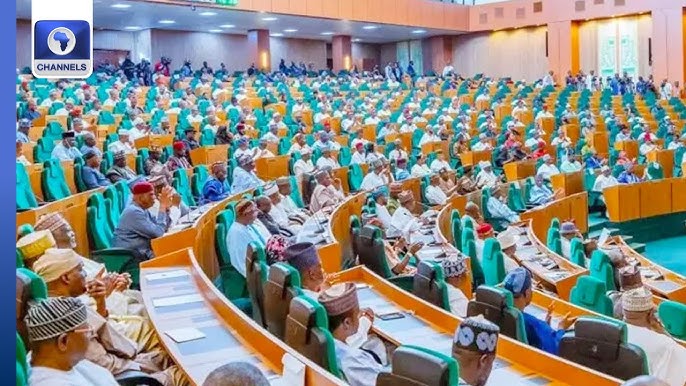
The House of Representatives has approved an investigation into alleged discriminatory recruitment practices at the University of Calabar Teaching Hospital (UCTH), following claims that the institution’s Chief Medical Director (CMD), Prof. Ikpeme Asanye Ikpeme, rejected medical doctors posted to the hospital on ethnic grounds.
At the same plenary session on Thursday, lawmakers also raised serious concerns over Nigeria’s worsening poverty and food insecurity situation, particularly in the North East, calling for urgent interventions to revive agricultural activities and support displaced farmers in the region.
The resolutions followed the adoption of two separate motions.
Moving the first motion, Hon. Iduma Igariwey, who represents Afikpo North/South Federal Constituency of Ebonyi State, told the House that print, electronic and social media reports alleged that Prof. Ikpeme rejected a list of 17 newly graduated medical doctors posted to UCTH by the Medical and Dental Council of Nigeria (MDCN) for the mandatory one-year housemanship programme.
He noted that UCTH is a component of the University of Calabar, a federal institution established to promote excellence in learning, professionalism and national integration.
According to him, reports indicated that 15 of the 17 doctors on the list were of Igbo extraction, a development that allegedly informed the CMD’s refusal to accept them.
“The reports indicate that 15 of the 17 doctors are of Igbo extraction, yet the CMD allegedly rejected the list on this basis. This is not only unfortunate but a clear violation of the Constitution of the Federal Republic of Nigeria,” Hon. Igariwey said.
The lawmaker further disclosed that despite interventions by the National Association of Resident Doctors (NARD), UCTH chapter, and the Nigerian Medical Association (NMA), Cross River State branch, the CMD was said to have maintained his position.
The House expressed concern that rejecting duly posted medical doctors on the basis of tribe or region contravenes Section 42 of the 1999 Constitution (as amended), which guarantees every citizen freedom from discrimination on grounds of ethnicity, place of origin or religion.
Lawmakers also warned that such actions could further weaken Nigeria’s already fragile healthcare system, noting that the country currently has about 40,000 licensed medical doctors, far below the estimated 300,000 required to meet national healthcare needs.
“The conduct of a senior federal officer in rejecting medical doctors on ethnic grounds is capable of encouraging brain drain, deepening ethnic divisions and undermining national unity,” Igariwey added.
Consequently, the House resolved to mandate the Committee on Health Institutions to immediately investigate the allegations and report back within four weeks. It also called on the Federal Ministry of Health to suspend Prof. Ikpeme pending the outcome of the investigation, in order to prevent any possible interference.
In a separate motion, sponsored by Yobe lawmaker, Khadija Ibrahim, the House was informed of an escalating poverty and hunger across the country, with particular reference to the North East region.
He noted that recent estimates indicate that about 139 million Nigerians, approximately 61 per cent of the population, are currently living below the national poverty line, with projections suggesting the figure could rise to 141 million by 2026 due to inflation and sluggish economic growth.
“Millions of Nigerians can no longer afford basic food items and essential services. This situation is particularly dire for women, children, the elderly and internally displaced persons,” Hon. Waziri-Bukar said.
He also cited projections by the United Nations World Food Programme, which indicate that about 35 million Nigerians could experience severe food insecurity in 2026, the highest number on the African continent.
Waziri-Bukar observed that the North East, traditionally an agrarian region, has suffered prolonged disruptions to farming activities due to insurgency, mass displacement, destruction of farmlands and loss of productive assets. Although security has improved in parts of the region, many farmers remain unable to resume full agricultural activities due to lack of access to farm inputs, credit facilities, extension services, irrigation systems, storage infrastructure and rural roads.
He warned that failure to reintegrate displaced farmers into agricultural recovery programmes could further entrench poverty, hunger and dependency, with grave implications for national food security, economic stability and peace-building efforts.
Accordingly, the House urged the Federal Government, in line with Section 14(2)(b) of the Constitution, to strengthen and harmonise poverty reduction, food security and post-conflict agricultural recovery initiatives, with deliberate focus on agrarian communities affected by insecurity.
It also mandated the Federal Ministry of Agriculture and Food Security, in collaboration with relevant Ministries, Departments and Agencies, to mainstream farmers in the North East into existing agricultural recovery programmes by ensuring timely access to farm inputs, credit support, mechanisation, irrigation facilities, storage infrastructure and value-chain development.
The House further directed its relevant committees to intensify oversight of agricultural recovery and poverty alleviation interventions to ensure transparency, inclusiveness and measurable impact. Both motions were unanimously adopted following the customary voice vote.