


743
By Tracy Moses
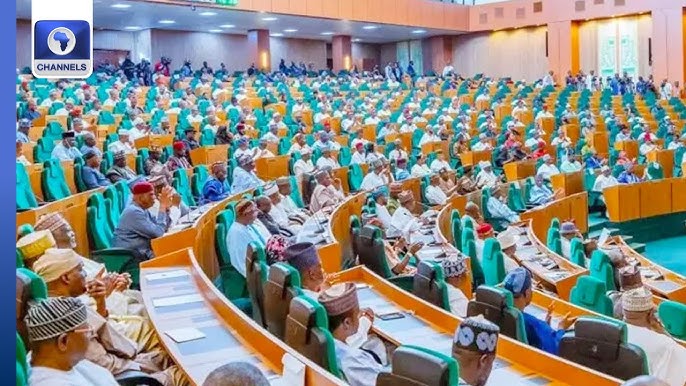
A move by the House of Representatives to amend the Constitution and provide statutory funding for traditional councils has ignited contrasting reactions from two former members of the Federal Executive Council, Professors Tunde Adeniran and Taoheed Adedoja.
The proposal, which is currently undergoing legislative consideration in the House, emerged from recommendations adopted by the House Committee on Constitution Review led by the Deputy Speaker, Rt. Hon. Benjamin Kalu.
The committee is seeking an amendment to Section 162 of the 1999 Constitution (as amended) to establish a stable funding mechanism for traditional institutions nationwide.
Section 162 regulates the Distributable Pool Account and currently provides that funds allocated to local government councils within a state shall be shared among them based on terms determined by the State House of Assembly.
Under the proposed amendment, lawmakers are recommending the insertion of an additional proviso after Sub-section (8), which would compel state legislatures to enact laws guaranteeing direct financial allocations to traditional councils. The provision stipulates that not less than five per cent of funds standing to the credit of local government councils in a state should be paid directly to the head of the traditional council.
If approved, the amendment would mark a significant shift by granting traditional institutions a constitutionally backed funding source, thereby reducing their dependence on discretionary allocations from state and local governments.
However, the proposal has continued to generate debate among stakeholders.
Reacting to the development, former Minister of Education, Prof. Tunde Adeniran, expressed reservations about embedding traditional institutions into the Constitution through statutory funding.
Speaking exclusively with Pointblanknews.com, he argued that the diversity of traditional systems across Nigeria makes a uniform national approach unsuitable. “Traditional institutions are not the same across states, either in structure or relevance,” Adeniran said.
“They should not be politicised or subjected to national uniformity. These matters are better addressed by sub-national governments in line with their historical and cultural realities.”
He cautioned that constitutionalising funding for traditional rulers could complicate governance arrangements at the federal level.
“Challenges at the centre should not be worsened by introducing constitutional provisions for traditional institutions,” he said, adding that states should retain full discretion over how such institutions are funded and administered.
Taking a different position, former Minister of Sports and Special Duties, Prof. Taoheed Adedoja, welcomed the proposed amendment, describing it as a practical step towards strengthening grassroots governance and stability. “Traditional institutions remain the closest authority to the people at the community level,” Adedoja said.
“They are deeply involved in resolving disputes, handling land and family issues, and maintaining peace through culturally recognised processes.”
According to him, guaranteed funding would improve the responsiveness and effectiveness of traditional rulers.
“When adequately funded, they can intervene promptly in conflicts and help reduce the burden on conventional courts that are already overwhelmed,” he said.
“Their role in sustaining peace and order at the local level cannot be overstated.”
Adedoja also underscored the cultural importance of traditional rulers, arguing that financial support is essential for preserving Nigeria’s heritage. “They are custodians of indigenous history, culture and moral values,” he said.
“Funding helps with documenting local histories, organising cultural festivals and transmitting values that foster unity, respect and social identity.”
Beyond culture, he noted that traditional institutions play a critical role in mobilising communities for development and security initiatives.
“They are effective platforms for community mobilisation around sanitation, public health campaigns, school enrolment and grassroots security efforts,” Adedoja said.
“Budgetary support will strengthen their collaboration with local governments, vigilante groups and early-warning systems.”
The call for constitutional recognition and funding of traditional institutions has remained a recurring theme in Nigeria’s constitutional reform debates since the return to civilian rule in 1999.
Despite their continued relevance in community leadership, dispute resolution and cultural preservation, traditional rulers currently have no clearly defined constitutional role.
While advocates believe statutory funding would enhance their independence, dignity and operational effectiveness, critics continue to raise concerns about accountability, fiscal sustainability and role definition, issues expected to feature prominently as lawmakers intensify deliberations on the proposal in the weeks ahead.