


1K
By Tracy Moses
The House of Representatives has urged the 36 State Houses of Assembly to support the passage of the Special Seats for Women Bill, as part of ongoing constitutional reforms aimed at strengthening gender inclusion in governance.
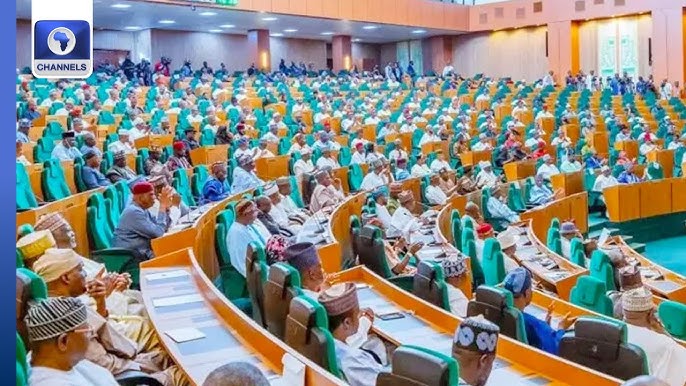
The resolution followed the adoption of a motion of urgent public importance sponsored by the lawmaker representing Lagos State, Jesse Onuakalusi, during Thursday’s plenary presided over by the Speaker, Tajudeen Abbas.
Presenting the motion, Onuakalusi described the proposed legislation as a critical step toward correcting long-standing gender imbalance in Nigeria’s political space.
“This bill represents a defining moment for our democracy. It is an opportunity to deepen inclusion, expand representation and strengthen governance outcomes,” he said.
He noted that although women constitute nearly half of Nigeria’s population and contribute significantly to national development, their participation in elective and appointive positions remains extremely low.
“Women remain grossly underrepresented in elective and appointive positions across all tiers of government, with representation persistently below five per cent in elective offices—one of the lowest globally,” he said.
According to him, the imbalance reflects a deeper democratic challenge that limits the effectiveness of governance.
“This persistent underrepresentation constitutes a fundamental democratic deficit, depriving governance structures of diversity, inclusivity and balanced policy formulation,” he added.
Onuakalusi explained that the Special Seats for Women Bill proposes a constitutionally backed affirmative action mechanism that would create additional seats for women in both the National Assembly and State Houses of Assembly.
“This is a temporary but necessary corrective measure designed to accelerate women’s inclusion while broader structural barriers are being addressed,” he said.
He cited several African countries, including Kenya, South Africa, Burundi, South Sudan and Uganda, where similar policies have significantly improved women’s political participation.
“International experience has shown that deliberate legislative intervention can transform representation and strengthen democratic institutions,” he added.
Warning of the broader implications of inaction, the lawmaker said Nigeria risks undermining its democratic progress if the imbalance persists.
“Failure to address gender inequality in political representation weakens institutional legitimacy, undermines democratic credibility and limits socio-economic development outcomes,” he said.
He further argued that increased female participation has positive ripple effects across key sectors.
“Greater inclusion of women improves policy outcomes in healthcare, education, social welfare and economic development,” he said.
The motion was overwhelmingly adopted by lawmakers when put to a voice vote.
Following its passage, the House urged state legislatures to support the bill and ensure speedy concurrence once it is transmitted after passage at the National Assembly.
It also mandated its Committees on Constitutional Review, Women Affairs and Electoral Matters to expedite work on the bill within a defined timeline.
Lawmakers further warned that failure to pass the legislation would continue to entrench exclusion and weaken Nigeria’s commitments under regional and international gender equality frameworks.
The renewed push comes amid sustained advocacy by civil society organisations and development partners seeking to address Nigeria’s persistently low female representation in politics.
Despite years of democratic practice, efforts to improve inclusion through party quotas and policy commitments have yielded limited results, largely due to structural, cultural and financial barriers.
Proponents of the bill insist that without deliberate legislative intervention, meaningful progress on gender inclusion may remain slow, making the current constitutional amendment process a critical opportunity for reform.