


1K
By Tracy Moses
The House of Representatives has called on the Federal Government to establish a comprehensive reintegration framework for Nigerian victims of human trafficking, particularly those stranded in Mali and other West African countries.
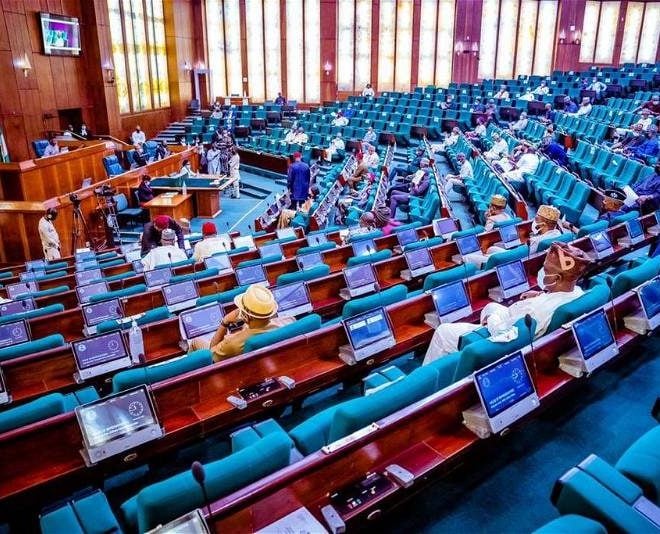
The resolution followed the adoption of a motion sponsored by the lawmaker representing Oluyole Federal Constituency of Oyo State, Tolulope Akande-Sadipe, during plenary on Thursday, presided over by the Speaker, Tajudeen Abbas.
As part of its resolutions, the House urged the Federal Government to develop a structured repatriation and reintegration programme that goes beyond rescue operations to include rehabilitation, psychosocial support and sustainable economic empowerment for victims.
Lawmakers also called for the creation of a dedicated intervention fund in the 2027 national budget to support the repatriation, rehabilitation and reintegration of trafficked Nigerians, with a focus on vulnerable groups such as girls and young women.
Moving the motion, Akande-Sadipe expressed concern over the persistent trafficking of Nigerians to Mali and neighbouring countries.
She said, “Victims are often subjected to sexual exploitation, forced labour and other forms of abuse, while traffickers continue to exploit weak systems and porous borders.”
The lawmaker warned that traffickers are increasingly targeting children.
“These criminal networks have now shifted their focus to children as young as 10 years old, many of whom are sold into brothels or exploited by organ harvesting syndicates,” she said.
Citing reports from humanitarian organisations, including the National Council of Child Rights Advocates of Nigeria, she added that hundreds of Nigerian minors remain trapped in exploitative conditions across Mali and parts of West Africa.
Akande-Sadipe further explained that victims are often deceived with promises of employment and better opportunities.
“Many of these young Nigerians are lured with false hopes, only to be trafficked across borders and subjected to inhumane and degrading conditions,” she said.
She acknowledged ongoing collaborative efforts involving the National Agency for the Prohibition of Trafficking in Persons, the Ministry of Foreign Affairs, humanitarian groups and relevant committees of the House, which recently led to the rescue and repatriation of several underage Nigerians from Mali.
However, she stressed that rescue alone is not enough.
“Without proper rehabilitation, psychosocial support and economic empowerment, many of these victims remain vulnerable to re-trafficking,” she warned.
According to her, effective reintegration requires a coordinated, multi-agency approach.
“We must adopt a comprehensive framework that includes medical care, psychological support, education, vocational training and long-term monitoring to ensure sustainable reintegration,” she said.
The House also expressed concern over persistent gaps in coordination, inadequate funding and bureaucratic delays, which it said continue to undermine Nigeria’s response to human trafficking despite its commitments under international conventions.
Following the adoption of the motion, the House mandated its Committee on Humanitarian Services to collaborate with the Committees on Diaspora, Foreign Affairs and Justice to investigate the situation of trafficked Nigerians in Mali and across West Africa.
The committees are expected to identify lapses in existing frameworks and recommend reforms aimed at strengthening anti-trafficking efforts and improving support systems for victims.
Human trafficking remains a major challenge in Nigeria, driven by poverty, unemployment and the activities of organised criminal networks. Experts note that while rescue operations have increased in recent years, the absence of a robust reintegration system continues to hinder long-term recovery and protection for victims.