


By Lizzy Chirkpi
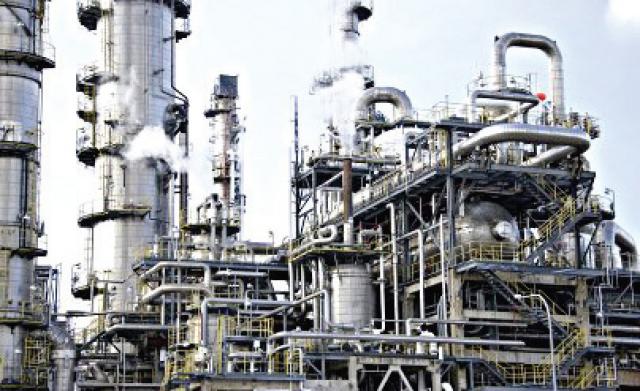
After nearly three decades of repeated Turnaround Maintenance (TAM) exercises with little to no lasting impact, Nigeria’s troubled refinery sector is once again in the spotlight. More than $5.3 billion has been spent on rehabilitation efforts since 1999, yet the country remains heavily dependent on imported fuel.
Now, the Nigerian National Petroleum Company Limited (NNPCL) has signed a fresh Memorandum of Understanding (MoU) with two Chinese firms, raising familiar questions about transparency, accountability, and whether anything will truly change this time.
A New Deal, Old Questions
On April 30, 2026, in Jiaxing City, China, NNPCL’s Group Chief Executive Officer, Bashir Bayo Ojulari, signed an MoU with Sanjiang Chemical Company Limited and Xingcheng (Fuzhou) Industrial Park Operation and Management Co. Ltd. The agreement proposes a Technical Equity Partnership aimed at reviving the Port Harcourt and Warri refineries.
The move has been presented as a renewed push to fix Nigeria’s refining capacity. But given the long history of failed rehabilitation efforts, skepticism remains widespread.
Nigeria’s major refineries—Port Harcourt, Warri, and Kaduna—were built between the 1960s and 1980s. Decades later, these ageing facilities have undergone repeated and costly repairs, yet none has delivered sustained output.
Billions Spent Across Administrations
Since 1999, successive governments have poured billions into refinery repairs:
- Under Olusegun Obasanjo (1999–2007), over $800 million was spent, with repeated claims of restored operations that never stabilized.
- During Umaru Musa Yar’Adua and Goodluck Jonathan’s administrations (2007–2015), spending rose to more than $1.6 billion. In 2012, officials claimed 60% capacity utilization—a figure widely disputed as breakdowns persisted.
- Under Muhammadu Buhari (2015–2023), over $2.9 billion was committed, including $1.5 billion for Port Harcourt and $1.48 billion for Warri and Kaduna.
Despite these investments, results have remained underwhelming. The Port Harcourt refinery, declared operational in November 2024, shut down within six months. Warri refinery has also failed to produce meaningful output.
The current administration of President Bola Tinubu has continued along the same path, with $2.39 billion in recent spending and the new Chinese partnership.
Altogether, more than $5.3 billion has been spent on refinery rehabilitation since 1999—excluding indirect or unaccounted costs.
A Pattern of Promises
The latest MoU is far from the first. Over the years, NNPC—now NNPCL—has entered multiple agreements with local and international partners, each touted as a breakthrough. Yet outcomes have consistently fallen short.
Ojulari described the new deal as a major milestone, noting it would extend beyond refining to include petrochemical and gas-based industries for long-term viability.
Still, industry experts are urging caution.
Concerns Over Transparency and Accountability
Faith Nwadishi, an extractive industry expert, questioned what makes the new arrangement different from past efforts.
“I was as curious as many Nigerians about the new MoU with China, particularly given the long history of turnaround maintenance and unfulfilled timelines, including promises that refineries would begin operations by a specific date that never materialised.”
She acknowledged that the proposed technical equity partnership could represent a shift in approach:
“In this new arrangement, the idea of technical equity partnership appears different because it suggests that the companies will not just carry out repairs and leave, but stay to ensure sustained operations of the Port Harcourt and Warri refineries, unlike previous efforts.”
However, she stressed that optimism must be matched with scrutiny.
“There has not been proper accountability for past rehabilitation efforts, so while this new model may offer some hope, there are still critical questions that NNPC must answer about how it will work in practice.”
Nwadishi also criticized NNPCL’s stance on Freedom of Information (FOI) requests:
“Each time FOI requests are made, NNPC often responds by citing its status as a private company, yet it manages resources that belong to Nigerians, and the law requires transparency from institutions operating in the public interest.”
She called for full disclosure of the agreement’s terms:
“We need clarity on what Nigeria is contributing under this equity arrangement, how it is being valued, and to ensure we do not repeat past situations where crude was taken and only limited refined products were returned, to the country’s disadvantage.”
She further emphasized the need for clear timelines and measurable outcomes:
“There must be clear timelines, defined outputs, and an understanding of how these refineries will perform, including whether lessons have been learned from previous failed contracts.”
And finally, she urged a review of past failures:
“It is important to determine what went wrong with earlier contracts and ensure that this new effort is built on those lessons rather than repeating the same mistakes, because ultimately what Nigerians need is a refinery system that works.”
Public vs Private: A Stark Contrast
The continued struggles of government-owned refineries have inevitably drawn comparisons with the Dangote Refinery. Built with private funding, it is already being seen as a functional alternative.
This contrast has fueled a persistent question: if a privately funded refinery can succeed, why has the government failed despite spending billions?
Many experts argue that the issue goes beyond funding. The refineries’ ageing infrastructure, combined with poor management and weak accountability, has made repeated repairs both inefficient and costly. Some believe that continued turnaround maintenance may even cost more than building new facilities.
Critics increasingly view the process as a channel for waste, citing opaque contracts, limited oversight, and minimal results.
The Bigger Problem
Nigeria’s refinery crisis is no longer just about ageing equipment. It is fundamentally a question of governance, transparency, and execution.
After decades of spending, the country still cannot rely on its own refining capacity. Fuel imports remain high, and public frustration continues to grow.
The latest MoU may signal another attempt at reform. But for many Nigerians, it feels like a continuation of a familiar cycle—large investments, bold promises, and disappointing outcomes.
The real question now is not whether the refineries can be fixed, but whether Nigeria is finally ready to change the approach that has failed for 27 years. Until then, the cycle may simply continue.