


1.5K
By Lizzy Chirkpi
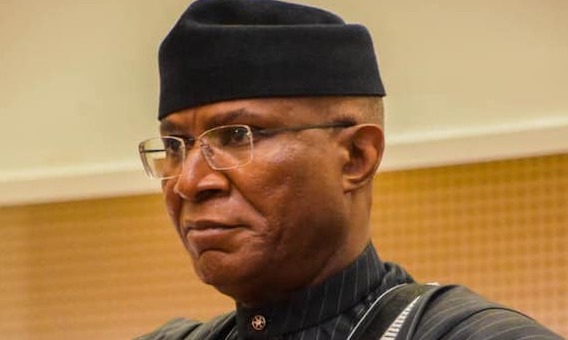
For a politician who has spent over a decade at the centre of Delta State politics and rose to become Deputy President of the Senate, the outcome of the New Democratic Congress (NDC) Delta Central Senatorial primary signifies one of the most defining moment in the political career of Senator Ovie Omo-Agege.
The former Deputy Senate President’s ambition to return to the Red Chamber suffered a dramatic blow after he was defeated by Dr. Onome Bernice Dema, a former President of the Urhobo Progress Union (UPU) North America, in a contest that exposed shifting political loyalties across Delta Central.
The defeat effectively truncates Omo-Agege’s immediate pathway back to the Senate, a chamber where he built much of his national political profile and emerged as one of the most influential politicians from Delta State in the Fourth Republic.
The primary election was expected to be a test of Omo-Agege’s enduring political structure against the growing grassroots appeal of Dema.
On paper, the former Deputy Senate President appeared difficult to beat.
His influence across Delta Central had been forged through years of political engagement, beginning from his emergence in national politics, his election to the Senate in 2015, his re-election in 2019, and his eventual rise to become Deputy President of the Ninth Senate.
As senator representing Delta Central, Omo-Agege became one of the most visible political voices from the South-South. He championed several legislative initiatives, built strong political networks across Urhobo land, and became a key figure within national power circles.
His political stature grew even further after becoming Deputy Senate President in 2019, making him one of the highest-ranking political office holders ever produced by Delta Central.
In 2023, however, his political trajectory suffered a setback when he lost the Delta State governorship election. The 2026 senatorial primary was therefore seen by many supporters as an opportunity for a political rebound and a return to the national stage.
While Omo-Agege secured convincing victories in some of his traditional strongholds, the margins proved insufficient against Dema’s overwhelming dominance elsewhere.
The former Deputy Senate President won comfortably in Ughelli North, polling 1,024 votes. He also emerged victorious in Ughelli South with 1,160 votes against Dema’s 1,146 votes.
In Udu, he recorded 900 votes compared to Dema’s 250, while in Uvwie he secured 400 votes against her 200.
Dema had already built an impregnable lead in two critical local government areas that would ultimately determine the outcome of the election.
In Sapele, she delivered one of the most astonishing results of the contest, polling 1,352 votes while Omo-Agege managed only four votes.
The story was repeated in Okpe, where Dema secured 1,650 votes against Omo-Agege’s five votes.
Those two local governments alone virtually erased every advantage Omo-Agege enjoyed in his traditional bases.
Even his narrow victory in Ethiope West, where he polled 360 votes against Dema’s 340 votes, could not alter the overall picture.
With the cancellation of results from Ethiope East, the contest ultimately came down to the areas where Dema had established overwhelming dominance.
At the conclusion of voting, Dema emerged victorious with 4,973 votes, while Omo-Agege secured 3,853 votes. Other aspirants, Akpodiete and Ineneji, polled 92 and 31 votes respectively.
What’s Next for Omo-Agege?
For Omo-Agege, the defeat raises important questions about the next phase of his political journey.
Having served two terms in the Senate, risen to the office of Deputy Senate President, and contested for governor, his political résumé remains one of the most impressive in Delta State. Yet politics is often defined by timing, momentum and public sentiment.
The NDC primary suggests that his once formidable political machinery may no longer command the same influence across every part of Delta Central.
Whether he chooses to remain active within party politics, seek another political platform, or reposition for future contests remains uncertain.
What is clear, however, is that the loss to Dema represents more than just a primary election defeat. It is an important turning point of his career that has shaped Delta politics for over a decade.
For now, the road back to the Senate has been blocked, and the Omo-Agege’s hopes of a return to the Red Chamber is bleak.
Prior to Omo-Agege’s recent defection from the All Progressives Congress (APC) to the Nigeria Democratic Congress (NDC), he stated that the APC’s current structure does not align with his principles. He cited several key reasons for making the switch, noting that his choice came after “weeks of reflection, wide consultations, and honest conversations”:
”The NDC represents that kind of leadership. It is a party built on the principles of inclusion, accountability, grassroots participation, and true federalism.”
For years, Omo-Agege was regarded as the undisputed face of the APC in Delta State.
He remained at the forefront of efforts to build the party into a viable opposition force in a state long dominated by rival political interests.
Many of his supporters argued that few politicians invested as much political capital, resources and personal influence in strengthening the APC’s structure across Delta State. Under his leadership, the party expanded its reach, recorded significant electoral gains and became more competitive in state politics.