


By Lizzy Chirkpi
The National Economic Council (NEC) on Thursday approved the release of ₦83.2 billion under the Anticipatory Action Trust Fund (AATF) to strengthen Nigeria’s preparedness for flooding and other climate-related disasters ahead of the peak of the rainy season.
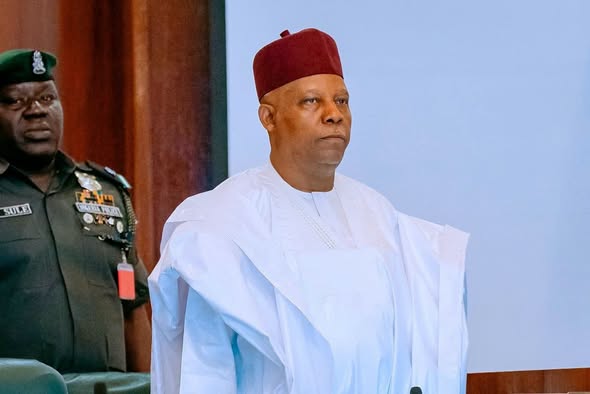
The approval was granted at the NEC meeting chaired by Vice President Kashim Shettima at the Presidential Villa, Abuja, as concerns mount over forecasts of heavy rainfall and potential flooding in several parts of the country.
Briefing journalists after the meeting, Cross River State Governor, Bassey Otu, said the intervention forms part of efforts to shift Nigeria’s disaster management framework from emergency response to proactive risk reduction.
According to him, although more than ₦166 billion was initially proposed for the initiative, the Council approved ₦83.2 billion for immediate deployment.
The fund, he explained, will support early warning systems, emergency preparedness measures, disaster mitigation projects and other interventions aimed at protecting lives, livelihoods and critical infrastructure from the impact of seasonal flooding.
Otu said the decision reflects a growing consensus among federal and state governments that disaster management must move beyond reactive responses after tragedies occur.
The Council also emphasised the need for a sustainable financing framework for emergencies, stressing that preparedness and prevention remain more cost-effective than post-disaster recovery efforts.
Shettima: Reforms Must Deliver Results
Addressing the meeting, Vice President Shettima said the success of the Tinubu administration’s economic reforms would ultimately be measured by their impact on the lives of ordinary Nigerians.
Reflecting on earlier discussions at the Council, he urged members to focus on tangible outcomes rather than policy intentions.
“When this Council last met, I called our economy a workshop—a place of measurement and correction, where plans are turned into systems and systems into institutions before they become prosperity,” Shettima said.
“A workshop is judged not by the plans pinned to its walls but by what comes off the bench. We must ask ourselves: Is the work taking shape?”
According to a statement issued by Stanley Nkwocha, Senior Special Assistant to the President on Media and Communications, the Vice President said the country is gradually transitioning from economic stabilisation to productive growth and implementation-driven governance.
“The assignment has not changed. We remain a federation moving from stabilisation to production, from aspiration to implementation, from isolated interventions to coordinated national growth,” Shettima stated.
He noted that while macroeconomic reforms are beginning to take root, social protection programmes must continue to shield vulnerable Nigerians from economic hardship.
The Vice President described investments in social welfare and safety nets as critical components of the administration’s broader economic agenda, stressing that growth must be inclusive and people-centred.
Push for Value Addition and Export Growth
Shettima also renewed calls for accelerated economic diversification, arguing that Nigeria can no longer rely on exporting raw materials while importing finished goods.
“We cannot continue to export raw materials and import finished products,” he declared.
According to him, sustainable economic growth will depend on developing a robust value chain that connects agricultural production, industrial processing and international trade.
He said:
“Nigeria’s prosperity depends on building a complete value chain linking farms to factories, factories to ports, and ports to global markets.”
The Vice President further pledged to address longstanding bottlenecks affecting agricultural exports, particularly challenges associated with port operations, logistics and compliance with international quality standards.
“A nation that cannot move its goods has imprisoned its own farmers. Meeting international standards is not submission to foreign demand; it is the price of the markets that will reward our labour,” the Vice President added.
The approval of the flood response fund comes as federal and state authorities intensify preparations for the rainy season amid warnings from meteorological agencies about heightened flood risks in vulnerable communities across the country.
In recent years, flooding has displaced thousands of residents, destroyed farmlands, damaged infrastructure and disrupted economic activities in several states, underscoring the need for stronger preventive measures and coordinated disaster management efforts.