


688
By Godswill Michael
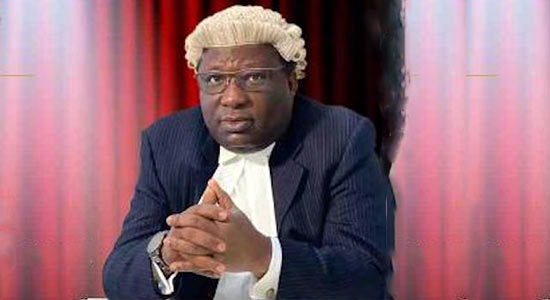
A constitutional lawyer, Tokunbo Afikuyomi, has commended President Bola Tinubu’s directive to the Economic and Financial Crimes Commission (EFCC) to return to court and seek the discharge of an order freezing the Osun State Government’s accounts, while urging continued respect for the independence of state institutions and the judiciary.
Afikuyomi, the Principal Partner of Liberty Semper Fidelis LP, said in a statement on Thursday that Tinubu’s intervention demonstrated a commitment to protecting the credibility of the forthcoming Osun State governorship election without undermining constitutional processes.
”The directive issued today by President Bola Ahmed Tinubu instructing the Economic and Financial Crimes Commission (EFCC) to return to court and seek the discharge of the order freezing the accounts of the Osun State Government deserves commendation,” he said.
According to him, the President’s determination that no action by the Federal Government should create the impression of influencing the governorship election reflects “an important appreciation of the constitutional imperative that elections must not only be free and fair but must also be seen to be so.”
Afikuyomi, however, stressed that constitutional governance requires even well-intentioned interventions to follow due process.
”The EFCC is a statutory body whose investigative and prosecutorial functions are exercised pursuant to law, while the order freezing the Osun State Government’s accounts remains a judicial order made by a court of competent jurisdiction,” he said.
He noted that by directing the anti-graft agency to return to court instead of seeking an extra-judicial resolution, Tinubu ensured that the matter would be resolved through the judicial process.
”The President has ensured that the matter remains where the Constitution requires it to be resolved: before the judiciary,” Afikuyomi added.
The lawyer also urged the President to sustain his commitment to the operational independence of investigative agencies and the constitutional authority of the courts.
”Our constitutional order rests upon the separation of powers and the independence of institutions,” he said, adding that every institution involved in the Osun governorship election should draw inspiration from the President’s commitment to safeguarding the democratic process.
Afikuyomi called on the Nigeria Police Force, the Armed Forces, the Nigeria Security and Civil Defence Corps, the Independent National Electoral Commission, election observers, National Youth Service Corps members serving as ad hoc officials, political parties, the media and the judiciary to uphold the integrity of the election.
He maintained that “free and fair elections are not negotiable” and urged all public institutions, politicians and citizens to protect Nigeria’s democratic process.
President Tinubu had earlier on Thursday directed the EFCC to immediately return to court to vacate the order freezing the Osun State Government’s accounts, saying the timing of the action, coming days before the governorship election, could create the impression of federal interference.
The President said he was “deeply embarrassed” by the timing of the agency’s action, although not by its exercise of statutory powers backed by a court order. He reiterated that he had consistently allowed anti-corruption agencies to operate independently without political interference but said the overriding public interest required him to act to preserve public confidence in the electoral process.
The EFCC was established by the Economic and Financial Crimes Commission (Establishment) Act, first enacted in 2002 and amended in 2004, to prevent, investigate, prosecute and penalise economic and financial crimes. The Act also empowers the Commission to enforce several related laws, including those on money laundering, advance fee fraud, terrorism financing, banking offences and other financial crimes. The agency exercises its investigative and prosecutorial powers independently under the framework provided by the law.