


1.4K
By Lizzy Chirkpi
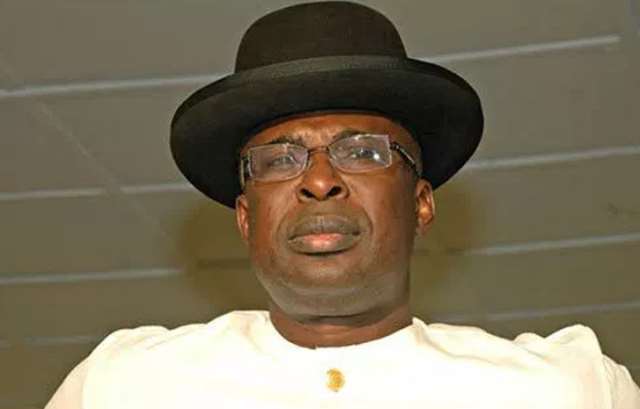
Timipre Sylva did not leave the All Progressives Congress (APC) on August 31, 2026, as a political stranger. He left as one of the politicians who helped build the party, rose through its ranks, served in its government and, until relatively recently, publicly defended President Bola Tinubu.
That makes his resignation more than another political departure.
Sylva’s political journey has taken him from the Peoples Democratic Party (PDP), through the coalition that gave birth to the APC, into the Muhammadu Buhari administration and eventually into the political camp of Tinubu.
Now, the same politician says the party has abandoned the ideals on which it was founded and that the government produced under its banner has disappointed Nigerians.
In his resignation letter, Sylva accused APC leaders of acting as though “all is fair in politics” and described the party as a “floundering ship” carrying an “irredeemable load of iniquities.”
But his political divorce from the APC did not happen overnight.
It was preceded by years of political battles, electoral setbacks, factional disputes in Bayelsa and, more recently, legal troubles that have placed him on a collision course with one of the most powerful institutions of the Federal Government.
From PDP to APC
Sylva was already an established politician before the APC was formed. He served as governor of Bayelsa State from 2007 to 2012 under the PDP.
His relationship with the party deteriorated after he lost the struggle for the party’s 2012 Bayelsa State governorship ticket, eventually drawing him towards the nPDP faction that would later join forces with other opposition groups to form the APC.
The new party offered politicians like Sylva a fresh political platform built around a promise of change and a challenge to the PDP’s long dominance of the Federal Government.
More than a decade later, Sylva is leaving that same party, accusing it of betraying the principles that attracted him to it in the first place.
Rise under Buhari
Sylva’s fortunes changed significantly after Buhari came to power.
In 2019, Buhari appointed him Minister of State for Petroleum Resources, giving the former Bayelsa governor a prominent position at the centre of Nigeria’s oil and gas policy.
But while his profile grew in Abuja, his political fortunes in Bayelsa dimmed.
In the 2019 governorship election, Sylva backed David Lyon, the APC candidate, against Douye Diri of the PDP.
Lyon won the election, but the victory lasted only a few days. The Supreme Court disqualified his running mate, Biobarakuma Degi-Eremienyo for pejury, preventing Lyon from taking office and paving the way for Diri to become governor.
For the Bayelsa APC, the episode was a major political setback. It also deepened internal divisions within the party, particularly the rivalry among leading figures seeking control of its structures and political direction.
The Tinubu Connection
By 2023, Sylva was back in the governorship race.
He resigned from Buhari’s cabinet in March that year and went on to win the APC governorship primary with 52,061 votes, although the contest generated protests from some aspirants.
At the time, his relationship with Tinubu appeared strong.
In August 2023, Sylva visited Tinubu at the Presidential Villa to seek the President’s support for his campaign. He also publicly backed Tinubu’s decision to remove the petrol subsidy.
At the APC campaign finale in Bayelsa, Tinubu urged voters to support Sylva, while Vice-President Kashim Shettima represented the President at the rally.
But the presidential backing was not enough to deliver Bayelsa.
Diri defeated Sylva in the November 2023 election, polling 175,196 votes against Sylva’s 110,108.
The defeat once again exposed the gap between Sylva’s influence within the national APC establishment and his ability to translate that influence into electoral victory in his home state.
There were other signs of trouble.
Former House of Representatives member Israel Sunny-Goli, who had been associated with Sylva, left his camp and supported Diri during the election. The development reflected the extent to which Sylva’s political network in Bayelsa had become fractured.
Still, the defeat did not immediately produce a public break between Sylva and Tinubu.
In February 2024, Sylva was still defending Tinubu’s economic policies and expressing confidence that the administration’s reforms would eventually yield positive results.
Whatever changed between then and his resignation was therefore gradual.
From Ally to Adversary?
By late 2025, Sylva’s relationship with the Federal Government had entered a much more difficult phase.
The Economic and Financial Crimes Commission (EFCC) declared him wanted over an alleged $14.86 million fraud case involving conspiracy and dishonest conversion.
Sylva disputed the allegations, insisting that he had previously honoured an invitation from the commission and accusing the agency of pursuing a political witch-hunt. The matter remained unresolved.
Then came another controversy involving allegations of a plot to overthrow the Tinubu administration.
Sylva denied any involvement in such a plot. The allegation nevertheless placed his name in a case involving some of the most serious offences against the state.
Against that background, his resignation from the APC carried a different weight.
On August 31, Sylva formally announced that he was leaving the party with immediate effect.
But rather than simply announcing his departure, he used his resignation letter to deliver a stinging assessment of the APC and the government it produced.
He said the present government had “disappointed the vast majority of Nigerians” and that he could see neither a credible attempt nor any possibility of revamping the party.
He then turned directly to the EFCC.
“I am deliberately putting the EFCC in copy of this letter because, of late, it has conducted itself more as an organ of the APC than as an institution of State,” he alleged.
Sylva also said he was aware that his decision could trigger what he described as a “redoubled witch-hunt” against him and his associates, but added that it was a risk he was prepared to take.
The EFCC’s response was immediate and unsympathetic.
Its spokesman, Dele Oyewale, said Sylva had been declared wanted and should make himself available to the commission.
That exchange has given Sylva’s political break another layer.
The Politics of Legal Scrutiny
Sylva’s allegation that state institutions could be used against political opponents cannot be established simply because he has made it. The EFCC has its own position, and the allegations against Sylva must ultimately be tested through due process.
His case, however, comes at a time when other former political insiders who have fallen out with the ruling establishment are also facing serious legal scrutiny.
Former Attorney-General of the Federation and Minister of Justice, Abubakar Malami, is facing EFCC prosecution over alleged money laundering.
Former Kaduna State Governor Nasir El-Rufai is also facing prosecution over alleged financial offences, while separate security-related allegations have surrounded him.
Neither case, however, can properly be presented as proof that political disagreements caused the prosecutions. The defendants have disputed the allegations, and the courts remain the proper place to determine their cases.
What the cases have created, nonetheless, is a political perception: that former insiders who become estranged from the establishment can suddenly find themselves operating under intense scrutiny from state institutions.
For Sylva, that perception has now become part of the story of his exit.
What Really Happened Between Sylva and Tinubu?
The more important question is whether Sylva’s departure represents the final collapse of a relationship that once appeared politically useful to both sides.
There is no publicly established single incident that explains the break between Sylva and Tinubu.
What is visible, however, is a gradual change: Sylva’s continuing difficulties within the Bayelsa APC, his defeat in 2023, the weakening of his political base and, eventually, the legal controversies that increasingly placed him at odds with the Federal Government.
His resignation is therefore both political and personal.
Sylva knows the APC from the inside. He was part of the political movement that produced it, served in its government and fought some of its most important battles.
But his political journey also demonstrates the limits of that influence.
He has twice failed to secure the Bayelsa governorship, while the internal divisions around him have persisted. His latest confrontation with the Federal Government could now mark a new chapter in his political career.
What Next for Sylva?
That makes his next move particularly important.
If he joins forces with an opposition coalition ahead of the 2027 elections, Sylva could become useful not simply because of his name but because of the story he now carries: that of a former APC insider who once defended the government but has since concluded that the party has lost its way.
Whether that message resonates beyond his immediate political circle remains to be seen.
For now, Timipre Sylva has crossed a political line that may be difficult to redraw.
He has left the party he helped build, openly criticised the government it produced and accused a major state agency of political conduct.
The APC may regard his departure as the exit of a politician whose influence has waned.
Sylva, on the other hand, appears determined to present it as a principled break.
The 2027 elections will provide the real test.
Until then, the question is not simply why Timipre Sylva left the APC. It is whether the man who once operated comfortably within the ruling establishment can turn his bitter exit into a new source of political relevance.