

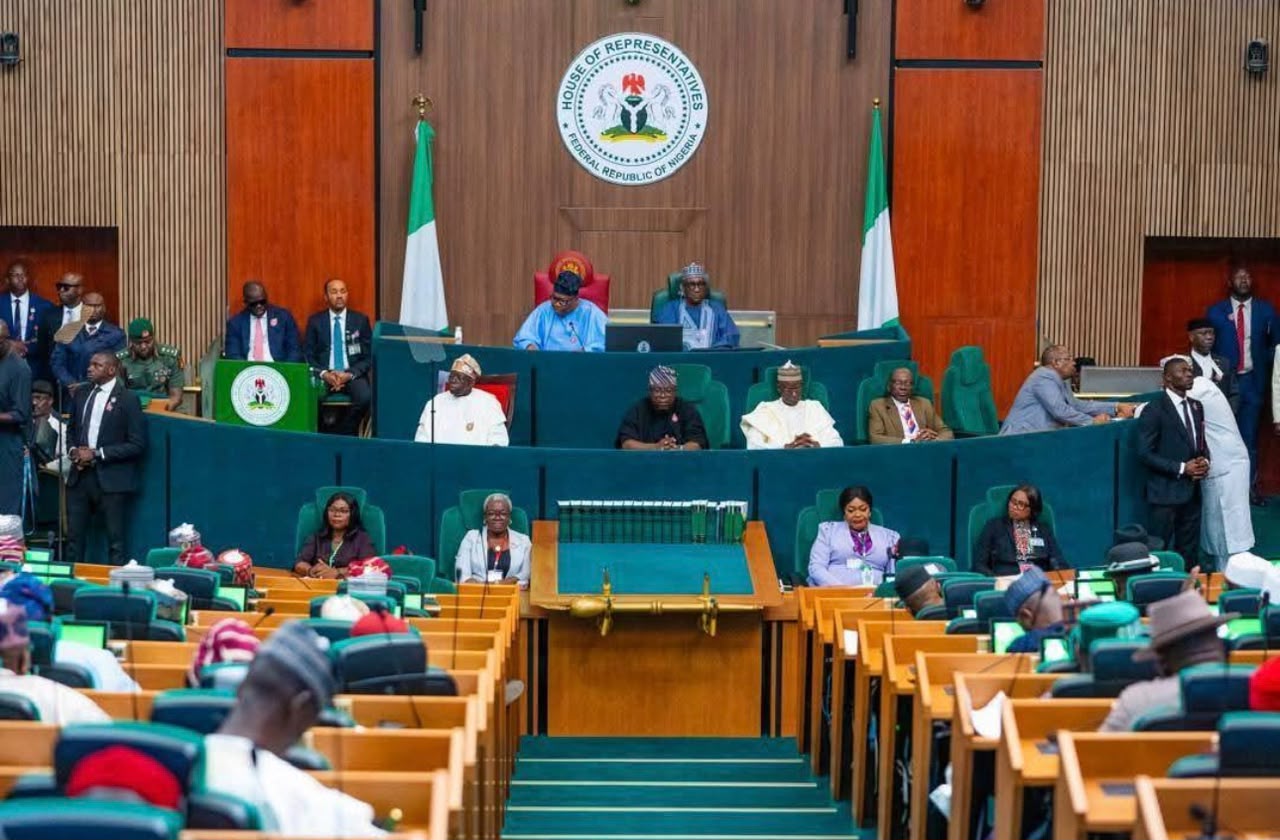

The House of Representatives has ordered an investigation into the rising incidence of human trafficking in Nigeria, mandating three of its committees to probe the activities of trafficking syndicates and assess the effectiveness of existing measures to combat the crime.
The House directed its Committees on Human Rights, Interior and Police Affairs to investigate the scale and patterns of human trafficking across the country and submit their findings within four weeks for further legislative action.
The resolution followed the adoption of a motion sponsored by Rep. Dominic Okafor, titled, “Need to Investigate the Alarming Increase in Human Trafficking in Nigeria”, at Wednesday’s plenary.
The lawmakers expressed concern over the growing threat posed by human trafficking, particularly to women, children and other vulnerable groups, describing the practice as a grave violation of human rights and human dignity.
They noted that trafficking involves the recruitment, transportation, transfer, harbouring or receipt of persons through force, coercion, deception, abuse of vulnerability or other prohibited means for the purpose of exploitation.
According to the House, victims are increasingly subjected to commercial sexual exploitation, forced labour, domestic servitude, forced begging, organ harvesting and other forms of degrading treatment.
The lawmakers identified poverty, unemployment, insecurity, displacement, irregular migration and organised criminal networks as major factors exposing Nigerians to trafficking.
They observed that traffickers often exploit the economic desperation of victims through false promises of employment, education, marriage and better opportunities abroad, only for many to end up in exploitative conditions marked by physical abuse, psychological trauma and, in some cases, death.
The House expressed particular concern over the increasingly organised and transnational nature of trafficking networks, which operate across state and international borders, taking advantage of porous borders, inadequate public awareness, weak institutional coordination and difficulties in identifying and prosecuting offenders.
While acknowledging the efforts of the National Agency for the Prohibition of Trafficking in Persons (NAPTIP), the Nigeria Police Force, the Nigeria Immigration Service and other relevant institutions, the lawmakers stressed the need to strengthen their operational capacity, funding, intelligence-sharing arrangements and victim-support mechanisms.
They also recalled the provisions of the Trafficking in Persons (Prohibition) Enforcement and Administration Act, 2015, which provides the legal framework for preventing human trafficking, prosecuting offenders and protecting victims.
However, they emphasised that the existence of legislation must be matched by effective enforcement, institutional accountability and sustained collaboration among the agencies responsible for combating the crime.
Consequently, the House urged the Federal Government to intensify nationwide efforts to prevent and combat human trafficking through stricter enforcement of existing laws, intelligence-led investigations and the prosecution of traffickers and their collaborators.
It also called for stronger mechanisms to identify and rescue victims, as well as comprehensive rehabilitation programmes, psychosocial support, legal assistance and reintegration services, particularly for women, children and other vulnerable persons.
The lawmakers further stressed the need to address the socioeconomic conditions that make individuals susceptible to exploitation, urging the government to tackle poverty, unemployment, limited access to education and the vulnerabilities associated with internal displacement.
In addition, NAPTIP and other security and law-enforcement agencies were urged to strengthen surveillance, intelligence-sharing and coordinated operations against trafficking syndicates, particularly those operating across state and international borders.
The House also called on the Federal Ministry of Education, relevant state ministries, local government authorities, civil society organisations and community leaders to intensify public enlightenment campaigns on the tactics employed by traffickers.
The campaigns, according to the lawmakers, should educate Nigerians on deceptive recruitment schemes, the dangers of irregular migration and the importance of verifying employment and travel opportunities before accepting offers.
Under the resolution, the three committees are expected to examine the activities of trafficking syndicates, assess the adequacy of existing enforcement measures and identify the institutional and operational challenges confronting agencies responsible for combating the crime.
Their findings are expected to provide a basis for further legislative action, including measures to strengthen law enforcement, improve inter-agency collaboration and address loopholes that allow trafficking networks to operate with relative impunity.
With the four-week deadline, the House has set a clear timeline for its intervention, raising expectations that the investigation will go beyond establishing the scale of the problem to recommending practical measures to dismantle trafficking networks and improve protection for victims.