


By Tracy Moses
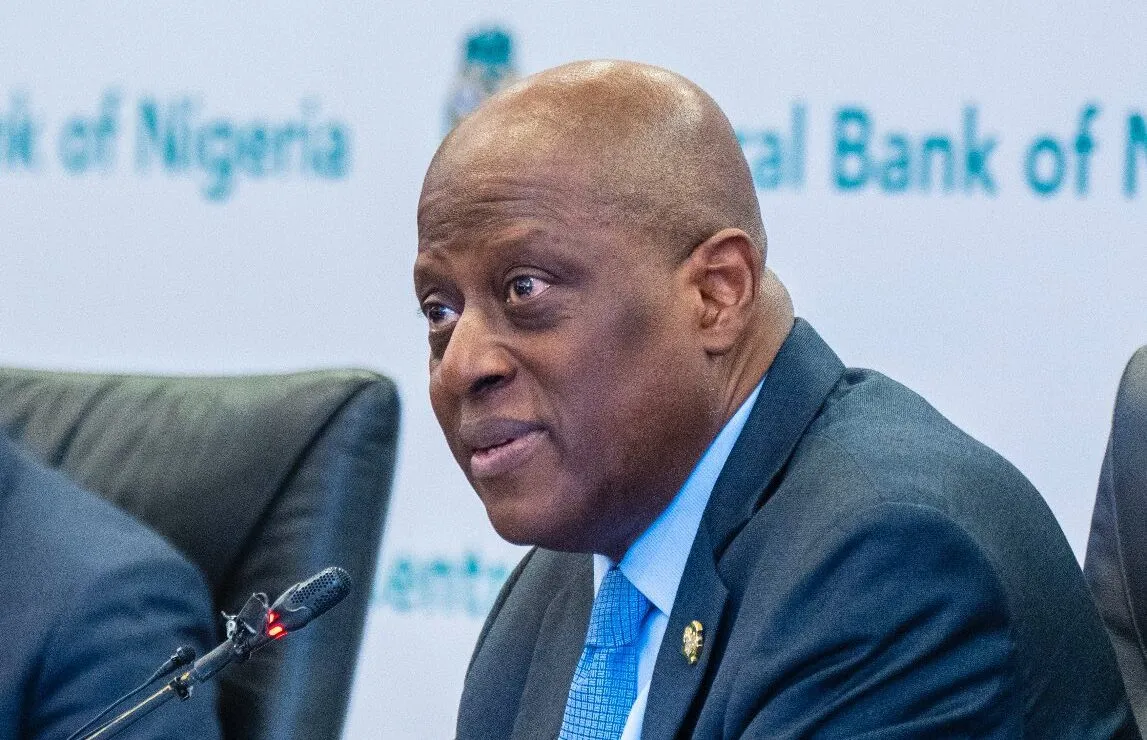
The Africa Finance Corporation (AFC), a leading African infrastructure solutions provider, has appointed the Governor of the Central Bank of Nigeria (CBN), Olayemi Cardoso, as Chairman of its Board of Directors, succeeding Ireti Samuel-Ogbu, who will remain on the board.
The appointment comes as the corporation steps up efforts to mobilise capital for strategic infrastructure projects across Africa, with a focus on closing the continent’s infrastructure gap, accelerating industrialisation and strengthening regional integration.
Cardoso brings extensive experience in international banking, investment management, economic policy and public-sector leadership to the position.
Since assuming office as CBN governor in September 2023, he has overseen monetary, financial-sector and institutional reforms aimed at restoring macroeconomic stability, strengthening policy credibility and rebuilding investor confidence in Nigeria’s economy.
Under his leadership, the apex bank has introduced changes to the foreign exchange market, addressed longstanding foreign exchange obligations and taken steps to improve monetary policy transmission, governance and transparency.
The CBN has also concluded a banking-sector recapitalisation programme designed to strengthen financial institutions and enhance their capacity to support investment and sustainable economic growth.
Before becoming governor, Cardoso served for 12 years as chairman of Citibank Nigeria and as Lagos State Commissioner for Economic Planning and Budget, where he contributed to economic planning and fiscal management.
He holds a degree from Aston University in the United Kingdom and a master’s degree in public administration from Harvard Kennedy School, where he also served on the Alumni Board.
Commenting on the appointment, AFC President and Chief Executive Officer, Samaila Zubairu, said Cardoso’s experience and leadership would strengthen the corporation’s efforts to mobilise African capital for infrastructure and industrial development.
“We are delighted to welcome Mr Cardoso as our Board Chairman. He shares our conviction that Africa’s lasting stability depends on its productive capacity,” Zubairu said.
He added that Cardoso’s leadership would support the corporation’s The Africa We Build 2050 initiative, which seeks to mobilise African capital to develop infrastructure and industries that create jobs and drive prosperity.
Zubairu also thanked Samuel-Ogbu for her dedication and contributions to the board during her tenure as chairman.
In his remarks, Cardoso said expanding Africa’s productive capacity was essential to achieving economic stability and transformation.
“A more productive Africa is a more stable Africa. AFC has the credibility and track record to mobilise capital and build the infrastructure and industries that drive transformation,” he said.
He expressed his readiness to work with the board, management and member states to advance the corporation’s long-term development agenda.
“Our measure of success must be the productive capacity we create, the industries we enable and the jobs we support,” he added.
AFC has financed infrastructure and industrial projects across Africa, spanning transport, fertiliser production and digital connectivity.
Among its recent milestones is the financial close of the $753 million Lobito Corridor Railway Project in Angola, which is expected to support the rehabilitation, upgrading and long-term operation of a 1,300-kilometre rail corridor.
The corporation has also supported a $600 million facility for the Dangote Group’s $7 billion fertiliser expansion programme in Nigeria, aimed at increasing production capacity.
In digital infrastructure, AFC has committed to a combined $300 million investment alongside Vision Invest in WIOCC Group to accelerate the expansion of critical digital infrastructure across the continent.
These projects reflect the corporation’s strategy of financing infrastructure that connects markets, strengthens industrial value chains and attracts investment at scale.
Cardoso assumes the board chairmanship as AFC pursues its long-term ambition to expand infrastructure financing and support the industries needed to drive Africa’s economic transformation.