

By Lemmy Ughegbe, Ph.D
On Sunday, 1 November 2026, on Channels Television’s Sunday Politics, I was asked a simple question. Why would the Department of State Services be interested in pursuing Omoyele Sowore?
My answer came in three parts. First, that the DSS under its current leadership is one of the most professional agencies in the country. Second, that “if the DSS were operating in the Gestapo manner of the past, and they wanted anybody taken out, it will not even be something difficult.” Third, that the Service had the capacity to do something untoward to Sowore, yet “more than anything else, the DSS has been graceful.”
The operative word in that second sentence was “if”. I was drawing a contrast between the DSS of today and the secret police of our darkest years. Remove that “if”, and you change the meaning entirely.
That is exactly what happened.
The next day, Sahara Reporters, the platform Sowore founded, published my words under a headline set in quotation marks: “If The DSS Wants To Kill Any Nigerian, They Could Easily Do It, But They Have Been Nice To Nigerians.”
The condition was gone. The Gestapo was gone. “Graceful” had become “nice”. A contrast with the past had been recast as a present threat and placed in my mouth as a direct quote. On X, that headline travelled alone to tens of thousands of readers who never saw the context.
On his Facebook page, Sowore took it further. I became the author of an “outrageous suggestion that the DSS could kill anyone it wanted but has graciously chosen not to.” I was the Director-General’s “bingo”. Elsewhere, he called me a “hustler”. I was lumped with “compromised media personalities” and “social media trolls”.
I have chosen restraint of my own. I will not follow him into the gutter. But the distortion deserves correction.
I did not say the DSS wants to kill anyone. Sowore knows this. What troubles him is that anyone would recognise grace where he insists on seeing menace.
Nor did I say Nigerians owe any agency gratitude for their right to life. That right is guaranteed by Section 33 of the Constitution. No security agency can grant or withdraw it.
What I spoke about was capacity and restraint. Every State possesses coercive power. The question is never whether such power exists, but whether it is exercised within limits.
Consider the record. In August 2025, Sowore published posts describing President Bola Tinubu as a “criminal”. The DSS did not storm his home at dawn. It gave him seven days to take the posts down. When he declined, it went to court.
A citizen who stands before a court, represented by counsel, and remains free to call the agency prosecuting him “lawless” every day is hardly living under the boot of a menacing secret police.
Then came an olive branch. The DSS moved to suspend the trial until after the presidential election, so that Sowore could campaign freely. He scorned the gesture and insisted the Service had no right to suspend a trial it had begun.
Weeks later, he was absent from that same trial. He wrote to the judge, and his counsel told the court he was in Ekiti State campaigning.
An agency with the means to act harshly chose the courtroom over the cell, the ultimatum over the raid, and the olive branch over escalation. That is what I called graceful. I stand by it.
There is also the small matter of consistency.
When the DSS asked Sowore to retract his description of the President and Commander-in-Chief as a “criminal”, he refused. He vowed never to withdraw it, even if given until 2027.
Yet at the Federal High Court in Abuja, when a lawyer allegedly called him a “tout”, Sowore confronted the man inside the courtroom and demanded that he withdraw the insult at once.
So, the President must swallow “criminal”, but Sowore cannot stomach “tout”. The DSS may not pause his trial for his campaign, yet he may skip it for the same campaign.
A man who demands courtesy for himself owes the same to others. When he calls me “bingo” and “hustler” while bristling at “tout”, Nigerians are entitled to ask whether his outrage is principle or convenience.
There is a deeper malaise. Any commentator who acknowledges good conduct by a public institution is instantly branded a hireling. Praise is assumed to be purchased. Fairness is mistaken for servility. Such a culture tells young Nigerians that the only honest voice is an angry one.
I reject that. I have spent my career as a journalist, scholar, public policy analyst, critic and advocate for survivors of sexual violence. In this column, I have questioned governments, including this one, when I believed they were wrong.
I will not apologise for saying that an institution has acted with restraint. Under Adeola Oluwatosin Ajayi, the DSS has shown that restraint, not only towards Sowore but across its operations.
A presidential candidate who aspires to command the coercive power of the State, the DSS included, should understand better than most that restraint is the highest virtue of power.
On the evidence of his conduct, it is a virtue Sowore does not practise. He meets every opposing view with abuse and every critic with a label. Nigerians should ask how such a man would wield the full power of the State.
Criticism is a right. Distortion is not. Free speech has never been a licence to defame, insult or abuse those whose views make you uncomfortable.
That is why my lawyers have served Sowore a pre-action notice demanding that he retract his defamatory publications, failing which we shall meet in court. We have also taken other lawful steps in response to his publications.
He remains free to criticise me, loudly and often. But Nigerians must stop indulging his excesses. A line must be drawn between criticism and defamation. There is no better time than now.
Dr Lemmy Ughegbe, FIMC, CMC
Email: lemmyughegbeofficial@gmail.com
WhatsApp ONLY: +2348069716645
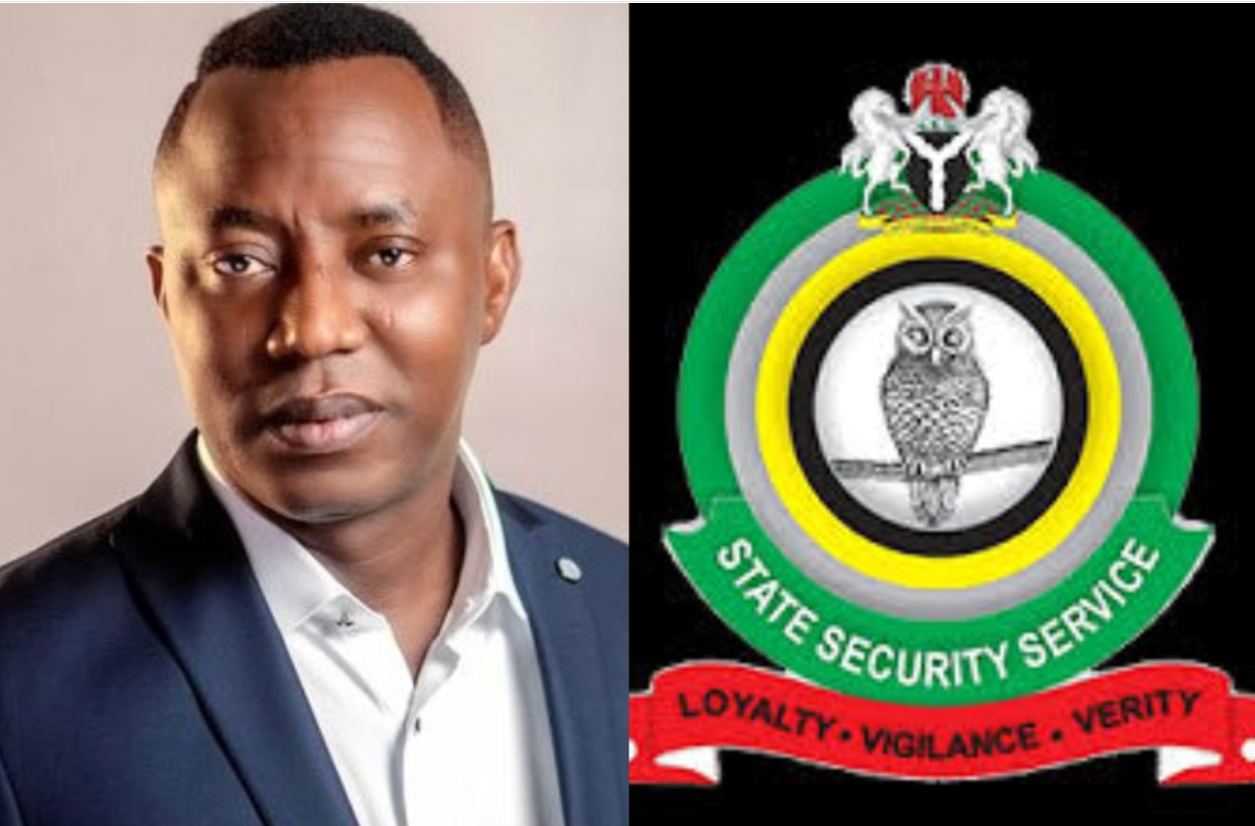
DSS, Sowore and the Grace of Restraint

43
previous post