


By Oscar Okhifo
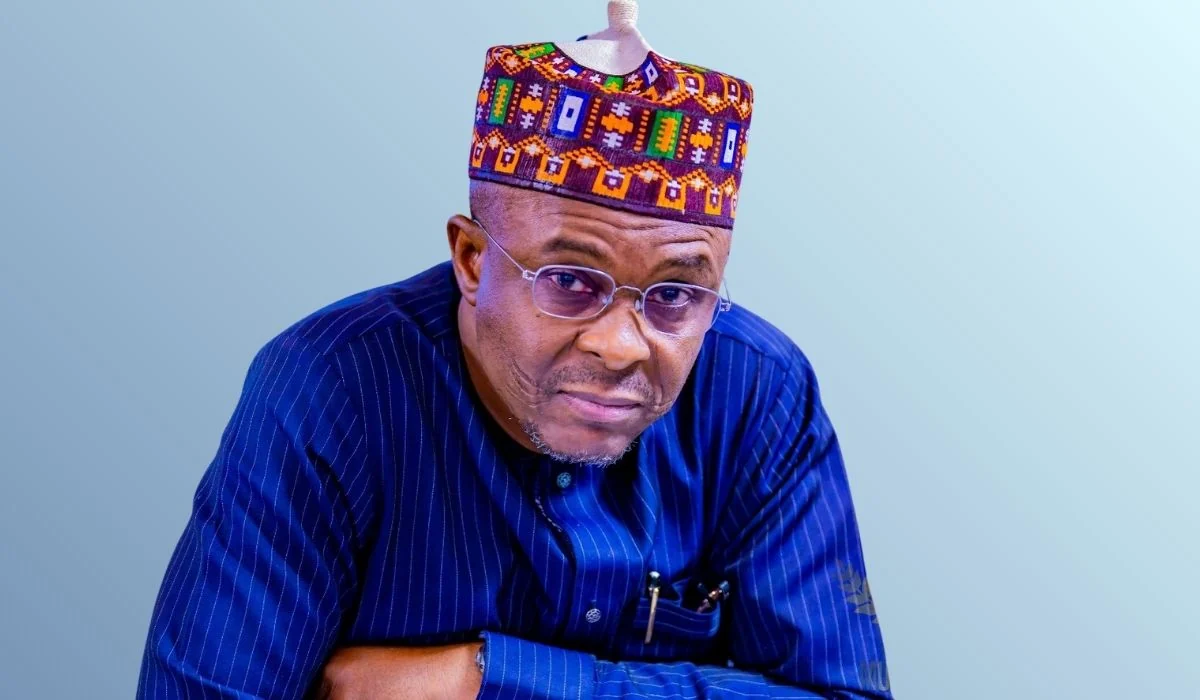
Nigeria’s exports have increased by 25 per cent in the past two years, driven by Federal Government policies and improved collaboration between the Nigerian Ports Authority (NPA) and major terminal operators, the NPA Managing Director, Dr Abubakar Dantsoho, has said.
Dantsoho disclosed this at the ongoing World Ports Conference in London, organised by the International Association of Ports and Harbours (IAPH).
He said the growth was not limited to the oil and gas sector but had also extended to manufacturing and agricultural commodities, including cocoa and cashew, attributing the development partly to the partnership between the NPA and major terminal operators such as APM Terminals.
“Statistically, the exports from Nigeria in the last two years has increased by 25%. And then these are exports that are not mainly only oil and gas […] but then also in the other areas of manufacturing and agriculture, you know, raw materials like cocoa, like cashew and all that. Volumes have increased and that this is to the credit of the partnership that we have between ourselves and the major terminal operators APM Terminals,” he said.
To sustain the growth, Dantsoho said the NPA had established Export Processing Terminals to streamline export procedures and ensure that goods meet the required standards before leaving the country.
He said the terminals were designed to facilitate local processing and coordination among relevant agencies, reducing the likelihood of compliance issues at destination ports.
“We have got about four of those in Nigeria where we collaborate with the terminal operators, with the Nigeria Customs Service (NCS), and other agencies that have a stake. So that everything regarding the processing of the cargo for export is done locally, so that by the time it is exported out of Nigeria, there will not be issues regarding standards,” he added.
The NPA chief also said ongoing economic reforms had strengthened Nigeria’s capacity to benefit from the African Continental Free Trade Area (AfCFTA), which seeks to expand trade among African countries.
According to him, the reforms have improved investor confidence and positioned Nigeria to play a leading role in promoting trade within the continent.
“Nigeria’s economy is very strong now because of our president’s reforms, which everyone can testify is attracting investors to the country. So because of that, we are leading other African countries to ensure that we export or trade within ourselves in a free and fair manner,” he said.
Dantsoho cited Nigeria’s growing trade relations with Morocco, particularly in the automotive sector, as an example of the opportunities available through greater intra-African cooperation.
He said Nigeria was also recording improvements in global port rankings, with two of its ports featuring among the top 20 in the latest World Bank ranking.
He attributed the performance to improved operational efficiency, technology adoption and stronger collaboration with industry stakeholders.
“This is the result of hard work and efficiency, because we are collaborating efficiently. And so we have identified that this is getting us a lot of good results. It’s result-oriented, it’s technology-based. So we are going to continue to consolidate on the relationship we have with major players in Morocco and South Africa,” he said.
Dantsoho further disclosed that revenue generated by ports across the country had quadrupled, attributing the increase to higher cargo volumes, improved operational efficiency and stronger collaboration.
He said Nigeria’s ports were now performing better than those of other West African countries, citing data available through the Association of Ports in West and Central Africa, which he chairs.
“As a matter of fact, the efficiency in the ports in Nigeria is far better now than those of other West African countries.
“I am saying this because as the president of Association of Ports in West and Central Africa, we have the same dashboard to know the performance of other ports in the regions. There has also been improvement in Tanzania and Kenya,” he said.
He added that the NPA would continue to strengthen its partnerships to sustain the gains and prevent setbacks in port operations.
Looking ahead, Dantsoho said the Federal Government was planning a $1bn investment to expand and modernise Apapa Port in Lagos, as part of efforts to upgrade infrastructure and accommodate rising trade volumes.
He said the scale of the proposed project would require partnerships with private investors capable of providing the necessary capital and technical expertise.
“Expansion and modernisation of infrastructure requires that we collaborate with private sector people. And in that area, like I said, we are working with APMT, we are working with other bigger players who have got the capital. But this is a project that requires a lot of investment. You have to put a lot of money to be able to do that,” he said.
Dantsoho also highlighted ongoing technology partnerships aimed at improving port operations and facilitating trade.
He said the NPA had partnered with a Singaporean firm to develop a “simple window system” about a year ago, while another collaboration with a company in Abu Dhabi was underway to develop a Port Community System.
He added that private-sector operators were also strengthening business-to-business relationships to support the modernisation of Nigeria’s ports.
The proposed Apapa Port investment and technology initiatives, he said, formed part of broader efforts to improve operational efficiency, strengthen trade links and sustain growth in the country’s export sector.