


By Lizzy Chirkpi
Nigeria’s Ambassador to South Africa, Chief Femi Fani-Kayode, has warned that patience is wearing thin within the Federal Government and among Nigerians over attacks and hostility against Nigerian citizens in South Africa.
He, however, cautioned against calls for Nigeria to sever diplomatic relations with South Africa or shut down South African-owned businesses in the country, insisting that xenophobic attacks should not destroy decades of friendship and solidarity between the two nations.
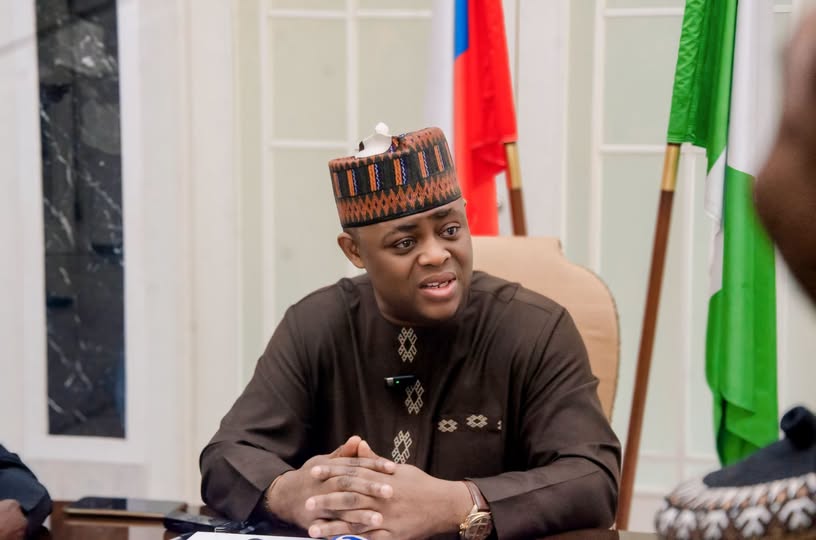
Fani-Kayode spoke while addressing Nigerians living in South Africa, where he reaffirmed the Federal Government’s commitment to protecting citizens abroad, assuring them that they would not be abandoned despite growing concerns over intimidation, violence and hostility against foreign nationals.
“Those in our country that say that we should break ties with South Africa, I do not agree with that,” he declared.
He also dismissed suggestions that South African businesses should be closed down in Nigeria, citing the extensive economic interests both countries have in each other’s economies.
“The idea that we should close those businesses down, in my view, is not something we should do, and I don’t think we’re going to do that,” he said.
The ambassador specifically mentioned MTN, noting that the telecommunications company has substantial operations in Nigeria and reportedly generates about $12m daily.
“MTN alone, I think I’m right in saying, makes about twelve million US dollars per day. Per day. And of course, many others. And they’re welcome to that,” he said.
Fani-Kayode, however, stressed that Nigeria’s restraint should not be mistaken for indifference to the plight of its citizens.
“It is important, and I emphasise the fact that patience is wearing thin within the corridors of power in our country and our people,” he said.
“They are not happy. They’re angry. They feel that you have not treated them well.”
He assured Nigerians in South Africa of the Federal Government’s support, pledging to use his diplomatic position to defend their interests and ensure their safety and dignity.
“My role is to build that bridge, to support you, defend you, and to ensure that you are treated well. And you have the full support and backing of the Nigerian federal government,” he told the gathering.
“You will not be left alone.”
Making an appeal for stronger relations between both countries, Fani-Kayode recalled Nigeria’s historic contributions to South Africa’s liberation from apartheid, describing the struggle as a collective African victory.
He said successive Nigerian governments provided diplomatic, political and material support to the anti-apartheid movement, while ordinary Nigerians, including civil servants and schoolchildren, also made financial contributions.
According to him, Nigeria contributed at least $61bn in monetary terms alone to the struggle between 1960 and 1994.
“And therefore, I say this. The South Africans must never forget that between nineteen sixty and nineteen ninety-four, Nigeria contributed in monetary terms alone no less than sixty-one billion US dollars to the struggle against apartheid,” he said.
He recalled the introduction of the Mandela Tax, through which Nigerian civil servants surrendered part of their earnings to support the African National Congress (ANC).
“During the Mandela tax, we imposed a tax on our own civil servants during the course of the struggle, and that money was channelled to the ANC,” he said.
He added that Nigerian schoolchildren also contributed by giving up their lunch money to support South Africans fighting racial oppression.
“Nigeria ensured that the children at school gave up their lunch, their lunch money, and contributed to the South African struggle,” he said.
Fani-Kayode further recalled Nigeria’s diplomatic mobilisation at the United Nations and other international platforms, insisting that the country’s contribution to the liberation struggle should never be forgotten.
He said South Africa’s liberation was not merely a victory for its citizens but a triumph for the entire African continent.
“It was liberated, and it was a victory for each and every one of us,” he said.
Describing South Africa as a country with a rich history of resistance, the ambassador said its past should remain an important guide for its future.
“Without knowing your own history, you’re not going anywhere. Therefore, they must never forget, and we must never forget the collective contribution that we made to their struggle,” he said.
He warned against growing hostility among Africans, describing attacks on fellow Africans and the rejection of other nationalities on the continent as retrogressive.
According to him, Africa cannot achieve meaningful development if its people continue to fight one another while other parts of the world increasingly embrace cooperation and integration.
“Pan-Africanism, which means we must all come together as we are doing in the name of Mother Africa, is very, very important,” he said.
“And the idea of African fighting African or opposing African, in my view, is a very retrograde and almost primitive sentiment.”
The ambassador maintained that the actions of a minority should not be used to define the entire South African population, expressing confidence that most South Africans remained friendly towards Nigerians and other African nationals.
“Those that do those things do not represent the majority of the people in this country. The majority of South Africans are loving, caring, kind, respectable, decent people,” he said.
He described Afrophobia and xenophobia as unfortunate developments threatening the historic bonds between African countries.
“It is a very small minority that seem to misunderstand the situation and have been imbued and possessed by the spirit of Afrophobia and xenophobia, which is unfortunate. We will pray for them. We pray deliverance for them,” he added.
Fani-Kayode said Nigerians generally maintained positive feelings towards South Africa despite incidents that had generated anger and calls for retaliatory measures.
He insisted that Nigeria must continue to demonstrate leadership by choosing dialogue, reconciliation and diplomacy over hostility.
“Our arms are wide open to them. We’ll continue to dialogue with them, speak with them, and ensure that there is peace, love, and unity between us all,” he said.
Reflecting on his childhood memories of the anti-apartheid struggle, the ambassador recalled singing in solidarity with black South Africans and the suffering, humiliation and dehumanisation they endured under the racist system.
He also referenced the historic battles fought by the Zulu people against British colonial forces, using South Africa’s history of resistance to illustrate the courage and resilience of its people.
Fani-Kayode argued that the country’s development and infrastructure should remind its citizens of the sacrifices made by other African nations towards its liberation.
“When I come to this beautiful country, and I see the joy, and I see the development, and I see the extraordinary infrastructural advancements they’ve made, and I see law and order, and I see all the wonderful things that I have seen, I say boldly that we from Nigeria and indeed the rest of Africa have a stake in this because we made a contribution to what they are today,” he said.
He stressed that Nigeria’s historic contribution should not be interpreted as a claim of superiority but as evidence of the deep relationship that ought to bind both countries.
Describing Nigeria as Africa’s big brother, Fani-Kayode said the country would continue to take the lead in promoting continental unity, defending African interests and strengthening relationships across the continent.
“Our country, Nigeria, which in my view is and will always be the big brother of every other African country. We are. There’s no question about that,” he said.
He urged Nigerians living in South Africa not to allow provocations to dictate their attitude towards their host country, stressing that leadership required restraint even in difficult circumstances.
“And even where we are offended or we are maligned or we are cheated or we are bullied and indeed even killed by those that don’t know any better, we must understand that as leaders, we must look forward, look up to God, look forward to the future and not be provoked,” he said.
Fani-Kayode concluded by assuring Nigerians that the Federal Government would continue to engage the South African government and other relevant stakeholders to protect their interests.
He said the government remained committed to diplomatic engagement and would not abandon its citizens, regardless of the challenges they faced.
“Know this, that your mission, your government, your president stands with you, he is behind you, and will do all it takes to ensure that you have a wonderful stay in South Africa,” he declared.