


BY JIDE AYOBOLU
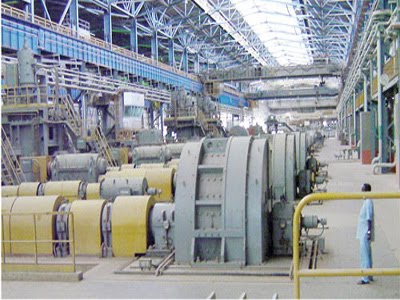
The Federal Government has inaugurated the Ajaokuta Presidential Project
Implementation Team aimed at realising the economic diversification
agenda of the regime of President Muhammadu Buhari. The Secretary to the
Government of the Federation, Boss Mustapha, is the chairman of the team
while the Minister of Mines and Steel Development, Olamilekan Adegbite,
is the Alternate Chairman. Inaugurating the committee, the SGF said that
the government desired to industrialise the country within a diversified
economy. He said, “The Ajaokuta Steel plant has languished in economic
unproductivity for about four decades, and previous efforts at reviving
it had proved abortive. This has resulted in avoidable massive foreign
exchange losses at an intolerable opportunity cost to the country.
“The pressing need to redress these avoidable challenges has
necessitated this presidential intervention at this time. This is
further underscored by difficulties being witnessed with present
challenges in the global oil industry.” The SGF said it was the focus
of the regime to make Ajaokuta steel West Africa’s largest fully
integrated steel producer and most importantly, to accelerate
industrialisation in steel-related industries. He added that the
government placed a lot of value on the diversification of the economy,
hence, the President’s participation at the Russia/Africa summit in
Sochi, Russia, hosted by his Russian counterpart, President Vladimir
Putin. Mustapha pointed out that the Ajaokuta Steel Project would “be
resuscitated on the basis of a Government-to-Government agreement with
funding from the Afrexim bank and the Russian Export Centre”.
It would be recalled that the Nigerian government has debunked the
reports that it has plans of selling the over $8 billion Ajaokuta Steel
plant in Kogi state, despite its redundancy. Yahaya Bello, Kogi State
Governor, revealed this to State House reporters recently after he met
with the country’s Vice President, Yemi Osinbajo. “The Vice
President said there is no plan by the Federal Government to sell
Ajaokuta Steel Company. The Vice President said Ajaokuta is an asset of
the Federal Government and that they are looking into how best to make
good use of that particular complex for the benefit of Nigerians at
large,” Bello said.
Recently, the Central Bank of Nigeria, CBN, Governor, Godwin Emefiele,
had, while briefing the Nigerian delegation at the end of the
International Monetary Fund/World Bank Group meetings in Bali,
Indonesia, said the company will be sold. “I am aware, as a member of
the National Council on Privatization, that more is coming and I believe
in due course that the Bureau of Public Enterprise, BPE, will make this
available for us. I am aware of the situation of Ajaokuta Steel Company
of Nigeria. It is also on the cart, first for a total review of the
process of privatization and payment, so that our aluminium sector can
eventually come alive,”
The steel plant which has 12,000 plots large, 68-kilometre road network
and another 24-kilometre road network underground, was built four
decades ago and has never produced any steel due to the dispute over the
ownership of the Ajaokuta Steel Complex and Nigerian Iron Ore Mining
Company (NIOMCO). The dispute made it impossible for the government to
make any long‐term plans for the concession or privatization of the
two companies.
However, the federal government in an attempt to revitalize the steel
sector signed a renegotiated concession agreement with Global Steel
Holdings Limited for the Nigerian Iron Ore Mining Company (NIOMCO),
Itakpe. By the new agreement, the Ajaokuta Steel Complex was reverted to
the Federal Government, effectively freeing the entity from all
contractual encumbrances that had left it uncompleted and non-functional
for decades, while GSHL retains NIOMCO. The agreement, which came after
four years of mediation, was signed at a short ceremony presided by
Osinbajo.
Recalled also that, the Federal Government has said it would not repeat
the mistake of the former President Olusegun Obasanjo’s administration
on the Ajaokuta Steel Complex in Kogi State. The former Minister of
Mines and Steel Development, Dr. Kayode Fayemi, who stated this at a
press conference in Abuja, also said the present administration would
not spend any money to complete the steel plant. Fayemi stated that the
Federal Government had sunk over $ 8 bn into the project since 1979
without any result. The minister stated that no fewer than 14
organizations from different countries had since 2016 indicated interest
in the Ajaokuta Steel Complex.
He said, “We have also said to them that we are not going to repeat
the mistake of the Obasanjo administration. We will not undertake the
re-concession without one, a technical audit; two, a transaction
advisory service that will look into all these and advise us accordingly
as to who really has the technical capacity, the financial wherewithal
and the track record to really bring Ajaokuta back to life. “However,
the government took a principled position on one thing: that Nigeria
will not spend one dollar on the so-called completion of the Ajaokuta
steel plant. The reason for that is very simple; today from our record,
we have spent close to $ 8bn since 1979 when this process started and we
have not seen the result.”
The minister added that the government and the House of Representatives
agreed on the concession of the plant and that the House approved the
sum of N2 bn for the purpose in 2017.
The House had last week passed a vote of no confidence in Fayemi and the
Minister of State for Mines and Steel Development, Alhaji Abubakar
Bwari, following their failure to appear before it for sectoral debate
on the steel plant.
The lawmakers also instructed the ministers to suspend every step
towards the concession of the plant, adding that they preferred that the
government should invest and complete the project. Fayemi, however, said
that the government had taken a decision not to spend any money on
Ajaokuta since over $ 8bn had been sunk into the project by successive
administrations since 1979.
According to him, the House agreed on the need to give out the plant as
a concession by approving N 2bn for the process in the 2017
Appropriation Act. He said “We are just implementing what was passed
by the National Assembly. That is why we are surprised that we have been
subjected to an unwarranted attack over the matter.
“Ajaokuta is an inherited challenge. The Chief Olusegun Obasanjo
administration gave it out on concession; the President Umaru Yar
’Adua government revoked it. And the case went to the London Court of
Arbitration. Its resolution in 2016 led to the signing of the Modified
NIOMCO Agreement, which ceded the complex back to the Federal Government
and NIOMCO to Global Steel.
“No fewer than 14 parties have shown interest in running the complex,
but the government ’s position is that we would not do any concession
without a technical audit. “PricewaterhouseCoopers was engaged to do a
review of the company’s indebtedness and statutory liabilities as part
of the settlement agreement.” The minister added, “The National
Assembly appropriated N 2, 096, 500, 000 for Ajaokuta concession in the
2017 Appropriation Act duly passed into law. We are just commencing what
was passed into law by the National Assembly.
“This is why I am surprised at how we have been subjected to vitriolic
attacks. The March 1 sectoral debate, which we could not attend, was the
first and only one I and the Minister of State were unable to attend and
we duly communicated this to the leadership of the House. “We take
exception to allegations that are not backed up by evidences.
Allegations that officials of the ministry have had their hands tied by
the concessionaire are quite unfounded. “The Russian government has
not indicated an interest in Ajaokuta. Yes, we have had offers from
companies from Ukraine, Russia, Belarus and even Nigeria.
“Yes, I have met with the Russian Ambassador the same way I have met
with the Ukrainian Ambassador and many other ambassadors. The Russian
Ambassador told me they can offer technical, management and audit
support, but not as a country bringing in money to take over the
complex. “Many are saying Ajaokuta is 98 per cent completed. The
ministry believes that can only be determined by the outcome of the
technical audit, which should be ready in about six weeks.”
Fayemi reiterated that the President Muhammadu Buhari administration was
being painstaking with the Ajaokuta Steel Complex, given the fact that
it had been a victim of bad planning and poor execution by past
administrations. “Our interest is to make it work so that it can
create jobs and wealth, and we are ready to work with the National
Assembly and other stakeholders to ensure its success,” he added.
Fayemi condemned what he called unwarranted attacks by the leadership
and members of the House of Representatives on the ministry. “The
House of Representatives has every right to seek for an explanation on
any matter relating to what they have appropriated as one responsible
for appropriation, and on any matter of public interest. There is
nothing fundamentally wrong in the House and its leadership requesting
our presence at the sectoral debate that was called last week,” he
stated. Fayemi stated the ministry requested that the appearance of the
ministers be shifted to another date.
“We did not think there was anything untoward about our request for
another time, partly because this was the fourth time we were going to
be speaking to the House of Representatives on the Ajaokuta Steel
Complex,” he added.
Boosting mining output, along with developing agriculture and
infrastructure, as part of plans to broaden the economy of Africa’s
second-largest oil producer. Crude accounts for around 70 per cent of
the OPEC member’s revenue and for 13 per cent of gross domestic
product, according to Finance Minister Kemi Adeosun. Slumping global oil
prices, from over $100 a barrel of Brent crude in 2014 to under $50 a
barrel currently, and reduced output due to militants attacks on
pipelines in Nigeria’s Niger River delta, have squeezed state finances
and caused a chronic dollar shortage.
Nigeria will also require about $2 billion to revive Ajaokuta, a steel
complex which was supposed to have an installed capacity of 5 million
tons a year. Situated on the Niger River, in Kogi state, its
construction began in 1979 but work was delayed by the government’s
failure to pay builders on schedule and it is yet to be completed. By
2004, when it was taken over by India’s Global Steel Holdings, then a
subsidiary of Ispat Industries Ltd., it still hadn’t produced any
steel. Global Steel’s concession was revoked in 2008. After an
eight-year legal dispute, it was agreed on Aug. 3 this year that the
government will take over Ajaokuta while the Indian firm retains Nigeria
Iron Ore Mining Company, which it will rehabilitate to supply the steel
mill within two years.
The ministry is hiring an adviser for investments needed to increase
Ajaokuta’s current capacity of 1.3 million tons of steel a year
fourfold, Fayemi said. The complex also includes a 110-megawatt power
plant, a 60 kilometre (37 miles) railroad and an airstrip. Just 18 of
some 30 steel manufacturers in Nigeria are active, producing about 2.2
million tons a year and leaving the government with a $3.3 billion
annual import bill, Fayemi said. The government is talking with
companies including Russia’s Techno-promexport and Ansteel Group Corp.
of China to complete and start production at Ajaokuta.
It also plans to create a $1 billion mining exploration fund from state
and private capital to improve data on Nigeria’s mineral wealth. Each
exploration project will be supported with about $5 million, Fayemi
said. Nigeria aims to increase mining’s contribution to gross domestic
product to 7 per cent within a decade, from 0.3 per cent last year,
according to the minister.
Nigeria’s Iron Ore and Steel sector Consumption of steel per capita
per annum Kg/yr Nigeria currently lags behind global benchmarks on steel
consumption per capita with potential to grow. Egypt, Brazil, Russia,
China, South Korea and South Africa are great steel countries, so, also
in India. South Korea’s demand for steel is largely fuelled by
increased industrial activity, between 1965 and 1970, a dramatic
increase in demand for intermediate and capital goods (20kg to 175kg per
capita per year) – Steel beams, flat sheets, rods, coils, bars –
Rise in real estate development, construction of roads and bridges,
fabrication, etc; Increased steel demand owing to increased
industrialization – Building construction; power – Automotive
construction; Agriculture – Road and bridge-building; Military –
Refinery investments – Machinery for rubber and plastics, textiles,
etc. South Korea leads the world due to high industrialization levels
Nigeria can expect an increase in demand for steel in the coming decade
driven by industrialization.
Nigeria’s Iron Ore and Steel sector Nigeria’s domestically focused
iron ore and steel strategy are driven by our ability to serve domestic
demand, as well as the challenges in export markets today. Few global
steel investors have the capacity to expand into Nigeria. China: ~60
million tons of steel capacity was mothballed in 2015 as part of a plan
to reduce production capacity; that has had a knock-on effect on the
global commodities market. Britain/Tata Steel: Decision by Tata to
sell/shut down its UK branch has also signalled the end of British steel
production which declined from 18M tons/annum to 8M tons/annum between
1988 – 2015; other European steelmakers are also challenged. Private
Companies: Many steel producers and suppliers from Vale to Rio Tinto to
BHP are struggling due to the downturn in commodity prices and excess
capacity in markets; we anticipate continued cost-cutting to rebalance
the market.
Therefore, Nigeria can build a world-class minerals and mining ecosystem
designed to serve a targeted domestic and export market for minerals and
ores. Nigeria will focus on rebuilding its minerals and mining and
related processing industry in 3 phases. Phase 1: Win over domestic
users of industrial minerals that are currently importing. Phase 2:
Focus on expanding domestic ore and mineral asset processing industry.
Phase 3: Return to global ore and mineral markets at a market
competitive price point. Hence, Nigeria will seek to build a minerals
and mining sector initially focused on using its industrial mineral
endowment to support its industrialization; private investors will be
facilitated to lead this charge, to this end, Nigeria will invest in a
range of initiatives including infrastructure investments, technical and
engineering capacity, regulatory reform, reorganization of the Ministry
itself, and expansion of access to financing to drive sector
transformation.
The government should support the development of an institutionalized
coal/gas-to-power plan for local players to guaranty affordable energy;
Identify and foster locations for steel development sites/clusters;
support the provision of concessional loans to current downstream
players to encourage backwards integration; support incentive to local
sourcing of raw materials wherever possible (iron ore, coal, limestone,
scrap) using specific levers such as tailored import tariffs or
subsidized prices; develop and support a skill-building program or
encourage the transfer of knowledge by attracting global experts; Ensure
logistics corridors with iron ore mines; offer favourable tax holiday
and zero duties and levies on iron and steel. Nigeria should drive
industry growth through carefully planned strategies to develop the
comatose steel industry in the country.