


1.3K
By Tracy Moses
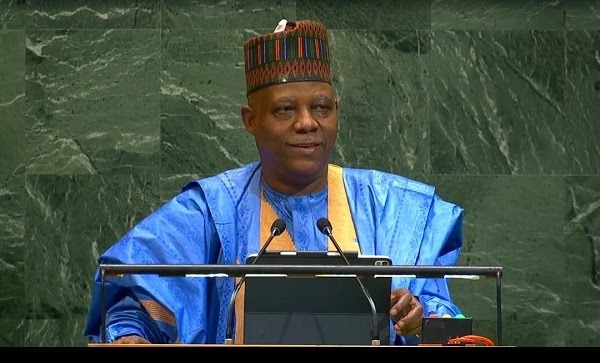
Key stakeholders, including the Vice President, Kashim Shettima, and former Director-General of the Budget Office of the Federation, Ben Akabueze, have called for urgent reforms to Nigeria’s budgeting system, warning that persistent gaps between planning and implementation have resulted in thousands of abandoned projects across the country.
The call was made on Tuesday at a two-day National Policy Dialogue on National Development Planning and Budgeting, organised by the National Assembly Joint Committee on National Planning and Economic Development in Abuja.
Speaking at the event, Akabueze revealed that Nigeria currently has over 56,000 abandoned projects, describing the situation as a clear manifestation of systemic failure in linking budgets to national development plans.
“This is without any doubt a symptom of failure in aligning our budgets with our plans and, ultimately, our development outcomes. A budget should serve as a compass that directs resources toward national priorities, but that has not been the case,” he said.
He stressed the need for a fundamental shift from budgeting focused merely on expenditure to one driven by measurable development results, insisting that public spending must translate into tangible improvements in citizens’ lives.
Akabueze identified the absence of a comprehensive legal framework as a major weakness in Nigeria’s budgeting process, noting that existing constitutional provisions are too vague to ensure accountability and efficiency.
“Our budget process is not governed by clear laws and rules. The constitution only requires that the President presents the budget before the start of the fiscal year, without clearly defining timelines, roles or responsibilities,” he said.
He recalled that attempts to pass an organic budget law during the 9th National Assembly were not concluded, as the bill was not assented to before the end of the administration, adding that enacting such a law would help establish clear procedures and strengthen fiscal discipline.
Also speaking, the Vice President, represented by the Special Adviser to the President on Economic Matters, Tope Fasua, underscored the importance of aligning annual budgets with medium- and long-term development plans.
According to him, Nigeria must move beyond routine fiscal exercises and adopt a more strategic approach that integrates planning with budgeting to accelerate national development.
“This is a critical conversation for the present and the future. The question is how our budgets can be better shaped by development plans and how we can create a pathway to sustainable growth that improves the standard of living of Nigerians,” he said.
Shettima noted that budgeting should not be limited to tracking Gross Domestic Product (GDP), but must also reflect real improvements in welfare, including poverty reduction and increased per capita income.
He defended the expansion of the 2026 budget to about N68 trillion, arguing that budgeting is a forward-looking process aimed at achieving national aspirations rather than dwelling on past limitations.
“Budgeting is not about capitulating to constraints; it is about documenting a greater future and challenging ourselves to deliver better outcomes,” he said.
The Vice President further highlighted ongoing fiscal and revenue reforms, expressing optimism that improved revenue generation and the deployment of technology would enhance government capacity to fund development priorities.
He also pointed to recent policy measures, including reductions in tariffs on essential raw materials and the removal of duties on pharmaceuticals and key manufacturing equipment, as steps aimed at boosting productivity and easing economic pressures on citizens.
Stakeholders at the dialogue agreed that the persistent disconnect between national plans and budget implementation must be urgently addressed to reverse the trend of abandoned projects and ensure sustainable economic growth.
They emphasised that without stronger alignment, accountability and a results-driven approach to public spending, Nigeria’s development aspirations would remain difficult to achieve.