


705
By Lizzy Chirkpi
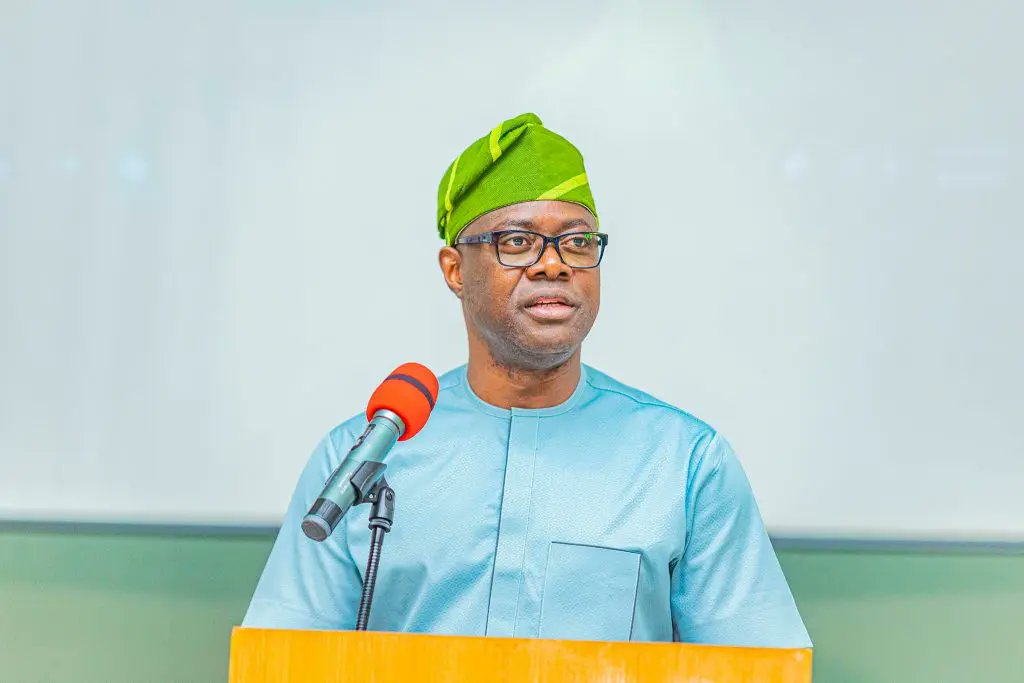
Oyo State Governor, Engr Seyi Makinde has said the ongoing insecurity in the state, including the continued captivity of abducted schoolchildren and residents, points to the limitations governors face under Nigeria’s current security structure.
Speaking in Ibadan on Saturday while accepting the presidential nomination of the African People’s Movement (APM), Makinde lamented that despite being designated as Chief Security Officer of the state, he lacks constitutional control over the security agencies needed to effectively combat crime.
“Today, innocent schoolchildren and citizens abducted by criminals remain in captivity in Oyo State,” he said.
“As Governor of Oyo State, I carry the burden of being called the Chief Security Officer of the state, yet lacking constitutional control over the security agencies required to fully address these threat.”
The governor argued that state leaders are often held accountable for security failures despite having limited authority over the agencies responsible for maintaining law and order.
“No governor should bear responsibility without having the authority necessary to act,” he stated.
Makinde used the occasion to push for far-reaching reforms to Nigeria’s security architecture, saying greater powers must be devolved to states to enable quicker and more effective responses to security threats.
His comments come amid growing concern over the fate of the schoolchildren and teachers abducted by gunmen in Oriire Local Government Area of Oyo State earlier this month. The victims were reportedly seized while travelling along the Ogbomoso-Igboho axis, causing outrage and renewed concerns over insecurity in the state.
Since the abduction, families of the victims have repeatedly appealed for urgent government intervention, while security agencies have launched search-and-rescue operations across affected communities and neighbouring areas. Despite assurances from authorities that efforts are ongoing to secure their release, the victims remain in captivity, heightening public anxiety and criticism of the government’s response.
“As President of the Federal Republic of Nigeria, by the grace of God, I will work to reform our national security architecture so that states are no longer left helpless in moments of crisis,” he said.
He stressed that decentralisation would be central to his security agenda if elected president in 2027.
“The decentralisation necessary for more effective security management will be prioritised. The safety and security of Nigerians will never be treated as a political slogan,” Makinde declared.
According to the governor, Nigeria requires a fresh approach to governance and security, insisting that old methods have failed to deliver the desired results.
“We cannot continue recycling the same approaches while expecting different outcomes. A new direction must emerge, one founded on competence, courage, accountability and compassion,” Makinde added.