

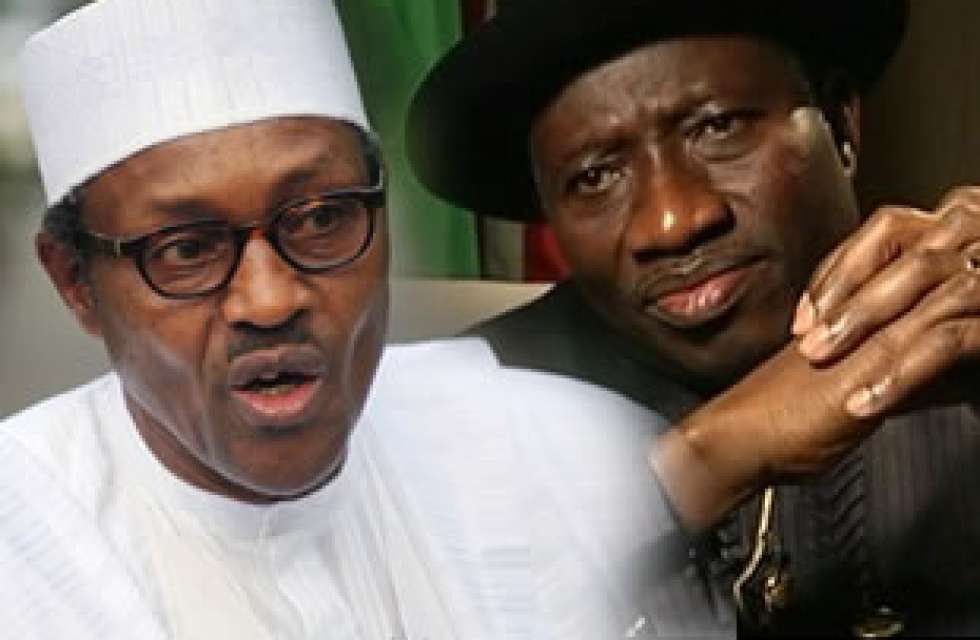

Regime Is About Trust
Since the announcement and implementation of the increase in the pump
price of fuel from N86 and N86.50 per litre to a cap limit of N145 per
litre respectively under the President Muhammadu Buhari led
administration, one has read and listened to a lot of commentaries from
various quarters either innocently, ignorantly or mischievously trying to
equate former President Goodluck Jonathan’s policy of removal of fuel
subsidy which resulted in the increase in pump price of petrol from N65 to
N141 per litre and President Buhari’s policy of liberalizing the
downstream sector which resulted in the increase of pump price of fuel
from N86.50 to a cap limit of N145 per litre as one and the same.
Regrettably, some of the opponents of the new fuel price regime, instead
of coming up with facts and statistics to buttress their position by
educating and convincing the people against the present government policy
in this age of intellectual discourse, have resorted to abuses, insults
and politically partisan statements which clearly exposes their standpoint
which is at variance with that of the majority of the people who have
queued up behind the new fuel price regime.
Some of these persons and groups have even resorted to tactics of
humiliating and intimidating the Nigerian people into a mindset of regret
by their relentless assaults, attacks and abuses that Nigerians are
hypocritical for stoutly and massively rejecting Goodluck Jonathan’s
policy in 2012, but supporting the fuel policy in 2016.
They have uncharitably called persons and groups with whom they were
together in the trenches against former President Goodluck Jonathan’s
policy in 2012 but who are not with them now on the opposition to the new
policy regime due to the reality of the times or for reasons best known to
them, all sorts of names and thereby exhibiting ignorance of the fact that
“We can’t all sleep and think in one direction” because variety is the
spice of life. Infact, it was the philosopher Heraclitus who postulated
that “You could not step twice into the same river”, meaning that no two
situations are exactly the same. Even in families, agreements and
disagreement occurs on issues, but the truth of the matter is that, ones
position must be rational, logical and based on facts rather than on
sentiments and emotions which is like a mob action mentality.
A critical tenet of democracy as a system of government which a lot of our
people are yet to come to grasp with is that, it recognizes that while the
majority will have their way, the minority must have their say. So, if a
person believes that he or she is endowed with more wisdom than even king
Solomon in the Bible and the mass of the people put together and he
assumes that the people have committed an error in taking a decision on an
issue, it is the height of immaturity and lack of civility to assault and
deride peoples sensibility because of differences on issues which is
natural.
However, to put the records straight, the attempt to intimidate and
assault the peoples sensibilities by attempting to equate the 2012 fuel
subsidy removal and 2016 fuel price regime, is obviously incorrect and far
from the truth. Thus, there is the urgent need to place issues in proper
perspective for the sake of discerning minds and posterity sake, lest the
maxim of the infamous Nazi propagandist Joseph Goebbels that “Tell a lie,
a thousand times and it becomes the truth, holds sway.
For records sake, it is imperative to state clearly just as it has been
canvassed from certain quarters in explaining the true situation of things
vis a vis the 2012 and 2016 fuel price regimes, that the major difference
between the former President Goodluck Jonathan and President Buhari’s
administrations was the issue of transparency, accountability, trust and
responsibility of leadership.
In explaining our position further, it becomes pertinent to reel out the
facts which is incontrovertible about the fuel subsidy regimes from
previous governments. Stated below is the amount expended on fuel subsidy
viz a viz the national budget by the federal government for a ten year
period of 2006 – 2016
:
Year. National Budget. Subsidy Payments
2006 N1. 9 trillion. N151. 9 billion
2007 N2. 3 trillion. N188 billion
2008 N2. 45 trillion N256.3 billion
2009 N3. 049 trillion N421. 5 billion
- N4. 6 trillion. N1. 3 trillion
- N4. 9 trillion N2. 19 trillion
2012 N4. 7 trillion N1. 049 trillion
2013 N4. 98 trillion. N971 billion
2014 N4. 69 trillion. N971 billion
2015 N4. 49 trillion N1 trillion +
2016 N6. 06 trillion. ———–
From the above table, one can see clearly that the astronomical increase
in subsidy payments from N421. 5 billion in 2009 to N1.3 trillion and 2.2
trillion naira in 2010 and 2011 respectively can be noticed from 2010 when
ex President Goodluck Jonathan assumed the reins of leadership of the
country as acting President.
We need to remind ourselves that in January 2012 when the federal
government implemented the removal of fuel subsidy, we could afford it if
was transparently managed because our major foreign earner, the crude oil
per barrel was selling at above $110 at the international market, the
country’s foreign reserve was about $40 billion and there was low or no
pipeline vandalism unlike now that the cost of crude oil per barrel has
dipped between $40 – 45 or even lower, there is high scale vandalism of
oil pipelines which has depleted our income because of a fall in
production of crude oil, the foreign reserves was hugely depleted to the
tune of about $27 billion by the previous government which went aborrowing
to sustain the running cost of the federal government before exiting
office as attested to by the then Minister of finance, Dr. Mrs. Ngozi
Okonji Iweala.
The federal government credibility crisis with the people began when she
announced towards the end of 2011 that she was going to remove the fuel
subsidy allocation in the 2012 budget because it was unsustainable which
was the truth, but was not prepared to render account of stewardship on
the management of the fuel subsidy payments which the people viewed as a
fraud because of the astronomical rise of the payments against logic and
rationality.
Unfortunately, instead of the government to hearken to the cries of the
people for an investigation into what the people believed was a fraudulent
subsidy regime, she played deaf and tried to sweep under the carpet the
demand for accountability on how the fuel subsidy funds was managed and
rather embarked on a vigorous campaign on why the fuel subsidy regime must
be eliminated in a display of utter insensitivity.
However, when the fuel subsidy was unilaterally removed on January 1, 2012
by the federal government which resulted in an increase in the price of
fuel from N65 to N141 per litre without providing answers to the peoples
queries on accountability, the battle line was thus drawn and the mass of
the people without prompting came to a logical conclusion that if a
government which derives its mandate from the people is running away from
the tenets of transparency and accountability, which is an essential
ingredient of democracy, then such a government does not deserve to be
trusted, which was why the people aligned forces in the occupy Nigeria
protests all over the country. It was this deficit in credibility that
extended thereafter and culminated in the government being voted out of
office at the 2015 general elections.
The position of the people that the government cannot punish them for its
incompetence and criminal complicity in the fuel subsidy fraud which she
was not prepared to investigate and prosecute, was however reinforced by
the outcomes of the House of Representatives investigative committee and
the Mr. Aigboje Aig Imoukhuede committee which was set up by the federal
government as a consequence of the fuel subsidy protests after the
irreparable damage to its reputation for aiding and abetting corruption.
The report of both committees indicted some persons and companies of fuel
subsidy fraud for which they are still standing trial in courts till date.
To correct the misinformation and blackmail of equating the 2012 fuel
subsidy situation with the 2016 fuel price regime, we need to make it
abundantly clear that the 2012 Occupy Nigeria Protests which witnessed
massive turnout of people on their own volition was not a rejection of the
removal of fuel subsidy which the people themselves believed was a fraud
perpetrated against our commonwealth, but was a rejection of a government
that was hands in glove with corruption in violation of the constitution
and our values as a people of honour.
Before assuming office, President Muhammadu Buhari explicitly stated at
campaign foras that the fuel subsidy regime is a fraud which was in tandem
with the thinking of mass majority of Nigerians and has been validated by
the ongoing prosecution of alledged fuel subsidy fraudsters, hence in the
submission of the 2016 budget which was his first national budget to the
National Assembly, there was no provision for fuel subsidy payments.
Moreover, President Buhari is widely regarded as a man of high moral
pedestal not only with the Nigerian people but also in the international
community because of his Spartan lifestyle which endeared him to Nigerians
who voted him into office and are solidly behind his government on this
new fuel policy. It is this credibility of responsible leadership that
indisputably separates the present leadership from its predecessor and is
the difference between 2012 and 2016 because leadership is about trust.
On a final note, one would like to admonish the opponents of this new fuel
policy who have resorted to abuses, insults, attacks and blackmail instead
of putting up superior arguments, to realize that in 2016, just like in
2012, there is divergence of opinions on the issues, but it will make
sense if they can come up with incontrovertible reasons of why people
should see things from their lens as against the reality on the ground,
because a society becomes endangered when issues are not dissected
dispassionately on its merit but on the basis of who is involved.
Thanks.
Nelson Ekujumi