


579
By Oscar Okhifo
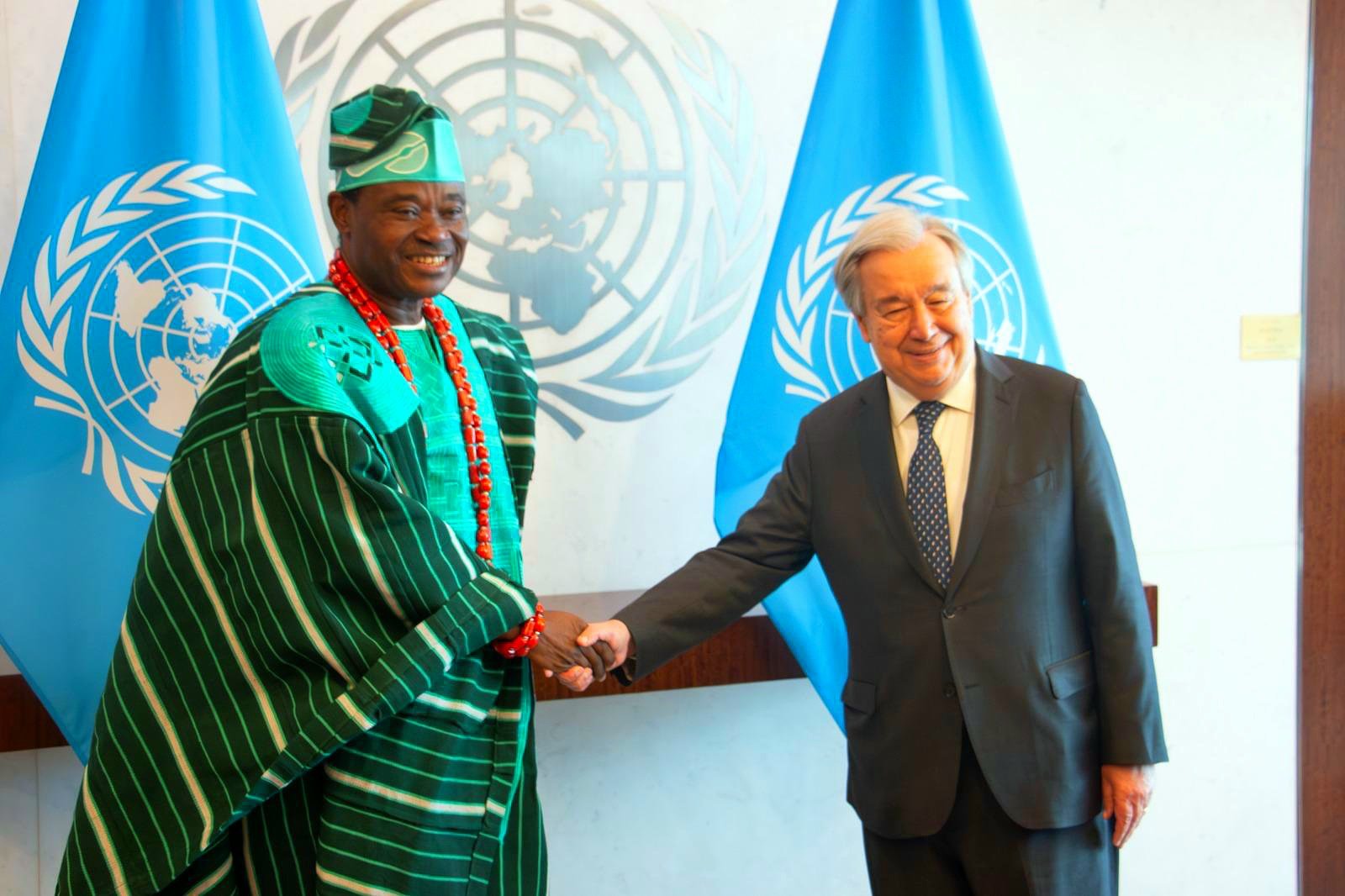
Nigeria’s Ambassador to the United Nations, Jimoh Ibrahim, has been elected Chairman of the United Nations General Assembly Fifth Committee, handing Nigeria a strategic leadership role in one of the UN’s most powerful committees at a time of growing fiscal and governance challenges facing the global body.
The election places the Nigerian diplomat at the helm of the committee responsible for scrutinising and approving the organisation’s budget and administrative policies, a role widely regarded as pivotal to the effectiveness and financial sustainability of the global institution.
His emergence comes at a crucial period for the United Nations, which is facing mounting financial pressures, calls for institutional reforms and increasing demands from member states amid evolving global security, economic and humanitarian challenges.
In his acceptance address, Ibrahim thanked member states for entrusting him with the leadership of the committee and pledged to steer its work with transparency, inclusiveness and a commitment to delivering results amid the complex challenges confronting the United Nations.
“I am deeply honoured by the confidence placed in me by member states.
The challenges before us require collective responsibility and decisive action,” he said.
The Fifth Committee plays a central role in the operations of the United Nations, overseeing the organisation’s budget and administrative framework, which underpin the implementation of UN programmes and mandates worldwide.
Addressing delegates, Ibrahim pledged to work closely with regional groups, committee officers and the UN Secretariat to ensure efficient management of the committee’s agenda.
He acknowledged the financial difficulties facing the United Nations, noting that delays in contributions from member states have contributed to significant budget shortfalls.
“The sustainability of the United Nations depends on predictable and adequate funding. Member states must meet their financial obligations promptly to enable the organisation to effectively carry out its mandate,” he said.
Ibrahim also stressed the importance of ongoing UN reforms aimed at improving efficiency, accountability and institutional effectiveness.
According to him, the organisation must continue adapting to emerging global realities, including geopolitical tensions, economic uncertainty, insecurity, poverty and rapid technological advancements.
He noted that innovation, leadership and knowledge-driven policies would be crucial in addressing these challenges and advancing sustainable development across the world.
A major focus of his address was consensus-building, which he described as the foundation of the Fifth Committee’s work.
“We must continue to build bridges, accommodate diverse perspectives and work together in the spirit of multilateralism to achieve outcomes that serve the collective interests of all member states,” Ibrahim said.
Drawing on his experience in Nigeria’s National Assembly, particularly in budgetary oversight and inter-parliamentary engagements, Ibrahim expressed confidence in his ability to build broad support for key decisions.
Observers say his emergence represents a notable diplomatic boost for Nigeria, underscoring the country’s growing visibility and influence within multilateral institutions, particularly at a time when global cooperation is increasingly under strain.
While he has only just assumed the position, analysts note that the appointment itself places Nigeria in a strategically visible role within the United Nations system, where outcomes will depend on how effectively he steers the committee’s work in the coming months.
Beyond diplomatic prestige, many Nigerians at home and in the diaspora view the development as carrying broader implications for the country’s international standing, especially at a time when Nigeria continues to grapple with a battered global image.
They argue that sustained visibility and effective leadership in global institutions could help strengthen confidence, improve perceptions of the Nigerian passport, and potentially support investment, development, and international partnerships if followed by tangible results.
They further stress that repositioning Nigeria and improving its global perception should remain a shared responsibility of both public officials and citizens, with diplomacy playing a central role in reshaping narratives about the country on the world stage.
His leadership of the committee is expected to position Nigeria at the centre of key negotiations on UN budgetary priorities, administrative reforms and efforts to strengthen financial accountability across the system.
The development also places added expectations on Ibrahim as the UN continues to confront rising operational costs, funding gaps and pressure to improve efficiency in delivering on its global mandates.