

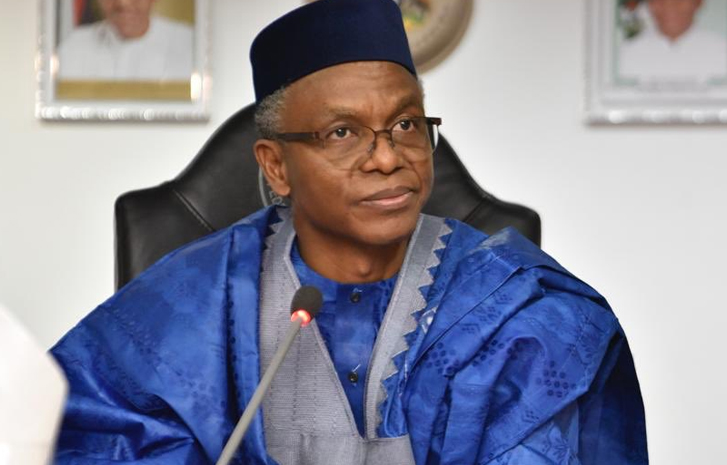

By John Azu
The Department of State Services (DSS) has informed a Federal High Court in Abuja that it will not be calling additional witnesses in the case involving former Kaduna State Governor, Malam Nasir El-Rufai, over alleged wire-tapping and cyber-related offences.
When the matter came up on Tuesday, DSS counsel, Oluwole Aladedoye (SAN), told the court that the prosecution had concluded its case.
He said the DSS was satisfied with the evidence already presented, insisting it was sufficient to establish the charges against the former governor.
According to him, “with the evidence led so far, the prosecution was satisfied that it had been able to establish the offences with which El-Rufai was charged.”
In response, defence counsel, Paul Erokoro (SAN), informed the court that the defence would be filing a no-case submission, arguing that the prosecution had not established sufficient evidence to warrant El-Rufai opening his defence.
He requested two weeks to file the application, while the prosecution also asked for two weeks to respond.
Erokoro further applied for a variation of some of the bail conditions granted to El-Rufai, describing them as overly stringent and difficult to fulfil. He argued that the requirement for level 17 civil servants with properties in Maitama or Asokoro, as well as verification and attestation letters from the Kaduna State traditional council, was impractical.
The DSS opposed the application, maintaining that qualified individuals who meet the conditions exist and urging the court to refuse the request.
Ruling on the application, Justice Joyce Abdulmalik declined to vary the bail conditions. The court held that there are indeed civil servants who own properties in the specified locations.
The DSS had arraigned El-Rufai on April 23 on a three-count charge bordering on cybercrime, alleging breaches linked to national security concerns arising from comments attributed to him during a television interview on February 13.
The judge adjourned the matter until September 22 for hearing of the no-case submission and further proceedings.