


102
By Godswill Michael
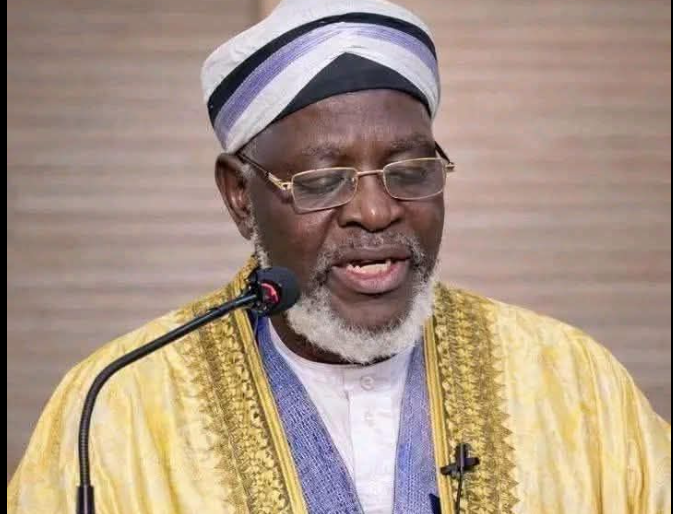
Former Vice President, Atiku Abubakar, has called on security agencies to either immediately release Kaduna-based Islamic cleric, Sheikh Sani Khalifa Zaria, or formally charge him to court, warning that his continued detention without trial undermines Nigeria’s democratic principles.
Atiku, in a statement issued on Wednesday, described the prolonged detention of the cleric, reportedly held since December 2025 over alleged involvement in a coup plot, as a grave violation of his fundamental human rights.
He expressed concern that despite a subsisting order of the Federal High Court directing that Sheikh Khalifa be presented in court, authorities have failed to comply, an action he said amounts to a direct affront to the rule of law and judicial authority.
“There can be no democracy without strict adherence to the rule of law. No security agency is above the Constitution, and none has the power to treat the rights of citizens as privileges to be dispensed with at will,” Atiku stated.
The former vice president decried the cleric’s reported lack of access to his family, legal counsel, and adequate medical care, describing the situation as a gross violation of constitutionally guaranteed rights.
In recent years, concerns have mounted over the detention of individuals by security agencies in Nigeria without prompt arraignment in court, particularly in cases involving national security allegations. Legal experts and civil society organisations have consistently argued that such practices contravene provisions of the Constitution, which mandate that suspects be charged to court within a reasonable time.
The issue has also been the subject of multiple court rulings, with Nigerian courts repeatedly affirming that prolonged detention without trial is unlawful, regardless of the nature of the allegations.
Despite these rulings, enforcement has remained a challenge, raising questions about institutional accountability and respect for judicial orders.
Against this backdrop, Atiku warned that normalising arbitrary detention poses a significant threat to Nigeria’s democratic foundations and risks eroding public trust in state institutions.
He also noted growing public speculation about the cleric’s condition, attributing it to the silence of authorities, which he said has deepened uncertainty and mistrust.
“Nigeria cannot continue to claim the status of a democracy while the rights of its citizens are routinely and brazenly violated,” he added.