


494
By Tracy Moses
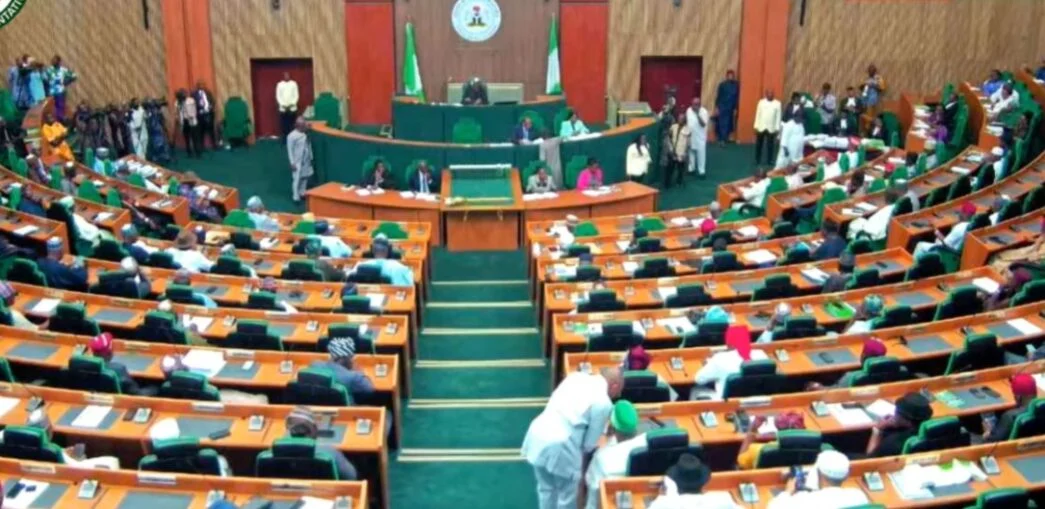
The House of Representatives has demanded full documentation from key government agencies over alleged revenue leakages linked to pre-shipment inspection of exports and the non-remittance of crude oil proceeds.
Chairman of the House Ad-hoc Committee on Investigation of Pre-Shipment Inspection of Exports and the Non-Remittance of Crude Oil Proceeds, Seyi Sowunmi, directed the Nigeria Customs Service (NCS), Nigerian Ports Authority (NPA), Central Bank of Nigeria (CBN) and Nigerian Association of Chambers of Commerce, Industry, Mines, and Agriculture (NACCIMA) to submit comprehensive records relevant to the ongoing probe.
The directive was issued at the resumed investigative hearing on Wednesday after the committee expressed dissatisfaction with the submissions made by representatives of the agencies, describing them as incomplete and not up to date.
Sowunmi said the agencies would be formally written to and given new dates to reappear before the panel with detailed documentation.
Earlier in the session, the agencies outlined their respective roles in the pre-shipment process for oil and non-oil exports at designated terminals across the country.
Representing the Comptroller-General of Customs, Bashir Adeniyi, Deputy Comptroller-General Caroline Diagwan explained that the Customs Service operates strictly within the provisions of its establishing Act and other extant laws.
“Our role as regards export is that we receive what we call the NXP form, alongside the certificate of inspection and export permit. We ensure that those documents tally with what is physically presented for export,” she said. She noted that Customs conducts examination and physical inspection of goods at the point of export to ensure compliance.
“We make sure that what is being exported tallies with the documents sent to us by the CBN, that’s the NXP, and the export permit from the relevant authorities. After inspection, that is when exportation takes place. Customs is present at the export terminals alongside other government agencies,” she stated.
Diagwan, however, clarified that the Service does not collect export duties and is not directly involved in tracking payments made to the government.
“We don’t collect export duties, and we don’t really know how much is paid to the government, because that is not within our purview. As long as the documents correspond with the physical goods, they are cleared for export,” she added, noting that controllers at the oil and gas export commands submit monthly returns to headquarters detailing export and import activities. On its part, the CBN said it plays an administrative and coordinating role in the pre-shipment inspection framework.
Representing the CBN Governor, Yemi Cardoso, Director Dr. Musa Nakurji explained that under the Pre-Shipment Inspection Act of 1992, the apex bank is responsible for the administrative aspects of the process but does not appoint pre-shipment inspection agents.
“Central Bank does not appoint the pre-inspection agent,” he said. “In terms of Form NXP, the process is fully automated. We do not send anything manually to Customs. Customs accesses the system to obtain the necessary information.”
He explained that exporters initiate the process through their commercial banks by opening Form NXP on the CBN’s Trade Monitoring System.
He further stated that once a pre-inspection agent verifies the quantity, quality and value of goods meant for export, a Clean Certificate of Inspection (CCI) is issued before shipment.
Also making a submission, General Manager, Tariff, of the NPA, Ibrahim Lukman, who represented the Managing Director, Dr. Abubakar Dantsoho, said the Authority’s role is confined to port operations and terminal management.
According to him, the NPA stations its agents at export terminals to monitor activities and relay information, while working in collaboration with other government agencies within its statutory mandate. Meanwhile, NACCIMA distanced itself from crude oil export processes.
A Director of the association, Dr. Emmanuel Akeh, told the committee that NACCIMA serves as the umbrella body for chambers of commerce nationwide and is only responsible for issuing certificates of origin for non-oil exports.
“We do not have any role in crude oil exports. Our responsibility is limited to issuing certificates of origin for non-oil exports to authenticate the products being exported,” he said.
In his closing remarks, Sowunmi stressed that the investigation was critical to plugging revenue leakages and ensuring proper accountability in the export value chain.
“Part of what Mr. President is trying to cure is ensuring that we account for every kobo that accrues to the nation. That is what this committee seeks to achieve,” he said.
The committee subsequently ruled that all concerned agencies must submit the requested comprehensive documents and appear on dates that will be communicated to them.
“Please, we are going to write to you. Any further necessities that we require must be submitted on time,” Sowunmi warned.
The panel also directed that any official representing the head of an agency must present a formal letter of authority empowering them to speak on behalf of their institution.