


335
By Tracy Moses
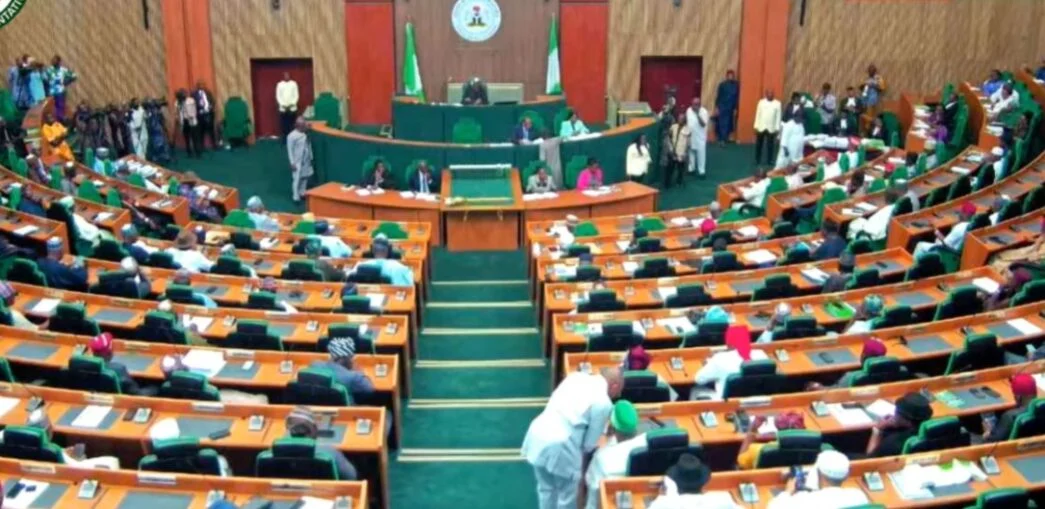
The House of Representatives has passed for second reading a bill seeking to regulate rental transactions in the Federal Capital Territory (FCT), with a proposed 12-month cap on compulsory advance rent payments and stiff penalties for landlords, estate agents and property managers who violate its provisions.
The proposed legislation also seeks to check arbitrary rent increases, regulate agency fees, protect tenants against unlawful eviction and establish a dedicated regulatory authority to oversee rental transactions in Abuja.
Sponsored by the member representing Enugu East/Isi-Uzo Federal Constituency of Enugu State, Prof. Paul Nnamchi, and co-sponsored by Ahmed Yusuf Doro, the bill proposes fines of up to N20 million for corporate offenders, while individuals found guilty of violating its advance-rent provisions could face fines ranging from N500,000 to N5 million.
The proposal generated extensive debate during Wednesday’s plenary, with lawmakers expressing divergent views over the extent to which government should regulate private rental transactions, particularly in relation to property rights, freedom of trade and the need to protect tenants from exploitation.
Leading the debate, Nnamchi said excessive rental demands had placed considerable financial pressure on residents, affecting household savings, small businesses and employment mobility.
He explained that the legislation was designed to establish a fairer and more accountable rental framework through the regulation of advance payments, a unified platform for identifying housing agents, reasonable limits on agency fees and protection against coercive practices.
“Mr Speaker, this legislation is not intended to undermine property rights or discourage investment. Rather, it recognises that legitimate commercial interests must coexist with public protection. Landlords deserve reasonable returns.
“Agents deserve professional recognition. And tenants deserve fairness and protection from exploitation,” he said.
Nnamchi added that a properly regulated rental market would promote transparency, certainty and accountability, protect consumers and improve confidence in the housing sector.
“The responsibility of legislation is not merely to protect economic transactions, but also to ensure that those transactions do not become instruments of undue hardship or exploitation,” he added.
Urging his colleagues to support the proposal, he argued that access to decent accommodation should not depend on an individual’s ability to make extraordinary advance payments.
“Ultimately, access to decent accommodation should not be determined by one’s ability to make extraordinary advance payments. Fairness, accountability and the protection of legitimate interests must remain the guiding principle of our rental markets. Mr Speaker, I so move,” he said.
Contributing to the debate, Rep. Idris Zacharias, representing Ida/Igalamela-Ibaji/Ofu Federal Constituency of Kogi State, described the bill as important but urged the House to consider broader land administration and housing issues in the FCT.
He also called for the involvement of the House Committee on FCT and Area Councils in the committee that would consider the proposal.
Similarly, Rep. Chinedu Ogah, representing Ikwo/Ezza South Federal Constituency of Ebonyi State, supported the bill, arguing that high rents and agency fees were making it increasingly difficult for businesses to establish offices in Abuja.
Ogah cited the cost of renting a three-bedroom office in Wuse, which he said ranged between N25 million and N30 million annually, with agency charges further increasing the financial burden on businesses.
He maintained that clearer rules governing rental transactions would help regulate the sector and encourage investment.
Rep. Jafaru Gambo, representing Bogoro/Dass/Tafawa Balewa Federal Constituency of Bauchi State, also supported the bill but proposed that the word “prohibit” in its title should be replaced with “regulate”.
He further argued that the proposed legislation should have nationwide application rather than being restricted to the FCT.
“The bill should have a nationwide coverage not just the FCT. Mr Speaker, this is my amendment to the bill,” he said.
Rep. Ibe Okwara Osonwa, representing Arochukwu/Ohafia Federal Constituency of Abia State, supported the need for regulation but cautioned against a blanket prohibition on multiple-year rent arrangements.
“This is a free market situation. By the free market economy, are we now going to, for every good or service that is sold outside, we now start to tell people how to trade on their own businesses?” he asked.
Osonwa argued that certain circumstances could justify multiple-year rental arrangements, insisting that the legislation should focus on regulation and clearly defined conditions rather than an outright prohibition.
Rep. Joseph Bagudu also called for regulation rather than prohibition, noting that landlords needed to recover their investments, particularly in view of rising building material costs.
He also disputed claims that agency fees could reach 25 per cent, arguing that the prevailing rate was generally around 10 per cent.
Rep. Ayodeji Alao-Akala, representing Ogbomoso North/South/Orire Federal Constituency of Oyo State, supported the proposal, arguing that it was primarily intended to address compulsory multiple-year rent demands rather than prevent landlords from increasing rents.
He said the requirement for young couples and newly employed Nigerians to pay two years’ rent upfront placed an unreasonable financial burden on them.
“As a youth, when a corps member comes out of service now, and is being asked to pay two years, where will this insurance money come from?” he asked.
Alao-Akala argued that the proposed framework could accommodate different payment arrangements, including monthly, six-monthly and annual payments, while preventing landlords from compelling tenants to pay several years’ rent in advance.
However, Rep. Patrick Umoh raised constitutional concerns, warning that the bill could affect property rights and freedom of trade.
He urged the House to step it down for further consultation and a review of existing tenancy laws applicable to the FCT.
The Deputy Speaker, Benjamin Kalu, who presided over the plenary, acknowledged the constitutional concerns raised during the debate. Reference was made to Section 44(2)(c) of the Constitution, which provides an exception relating to laws governing leases and tenancies.
Kalu, however, maintained that the proposed legislation did not violate any provision of the 1999 Constitution, as amended.
Also contributing, Rep. Wale Raji, representing Epe Federal Constituency of Lagos State, argued that previous attempts to regulate rents had not adequately addressed the housing challenge.
He attributed rising rental costs partly to the widening gap between housing demand and supply, maintaining that increased housing development and social housing programmes were necessary to address the problem.
Rep. Sunday Umeha, representing Ezeagu/Udi Federal Constituency of Enugu State, disagreed with the constitutional objections, insisting that the bill did not conflict with the Constitution and should proceed to the next legislative stage, where its provisions could be scrutinised and amended.
“The purpose of this House is to make laws for the welfare and good governance of the Nigerian people,” he said.
“The bill is not anti-investment. The bill is not against even the landlords or those making investment in the real estate environment or industry. This bill is of good use to both the landlords and the tenants.”
He maintained that the proposal was consistent with the legislature’s responsibility to promote order and protect citizens against exploitative practices.
The Minority Leader, Rep. Frederick Agbedi, also urged members to support the bill, saying high accommodation costs in the FCT were forcing residents into overcrowded and unsuitable living conditions in satellite towns and surrounding suburbs.
“I adopt the submissions of Honourable Umeha entirely as mine. A free market economy does not assume that everything has to be free. The way rent is being increased in FCT, a lot of people have moved to the suburbs where living conditions are pathetic. This bill is intended to cure some of these excesses. That you built a house at N1m today does not mean you must rent it out at N100m today,” he said.
Agbedi argued that the proposed legislation was intended to address abuses in the rental market without discouraging legitimate investment in the housing sector.
The House Leader, Prof. Julius Ihonvbere, also backed the proposal, citing the difficulties residents encounter in securing accommodation and the activities of unregistered estate agents.
“I think this is a very important bill. And I want to thank Professor Nnamchi for thinking about it,” he said.
Ihonvbere said the bill would proceed to a public hearing, where Nigerians, property professionals and other stakeholders would have the opportunity to examine its provisions and make contributions.
He urged lawmakers to support the proposal, adding: “We are in a stage where we have a duty to protect Nigerians. It’s not against you to build your house. You can build as many houses as you want.”
In his closing remarks, Kalu cited Section 16 of the Constitution, which outlines the economic objectives of the state, including the promotion of citizens’ welfare and the provision of suitable and adequate shelter.
He argued that Nigeria operated a mixed economy in which certain sectors, particularly those connected to essential needs such as housing, could be regulated in the public interest.
“Not all sectors of the economy should be free and capitalist. Especially when it has to do with shelter, which is fundamental. So, some sectors should be regulated as well as controlled,” he said.
Following the debate, the House passed the bill for second reading, paving the way for further legislative consideration and stakeholder engagement.
What the bill seeks to change
Details of the proposed legislation show that it seeks to prohibit landlords, estate agents, property managers and other persons acting on their behalf from demanding, receiving or compelling tenants to pay more than 12 months’ rent in advance as a condition for securing, renewing or continuing a tenancy.
Titled A Bill for an Act to Regulate Advance Rental Payments, Prohibit Compulsory Multiple-Year Rent Demands, Establish the Federal Capital Territory Rent Regulation and Tenants’ Protection Authority, Provide Remedies for Unlawful Rental Practices, and for Related Matters, the bill is co-sponsored by Ahmed Yusuf Doro.
Section 4 provides that “a landlord, estate agent, property manager or other person acting on behalf of a landlord shall not demand, receive or compel a tenant to pay more than twelve months’ rent in advance.”
The proposal, however, does not completely prohibit tenants from voluntarily paying beyond 12 months, provided the initiative comes from the tenant, is not imposed as a condition by the landlord and is documented in writing.
It also places the responsibility of proving that such payment was voluntary on the person who received it.
To prevent landlords and agents from circumventing the proposed restriction, the bill prohibits compulsory service charges, artificial tenancy renewals, separate agreements and other arrangements designed to extract payments exceeding the permitted period.
It further seeks to protect tenants against intimidation and retaliation, including refusal to renew tenancies, threats of unlawful eviction, punitive charges and withdrawal of lawful benefits because they decline to make payments contrary to the proposed law.
Under the proposed framework, tenants who make unlawful advance payments would be entitled to apply to the proposed regulatory authority for a refund. Landlords or other recipients of such payments would be required to refund the unlawful amount within 30 days of receiving the authority’s order.
The legislation also proposes the establishment of the Federal Capital Territory Rent Regulation and Tenants’ Protection Authority, which would investigate complaints, monitor landlords and property managers, issue compliance notices, facilitate mediation and enforce the provisions of the law.
The proposed authority would provide an institutional mechanism for addressing disputes and monitoring compliance, rather than leaving tenants to rely solely on conventional court proceedings to seek redress.
The bill’s eventual impact will depend on the final provisions adopted by the National Assembly, the effectiveness of its enforcement mechanisms and the ability of the proposed regulatory authority to balance tenants’ protection with legitimate property and investment interests.